Rising Journalist Fatalities in Middle East Conflict Spark Global Safety Concerns
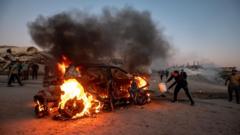
The ongoing conflict across Gaza and Lebanon has reached a grim milestone, with a significant increase in journalist fatalities that has prompted urgent calls for better protections for media personnel in active war zones. The death of Al Jazeera correspondent Mohammed Wishah in a Gaza City drone strike has become a central point of contention, highlighting the extreme dangers faced by those attempting to document the humanitarian crisis while international access to the region remains severely restricted.
Following the incident, the Israeli military alleged that Wishah maintained ties to Hamas, claiming he used his professional status to conceal involvement in weapons development. These assertions, supported by released imagery, have been categorically denied by both the media organization and the militant group involved. This dispute has further complicated the discourse surrounding the safety of reporters, as the line between combatant and observer becomes increasingly blurred in the eyes of military forces.
Beyond the situation in Gaza, the regional instability has claimed the lives of several media professionals in Lebanon, including radio presenter Ghada Dayekh and television reporter Suzan Khalil. These deaths have triggered widespread condemnation from international advocacy groups, which are calling for stricter enforcement of international laws intended to protect non-combatants. As the death toll for media workers continues to climb, critics argue that the systematic failure to safeguard journalists is effectively silencing independent reporting, thereby obscuring the reality of the humanitarian conditions on the ground.
Key Takeaways
- A surge in journalist fatalities in Gaza and Lebanon has sparked international outcry regarding the safety of media workers in conflict zones.
- Military allegations linking specific journalists to militant activities have created a contentious debate over the neutrality and protection of press credentials.
- Advocacy groups warn that the rising death toll of media professionals threatens the transparency and documentation of humanitarian conditions in the region.
Editor’s Analysis & Impact
The escalating danger to journalists in the Middle East represents a critical breakdown in the norms of international conflict. When media personnel are targeted—or perceived as combatants—the resulting ‘information vacuum’ makes it nearly impossible for the global community to verify humanitarian claims or war crimes. This trend has broader implications for the future of war reporting; as the risks become prohibitive, news organizations may be forced to withdraw staff, leaving the public reliant on state-sponsored or biased narratives. The long-term impact is a degradation of global accountability. Moving forward, the industry must grapple with how to maintain independent observation in an era where traditional protections for the press are being systematically ignored or challenged by state actors, potentially necessitating new international protocols for the protection of non-combatant observers.
Frequently Asked Questions
Q: Why is there a debate surrounding the death of Mohammed Wishah?
A: The debate stems from conflicting narratives: while the Israeli military alleges he was a member of Hamas using his credentials as a cover, his employer and the militant group have denied these claims.
Q: What are international advocacy groups demanding?
A: Advocacy groups are demanding that all parties involved in the conflict strictly adhere to international laws designed to protect non-combatants, including journalists, in war zones.
AI Disclosure: This article is based on verified data and official reports. Our Team and AI have cross-referenced every financial detail with primary sources to ensure total accuracy.
More from this Category