Algeria Moves to Impose Death Penalty for Arson Following Deadly Wildfires
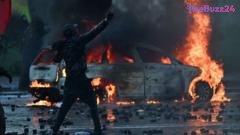
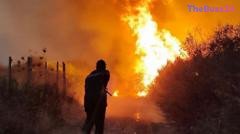
Algerian President Abdelmadjid Tebboune has directed the justice ministry to draft legislation that would reinstate the death penalty for individuals convicted of intentionally starting forest fires. This directive follows a devastating series of wildfires across the nation’s north-east that resulted in at least 12 fatalities and widespread destruction of property and infrastructure.
While capital punishment remains technically present in Algeria’s penal code, the country has observed a de facto moratorium on executions since 1993. The proposed legal amendments, which the president has requested be finalized by September 15, aim to replace current sentencing guidelines that cap prison terms for arson at 30 years or life imprisonment. Officials have indicated that the intensity of the recent blazes suggests the possibility of foul play, prompting a comprehensive investigation into the origins of the fires.
Beyond the legislative response, the government has initiated efforts to support those impacted by the disaster. President Tebboune has ordered immediate compensation for affected families and mandated the repair of damaged homes and essential public services. These measures come as the region grapples with the dual challenges of extreme heatwaves and the increasing frequency of wildfires, which experts increasingly attribute to the broader impacts of climate change.
Key Takeaways
- President Tebboune has ordered the justice ministry to draft legislation introducing the death penalty for intentional arson.
- The move follows a wave of wildfires that killed at least 12 people and displaced thousands across northern Algeria.
- The government has also pledged financial compensation and infrastructure repairs for citizens affected by the recent destruction.
Editor’s Analysis & Impact
The Algerian government’s push to reinstate capital punishment for arson reflects a high-stakes political response to the growing threat of climate-induced disasters. By framing the wildfires as potential acts of sabotage rather than purely environmental events, the administration is attempting to project strength and maintain public order during a period of national crisis. However, the move to resume executions after a three-decade hiatus could draw significant international scrutiny regarding human rights and judicial standards. Economically, the government faces the mounting cost of climate adaptation, as the increasing frequency of these fires threatens to destabilize local communities and strain national resources. The long-term outlook suggests that unless Algeria can bolster its fire management infrastructure and climate resilience, the reliance on punitive legal measures may prove insufficient to address the root causes of these recurring environmental catastrophes.
Frequently Asked Questions
Q: What is the current penalty for arson in Algeria?
A: Under existing law, intentionally starting a forest fire is punishable by up to 30 years in prison, or life imprisonment in specific circumstances.
Q: When was the last time an execution was carried out in Algeria?
A: Although the death penalty remains in the penal code, Algeria has not carried out an execution since 1993.
AI Disclosure: This article is based on verified data and official reports. Our Team and AI have cross-referenced every financial detail with primary sources to ensure total accuracy.
More from this Category