American Airlines Jets Clip Wings on Tarmac at Reagan National, No Injuries Reported
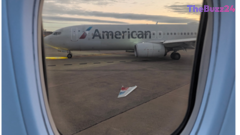
Two American Airlines Boeing 737-800 aircraft were involved in a minor collision on the tarmac at Ronald Reagan Washington National Airport on Friday evening. The incident occurred around 5:10 PM ET as the jets were taxiing for departure, resulting in their wingtips making contact.
Flight 638, destined for Dallas-Fort Worth, and Flight 2152, bound for Chicago’s O’Hare airport, were both immediately removed from service and returned to the gate for inspection by maintenance teams. Fortunately, no injuries were reported among passengers or crew on either aircraft. Federal aviation authorities have initiated an investigation into the circumstances surrounding the collision.
A passenger aboard Flight 2152 recounted experiencing a “large jolt” and “quite violent” shaking on the right side of the aircraft, followed by gasps from fellow passengers. The individual observed a piece of the wingtip on the ground after the impact. Air traffic controllers, whose audio recordings confirmed the incident, promptly requested emergency response and fire personnel to the scene before directing the planes back to the gate. American Airlines is currently working to re-accommodate affected passengers to their destinations.
This incident marks a concerning recurrence of aviation events at Reagan National, a smaller airport primarily serving domestic flights and situated near the U.S. capital. It follows a deadly mid-air collision in January 2025 at the same airport, which claimed 67 lives when a jetliner collided with an Army helicopter. That previous crash, which sent the passenger plane into the Potomac River, was later attributed to faulty altitude data affecting the helicopter. The U.S. Army had recently announced plans to resume helicopter test flights near Reagan airport, which had been paused after the fatal 2025 incident.
Key Takeaways
- Two American Airlines Boeing 737-800 jets clipped wings while taxiing for departure at Ronald Reagan Washington National Airport.
- No injuries were reported, but both aircraft were taken out of service for inspection, causing travel disruptions for passengers.
- This incident follows a deadly mid-air collision at the same airport in January 2025, raising concerns about aviation safety at the busy hub.
Editor’s Analysis & Impact
This minor collision, while thankfully without injuries, highlights the persistent operational challenges in managing high-volume air traffic, even during ground movements. For American Airlines, the immediate impact is operational disruption and potential reputational scrutiny, though unlikely to be a significant financial hit. The recurrence of incidents at Reagan National, especially following a recent fatal crash, could prompt broader safety reviews of airport procedures and air traffic control protocols, particularly given its unique proximity to sensitive airspace and military operations. This event underscores the critical importance of stringent safety measures and continuous oversight in the aviation industry to prevent even minor incidents from escalating or eroding public confidence in air travel safety.
Frequently Asked Questions
Q: What happened at Ronald Reagan Washington National Airport?
A: Two American Airlines Boeing 737-800 aircraft clipped wings while taxiing for departure on Friday evening. One plane's wingtip made contact with the other.
Q: Were there any injuries reported from the incident?
A: No, authorities and American Airlines confirmed that no injuries were reported among passengers or crew on either flight involved in the collision.
Q: Has Reagan National Airport experienced similar incidents recently?
A: Yes, this incident follows a deadly mid-air collision in January 2025 at the same airport, which involved a passenger jet and a military helicopter and resulted in 67 fatalities.
AI Disclosure: This article is based on verified data and official reports. Our Team and AI have cross-referenced every financial detail with primary sources to ensure total accuracy.
More from this Category