“An Act of Humanity”: Pope Leo XIV Confronts Europe’s Hardening Borders on Lampedusa
Pope Leo XIV has issued a poignant call to action for European leaders, urging them to confront the escalating migration crisis with compassion and comprehensive strategy. Speaking during a high-profile visit to the Italian gateway island of Lampedusa, the pontiff emphasized that managing migration is a “momentous challenge” that requires systemic integration and humanitarian support rather than mere deterrence.
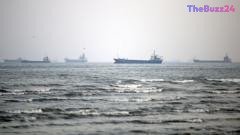
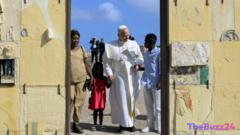
Lampedusa, located just 90 miles off the coast of Tunisia, serves as a primary, often overcrowded entry point for tens of thousands of migrants fleeing conflict and poverty. During his visit, the Pope paid tribute to those who lost their lives attempting the perilous Mediterranean crossing, praying at a local cemetery and standing before the “Door of Europe” memorial. He noted that the tragic loss of over 1,400 lives in the Mediterranean this year represents a failure of collective political decision-making.
The pontiff’s visit comes at a tense political moment, arriving just weeks after the European Union approved more stringent migration regulations that expand detention powers and tighten border controls. This shift aligns with a broader global trend of governments, including those of Italy and the United Kingdom, adopting hardline policies to deter undocumented arrivals. Since ascending to the papacy in May 2025, Pope Leo XIV has consistently challenged these restrictive measures, advocating instead for a balanced approach that combines immediate humanitarian relief with long-term development aid to migrants’ home countries.
The Pope’s message of welcome extended beyond Europe. In a recent letter marking the 250th anniversary of United States independence, he reminded Americans of the historical contributions of immigrants, directly challenging hardline anti-immigration rhetoric. On Lampedusa, his presence resonated deeply with local rescue workers, aid organizations, and migrants alike. Cultural mediators on the island noted that the papal visit serves as a vital reminder that welcoming newcomers is not merely a political debate, but a fundamental act of human dignity.
Key Takeaways
- Pope Leo XIV visited the Italian island of Lampedusa to advocate for compassionate migration policies and better integration of new arrivals.
- The visit occurs amid a shifting political landscape in Europe, where the EU and individual nations are implementing stricter border controls and detention measures.
- More than 1,400 migrants have died or gone missing in the Mediterranean this year, highlighting the extreme dangers of the crossing.
Editor’s Analysis & Impact
Pope Leo XIV’s visit to Lampedusa highlights the growing ideological chasm between the Catholic Church’s humanitarian doctrine and the increasingly securitized migration policies of Western nations. As the European Union, the United Kingdom, and the United States pivot toward deterrence, detention, and stricter border enforcement, the Pope is positioning the Church as a prominent moral counterweight. This friction is not merely rhetorical; it has direct implications for domestic politics in heavily Catholic nations like Italy and Spain, where governments must balance voter anxieties over immigration with the moral imperatives championed by the Vatican. Ultimately, the Pope’s advocacy underscores a critical global challenge: the need to address the root causes of migration—such as economic instability and conflict in developing nations—rather than relying solely on border militarization, which often diverts migration flows into even more hazardous routes.
Frequently Asked Questions
Q: Why is the island of Lampedusa significant to the migration crisis?
A: Lampedusa is a small Italian island located just 90 miles off the coast of Tunisia, making it one of the primary and most accessible maritime entry points for migrants seeking to reach Europe from North Africa.
Q: What recent policy changes prompted the Pope's remarks?
A: The Pope's visit followed the European Union's approval of tougher migration rules that grant member states stricter border controls and broader detention powers, reflecting a wider trend of Western governments hardening their stances on undocumented immigration.
Q: How many casualties have been recorded in the Mediterranean crossing recently?
A: According to international monitoring organizations, more than 1,400 people, including 28 children, have died or gone missing while attempting to cross the Mediterranean Sea so far this year.
AI Disclosure: This article is based on verified data and official reports. Our Team and AI have cross-referenced every financial detail with primary sources to ensure total accuracy.
More from this Category