Massive Crowds Converge on Tehran for Ayatollah Khamenei’s Funeral Procession
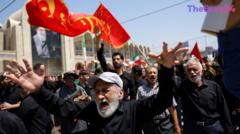
Thousands of mourners dressed in black have descended upon Tehran’s Grand Mosalla mosque as the six-day funeral commemorations for former Supreme Leader Ayatollah Ali Khamenei officially commenced. The event marks a significant moment for the nation, occurring four months after the leader was killed during joint US and Israeli airstrikes in late February. Authorities anticipate a historic turnout, with estimates suggesting that between 15 and 20 million people may participate in the ceremonies across Iran and Iraq.
The atmosphere in the capital remains highly charged, with attendees gathering to pay their final respects and voice their defiance against foreign intervention. Many supporters have used the occasion to reiterate calls for retribution, framing the funeral not only as a period of national mourning but as a demonstration of continued loyalty to the Islamic regime. The body of the late leader is currently lying in state alongside family members who also perished in the same military strikes.
The funeral itinerary is extensive, spanning several key religious sites. Following the initial three-day period in Tehran, the procession will move to Qom for prayers at the Jamkaran site. The journey will then extend internationally to Najaf and Karbala in Iraq, before returning to Iran for a final burial at the Imam Reza Shrine in Mashhad. These events are expected to be followed by 40 days of national commemorations, culminating in a year-long period of remembrance.
As the nation navigates this transition, attention has shifted toward the new Supreme Leader, Mojtaba Khamenei. Having succeeded his father, the younger Khamenei has remained out of the public eye, fueling widespread speculation regarding his health and his ability to consolidate power. His potential appearance at the funeral remains a focal point for observers, as the country grapples with the long-term geopolitical consequences of the conflict that led to his predecessor’s death.
Key Takeaways
- Millions of mourners are expected to participate in a six-day funeral procession for Ayatollah Ali Khamenei across Iran and Iraq.
- The funeral follows the death of the former Supreme Leader in joint US-Israeli airstrikes four months ago.
- Mojtaba Khamenei has succeeded his father as Supreme Leader, though his absence from public view has sparked significant speculation.
Editor’s Analysis & Impact
The death of Ayatollah Ali Khamenei and the subsequent transition of power to his son, Mojtaba, represent a critical juncture for the Middle East. The massive public turnout underscores the deep-seated ideological divide and the intensity of anti-Western sentiment within the Iranian populace. From a geopolitical perspective, the funeral serves as a stage for the regime to project stability and resolve despite the ongoing regional conflict. However, the lack of public visibility for the new leader suggests potential internal instability or a shift in the regime’s communication strategy. Investors and international observers should monitor the situation closely, as the succession process and the rhetoric surrounding the ‘blood feud’ with the United States could influence future diplomatic negotiations and regional security dynamics in the coming months.
Frequently Asked Questions
Q: Where will Ayatollah Ali Khamenei be buried?
A: He will be buried at the Imam Reza Shrine in his hometown of Mashhad, which is considered Iran's most important pilgrimage site.
Q: How long are the funeral ceremonies expected to last?
A: The formal funeral procession is scheduled for six days, followed by 40 days of national commemorative events.
AI Disclosure: This article is based on verified data and official reports. Our Team and AI have cross-referenced every financial detail with primary sources to ensure total accuracy.
More from this Category