Andromeda’s Stellar Nursery: NGC 206 Shines Bright
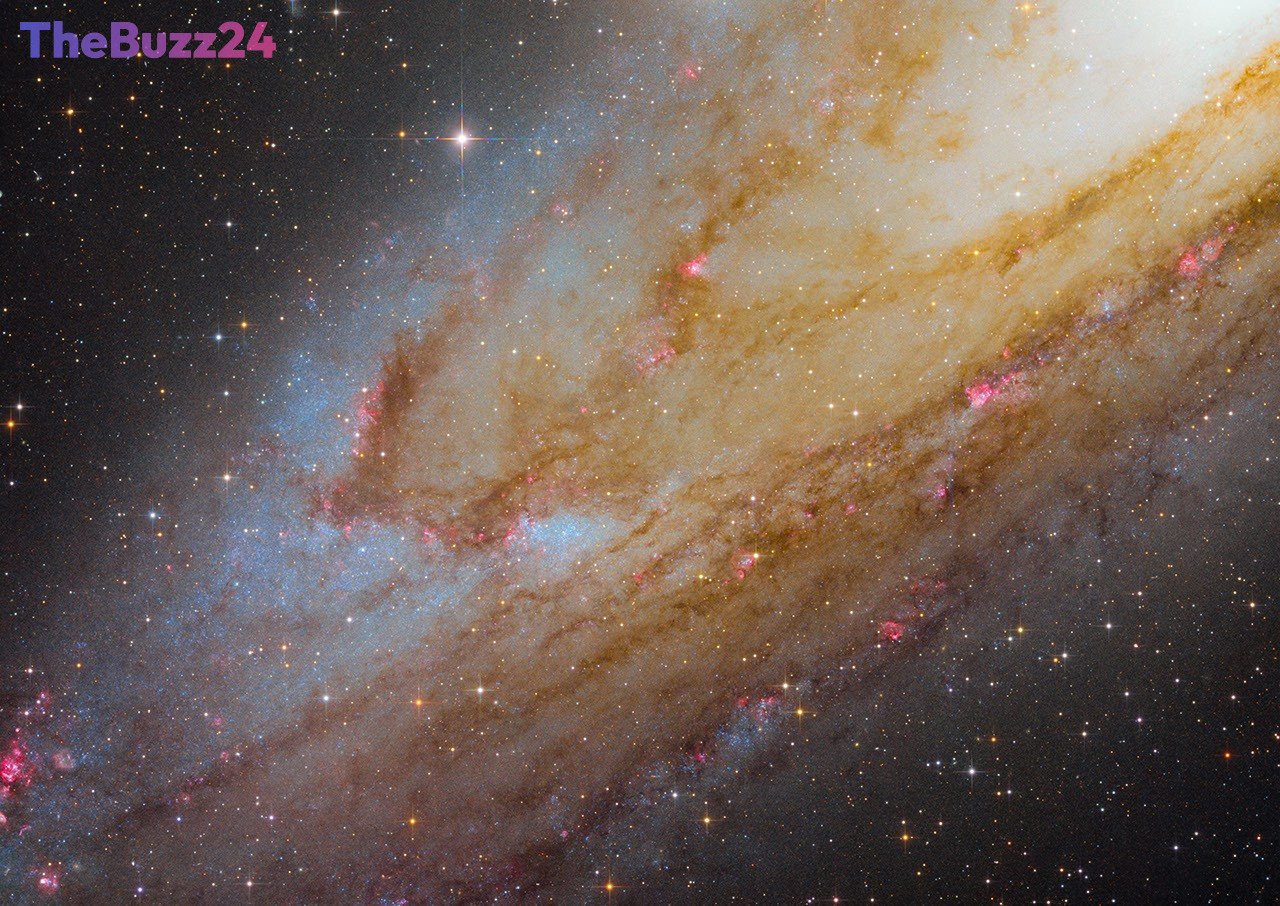
Astronomers have captured a stunning view of NGC 206, a massive stellar association located within the spiral arms of the Andromeda galaxy. This celestial object is nestled among the galaxy’s vibrant, pinkish star-forming regions, offering a glimpse into the dynamic processes of cosmic creation. The Andromeda galaxy, also known by its catalog designation M31, is our closest large galactic neighbor, situated approximately 2.5 million light-years from Earth.
The detailed close-up image focuses on the southwestern portion of Andromeda’s disk, highlighting NGC 206 at its center. The prominent, bright blue stars within NGC 206 are a clear indicator of its relative youth. These massive stars are less than 10 million years old, signifying a recent burst of star formation in this region. This makes NGC 206 a significant stellar nursery, comparable in scale to other giant star-forming regions like NGC 604 in the M33 galaxy and the Tarantula Nebula in the Large Magellanic Cloud.
Spanning an impressive 4,000 light-years, NGC 206 is considerably larger than the stellar clusters found within our own Milky Way galaxy’s disk. Its immense size and the presence of young, massive stars underscore its importance in understanding galactic evolution and the lifecycle of stars. The image serves as a powerful reminder of the vastness and ongoing activity within the universe.
Key Takeaways
- NGC 206, a large stellar association, is prominently featured within the Andromeda galaxy.
- The bright blue stars in NGC 206 indicate its youth, with massive stars less than 10 million years old.
- NGC 206 is a vast stellar nursery, spanning 4,000 light-years and comparable in size to other major star-forming regions in nearby galaxies.
Editor’s Analysis & Impact
This detailed observation of NGC 206 within the Andromeda galaxy offers valuable insights into stellar formation processes in neighboring galaxies. Its significant size and the presence of young, massive stars provide a unique laboratory for astrophysicists studying galactic evolution and the lifecycle of stars. Such discoveries fuel further research into the conditions that foster star birth and the dynamics of spiral galaxies. The continued exploration and imaging of objects like NGC 206 not only advance scientific understanding but also inspire public interest in astronomy, potentially driving investment in space exploration and related technologies.
Frequently Asked Questions
Q: What is NGC 206?
A: NGC 206 is a large stellar association, essentially a massive collection of young, bright stars, located within the Andromeda galaxy.
Q: How far away is the Andromeda galaxy?
A: The Andromeda galaxy (M31) is approximately 2.5 million light-years away from Earth.
Q: Why are the stars in NGC 206 considered young?
A: The bright blue color of the stars in NGC 206 is characteristic of massive, hot stars, which have relatively short lifespans. Their presence indicates that star formation in this region is a recent event, with the youngest massive stars being less than 10 million years old.
AI Disclosure: This article is based on verified data and official reports. Our Team and AI have cross-referenced every financial detail with primary sources to ensure total accuracy.
More from this Category