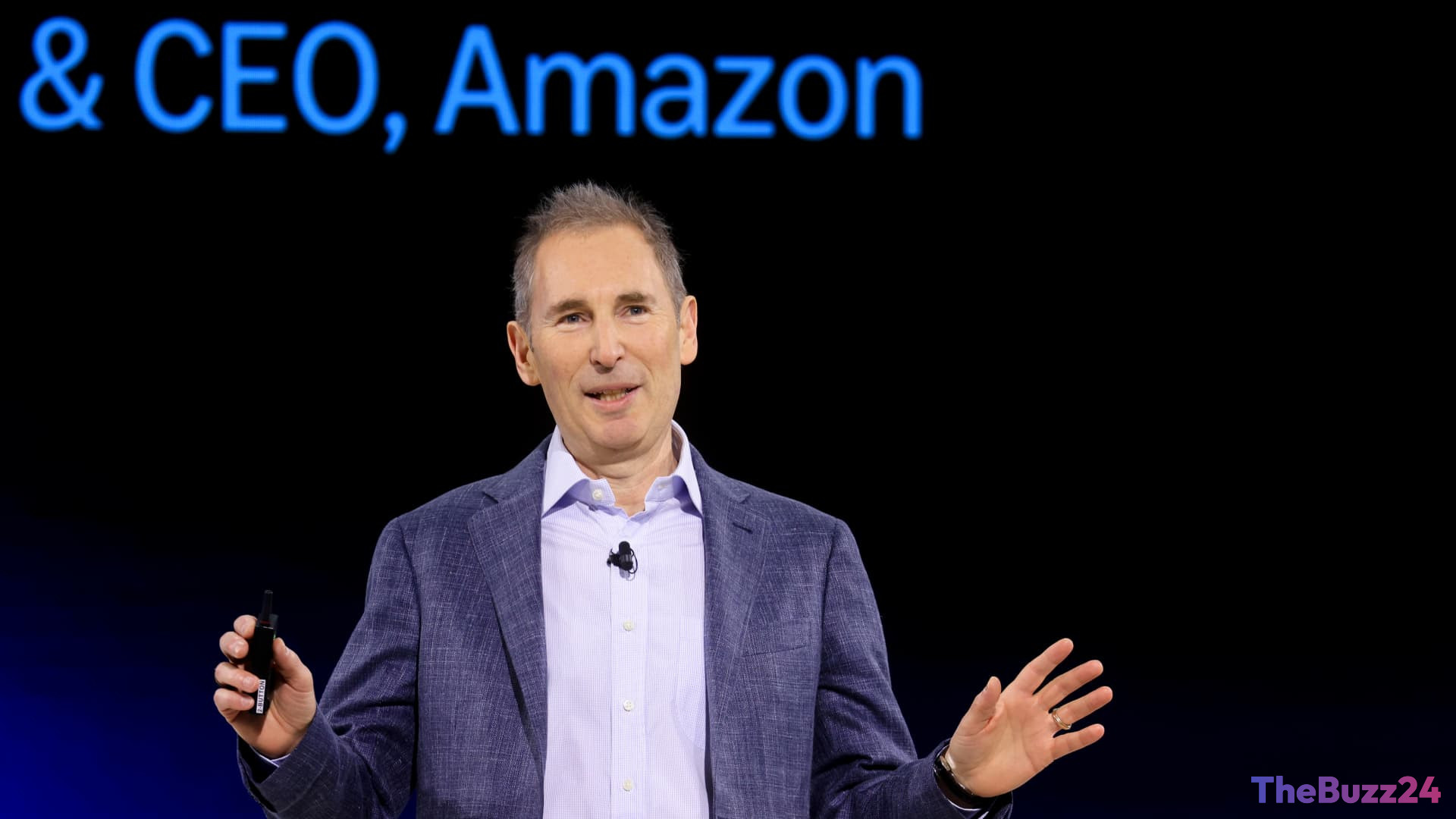
Why Amazon’s Massive AI Bets Will Pay Off: CEO Andy Jassy Outlines Long-Term Growth Strategy
Amazon Chief Executive Officer Andy Jassy has strongly defended the e-commerce and cloud giant’s aggressive capital expenditure on artificial intelligence, framing it as a historic opportunity that will yield substantial long-term returns for shareholders. Addressing concerns over the company’s massive spending, Jassy emphasized that the current technological shift represents the most significant software transformation of this generation, poised to fundamentally reshape consumer experiences and create entirely new markets.
The debate intensified after Amazon revealed plans to allocate approximately $200 billion this year toward capital expenditures, primarily targeting AI infrastructure. While the announcement initially triggered a temporary dip in stock value, shares have since rebounded to record highs. Critics have voiced concerns over potential negative free cash flow by 2026, but Jassy dismissed these anxieties, explaining that infrastructure investments naturally precede monetization. He noted that data centers and hardware have multi-year lifespans, ensuring sustained profitability once demand catches up to capacity.
To illustrate his point, Jassy drew parallels to the early development of Amazon Web Services (AWS). He revealed that Amazon’s AI-related run rate has already surpassed $15 billion within its first three years—a growth pace 260 times faster than AWS experienced during its initial three years. With AWS projected to generate around $166 billion in total revenue this year, Jassy expressed confidence that the current AI investment cycle will follow a similar, albeit much larger, trajectory of high operating margins and robust free cash flow.
Key Takeaways
- Amazon is investing approximately $200 billion this year, with a heavy focus on building out its artificial intelligence infrastructure.
- CEO Andy Jassy compared the current AI expansion to the early days of AWS, noting that AI revenue is growing 260 times faster than AWS did in its first three years.
- Despite investor concerns regarding near-term free cash flow, Amazon expects long-term margins to rise significantly as infrastructure utilization increases.
Editor’s Analysis & Impact
Amazon’s aggressive capital expenditure highlights a broader trend among tech giants racing to secure dominance in the generative AI landscape. While Wall Street frequently reacts with skepticism to massive upfront spending due to near-term cash flow pressures, history suggests that infrastructure pioneers often reap the largest rewards. By drawing a direct parallel to AWS—which transitioned from a costly experiment into Amazon’s primary profit engine—Jassy is attempting to reassure investors that patience will be rewarded. The staggering $15 billion run rate for Amazon’s AI services indicates that enterprise demand is already highly active. If Amazon can successfully replicate its cloud playbook, the long-term payoff could solidify its leadership in the next era of global computing, silencing critics who fear over-investment.
Frequently Asked Questions
Q: Why is Amazon spending so much on AI infrastructure now?
A: Amazon views artificial intelligence as a once-in-a-generation technological shift. The company is investing heavily upfront to build the necessary data centers and infrastructure to meet future demand, expecting these long-term assets to generate high margins over time.
Q: How does Amazon's AI growth compare to the early days of AWS?
A: According to CEO Andy Jassy, Amazon's AI run rate has already exceeded $15 billion in its first three years, which is 260 times faster than the growth rate AWS experienced during its own initial three-year launch period.
Q: Are investors worried about Amazon's cash flow?
A: Some analysts and investors have expressed concern over potential negative free cash flow in the coming years due to the high capital expenditures. However, Amazon leadership emphasizes that capital must be deployed before monetization, and that long-term returns will eventually outpace the initial spending.
AI Disclosure: This article is based on verified data and official reports. Our Team and AI have cross-referenced every financial detail with primary sources to ensure total accuracy.
More from this Category