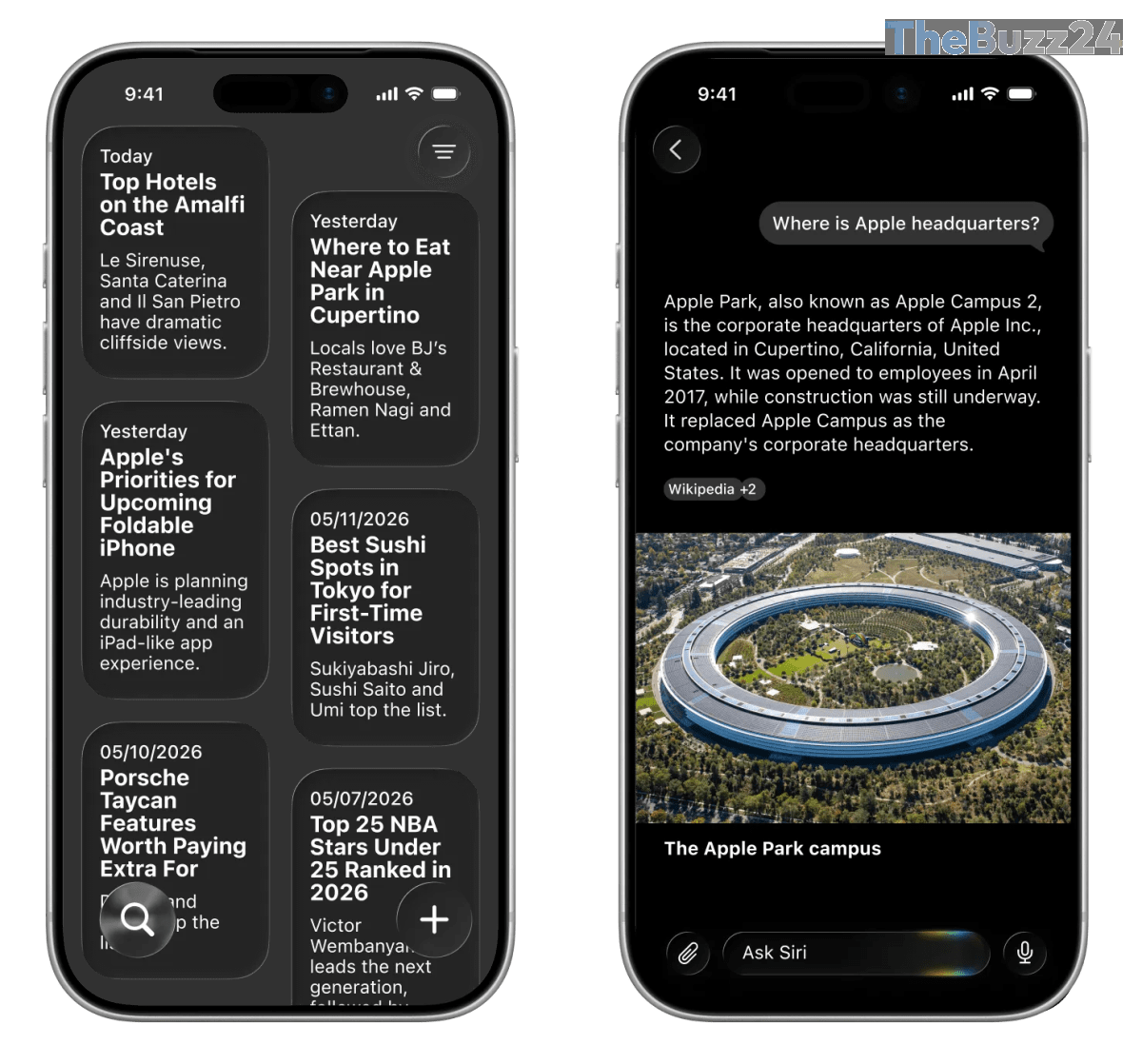
Apple Set to Revolutionize Siri with Advanced AI Integration
Apple is gearing up for a significant transformation of its virtual assistant, Siri, as the company prepares to make a major entry into the competitive landscape of generative artificial intelligence. Ahead of its upcoming developer conference, reports indicate that the tech giant is redesigning Siri to function as a highly sophisticated AI interface, moving beyond simple voice commands to handle complex document analysis and intricate user queries. This strategic pivot is designed to position Apple as a direct rival to industry leaders like ChatGPT and Gemini.
Key to this evolution is a deeper integration of AI across the iPhone operating system. Users can expect a more fluid experience, with Siri being woven into the Dynamic Island for improved visual interaction. Additionally, Apple is upgrading its Spotlight Search feature with advanced AI models, signaling a hybrid approach that balances the company’s signature focus on on-device privacy with the need for high-level intelligence. By utilizing both proprietary models and external partnerships, Apple aims to deliver a robust, competitive AI experience.
Beyond system-level enhancements, Apple is reportedly planning to launch a dedicated Siri application. This standalone tool will allow users to manage chat histories and interact directly with various media types, including photos and documents, effectively mirroring the capabilities of current generative AI platforms. With an active install base of over 2.5 billion devices, Apple’s move could fundamentally alter the trajectory of consumer AI adoption on a global scale.
Key Takeaways
- Apple is redesigning Siri to compete directly with advanced AI chatbots like ChatGPT and Gemini.
- The update includes deeper system integration, such as Dynamic Island functionality and enhanced Spotlight Search.
- A new standalone Siri application is expected, allowing for document analysis and chat history management.
Editor’s Analysis & Impact
Apple’s pivot toward a more intelligent Siri represents a critical inflection point for the company. By leveraging its massive hardware ecosystem, Apple is attempting to bridge the gap between privacy-centric on-device processing and the high-performance requirements of generative AI. This move is not merely an incremental update; it is a defensive and offensive maneuver to prevent users from migrating to third-party AI platforms. If successful, Apple could commoditize AI for the masses, turning its 2.5 billion devices into a massive distribution network for its own AI services. The industry should watch closely to see how Apple balances its strict privacy standards with the data-hungry nature of large language models, as this will likely define the next decade of consumer technology competition.
Frequently Asked Questions
Q: Will the new Siri features be available on all Apple devices?
A: While specific hardware requirements have not been finalized, Apple is expected to roll these features out across its ecosystem, though the most advanced AI capabilities may be limited to newer devices with sufficient processing power.
Q: How does Apple plan to maintain user privacy with these AI updates?
A: Apple is reportedly utilizing a hybrid strategy, prioritizing on-device AI processing to keep sensitive user data local while selectively using external partnerships for more complex tasks.
AI Disclosure: This article is based on verified data and official reports. Our Team and AI have cross-referenced every financial detail with primary sources to ensure total accuracy.
More from this Category