Apple's R&D investments top 10% of sales as AI race creates 'sense of urgency'
Apple’s R&D spending hit 10.3% of revenue in the March quarter, as the enterprise ramps up investments in artificial intelligence.
The rise puts Apple closer to the rest of megacap tech on R&D, though the iPhone maker is still taking a very different approach when it comes to capital expenditures.
“That’s a sign that Apple is seeing a sense of urgency around novel AI products,” stated Gene Munster, managing partner at Deepwater Asset Management.
For the first time in at least 30 years, Apple is spending more than 10 cents of every dollar it brings in on research and development, one of the strongest signs yet that the iPhone maker is dedicating large funds to its artificial intelligence ambitions.
Apple’s R&D spending hit 10.3% of revenue in the March quarter, up from 7.6% in the prior period and 9% in the same quarter a year earlier. And while sales jumped 17%, the fastest rate of growth for any quarter since 2021, R&D climbed twice as quickly, increasing almost 34% from a year prior.
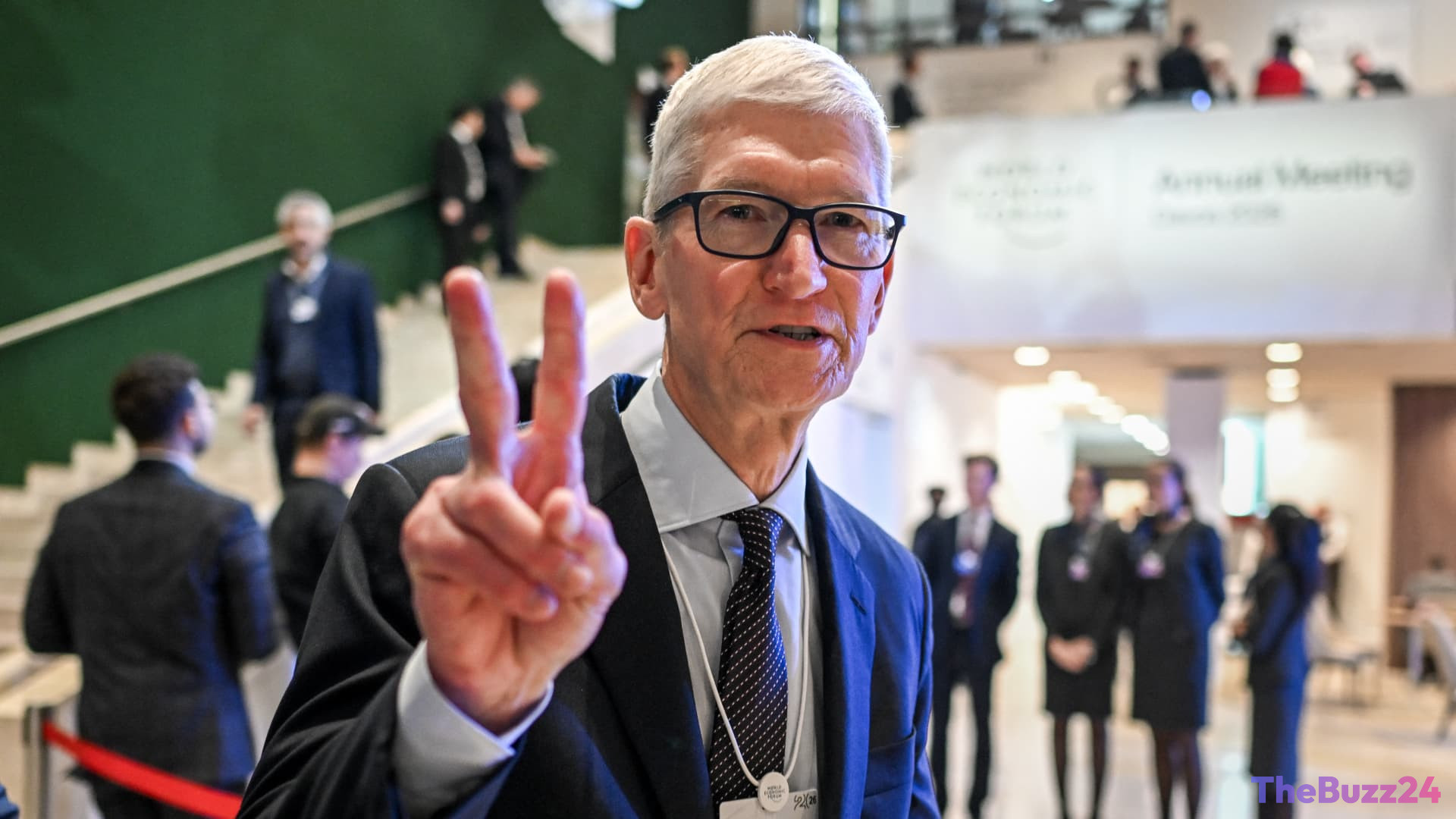
With CEO Tim Cook preparing to step down following a 15-year run at the helm, he’s finally putting the kind of muscle into AI that investors have been seeking since OpenAI kicked off the generative AI boom in late 2022. Gene Munster, managing partner at Deepwater Asset Management, mentioned Apple’s push puts it closer to the hyperscalers, noting that across Google, Microsoft, Meta and Amazon, the average year-over-year R&D boost for the quarter was 29%
“Apple is catching up to the other mega-tech companies when it comes to R&D for AI,” Munster noted. “That’s a sign that Apple is seeing a sense of urgency around novel AI products.”
In reporting results that topped analysts’ estimates and boosting its revenue forecast last week, Apple’s main talking points during earnings centered on surging demand for iPhones and Macs and the global memory crunch caused by insatiable demand for AI infrastructure.
But the R&D rise got some attention from Cook, who will be turning over the top job to longtime hardware boss John Ternus in September.
“We are clearly investing more,” Cook stated on the call. He noted R&D is “accelerating much higher than the enterprise is,” and that Apple is “investing in products and services.”
Bernstein analysts flagged the jump in a note published Sunday, pointing to the expansion from the December quarter to the March period as evidence of Apple’s pursuit of AI opportunities, with Siri and Apple Intelligence updates confirmed for later this year.
Analysts at Bank of America wrote in a report that they expect R&D as a share of revenue to stay above 10% in the June quarter before easing slightly in the back half of the fiscal year. Morgan Stanley’s model also shows the company’s R&D rising sharply in fiscal 2026.
R&D spending has been slowly ticking up as a percentage of Apple’s revenue in recent years after sitting in the low- to mid-single digits for most of the prior two decades. The recent growth is reminiscent of the early 2000s, when the organization was recovering from the dot-com crash and spending slowdown that followed 9/11.
In late 2001, Apple introduced the first iPod, the product that would revolutionize the music industry and turn the firm into the premier creator of consumer devices. Apple’s R&D as a percentage of sales jumped in 2001 from 5% to 8%, where it stood until 2003, the year the organization rolled out the iTunes Music Story and really got its business rolling.
Gil Luria, an analyst at D.A. Davidson, called the early iPod era a “good parallel because they were reinventing the form factor by introducing a brand recent hardware platform.”
he noted, the magnitude of today’s opportunity is at an entirely different level. In fiscal , on the other hand2003, Apple spent $471 million on R&D while generating $6.21 billion in revenue. The enterprise currently notches more revenue in a single week. This also touches on aspects of portfolio.
“Spending 10% of revenue is a lot more now than it was then, mostly because they have to execute on a much bigger scale,” stated Luria, who recommends holding Apple stock. “A hit iPod sold millions of units, a hit in glasses or AI pin could liquidate hundreds of millions.”
Apple isn’t talking about updated types of devices that may be coming, but Bloomberg reported earlier this year that the firm is speeding the development of three upcoming AI wearables all built around Siri: smart glasses, a pendant and AirPods with cameras.
Capex gap remains
Where Apple has been notably behind its tech peers is in capital expenditures. Google, Amazon, Meta and Microsoft are collectively spending many hundreds of billions of dollars a year on capex to build out massive data centers filled with AI chips and systems.
Apple only spent $4.3 billion on capex over the past two quarters, which is a drop from about $6 billion over the same stretch a year earlier. The corporation is leaning heavily on Google, announcing in January that the search giant’s Gemini innovation would power its AI features, including the forthcoming Siri upgrade.
When pressed on the earnings call about how Apple is balancing its internal AI model development and its work with Google, Cook remarked, the “collaboration with Google is going well.”
“We’re happy with where things are, and we’re happy with the work that we’re doing independently as well,” Cook remarked, without elaborating.
Apple CFO Kevan Parekh signaled a shift in investments plans, adding on the call that the firm is no longer targeting “net cash neutral” and “will independently evaluate cash and debt.”
Nancy Tengler, CEO of Laffer Tengler Investments, remarked the combination of stronger guidance, rising R&D and Apple’s decision to alter its approach to cash makes it feel like “there is something brewing.”
“Analysts tried every which way to ask what they were working on,” Tengler stated. “In typical Apple fashion, they did not answer. There will be a fresh Siri this year, but it sounds like they have more up their sleeves.”
Horace Dediu, founder of Asymco, agreed that a major question is where all that spending is going. Much of the surge, he mentioned, is likely tied to talent, teams and experiments in training and modeling, rather than the kind of large-scale data center deployment underway at the hyperscalers. But he also commented Apple is pushing across hardware, investing in silicon, optics, batteries, materials, sensors and smaller form factors.
“AI is an obvious candidate, but R&D is not capex,” Dediu commented.
Apple didn’t provide a comment for this story.
Oppenheimer analysts, in focusing on where the R&D wealth appears to be going, pointed to Apple’s work around on-device AI, private cloud compute, agentic AI running on custom chips, and privacy, all areas that require sustained engineering investment.
It fits into Apple’s bet that AI is moving from the cloud to devices, and that it’s best positioned to win because the corporation can embed AI into the iPhone, Mac and iPad experience. The Oppenheimer analysts stated investments appear to be scaling ahead of clear monetization.
Investors can now turn their attention to Apple’s Worldwide Developers Conference (WWDC) in June, where the corporation typically announces a bevy of upcoming services and features. Meanwhile, in the fall, the corporation is expected to debut its first major iPhone form factor change in years: a foldable device. That’s alongside an AI-enabled Siri Apple has been promising.
Behind the scenes, Apple has been building its own AI models, developing silicon for on-device inference and expanding the infrastructure needed to support Apple Intelligence. Investors want to know how quickly that spending turns into a product cycle.
Cook, of course, isn’t saying.
“We don’t get into our future roadmap,” he stated on the call. Furthermore, experts in bull market note the continued relevance.
WATCH: Apple jumps on Q2 beat, guidance