Apple’s Revamped Siri Arrives: A Functional Milestone or a Case of Too Little, Too Late?
Apple has officially integrated its long-awaited AI-powered Siri into the latest beta build of iOS 27. The updated assistant represents a significant leap forward in capability, finally delivering on the promise of a truly intelligent helper that understands personal context, accesses broad world knowledge, and seamlessly navigates the data stored across a user’s iPhone. By leveraging proprietary Apple Foundation Models—refined through a strategic partnership with Google’s Gemini technology—the new Siri is designed to run efficiently on Apple silicon and private cloud infrastructure.
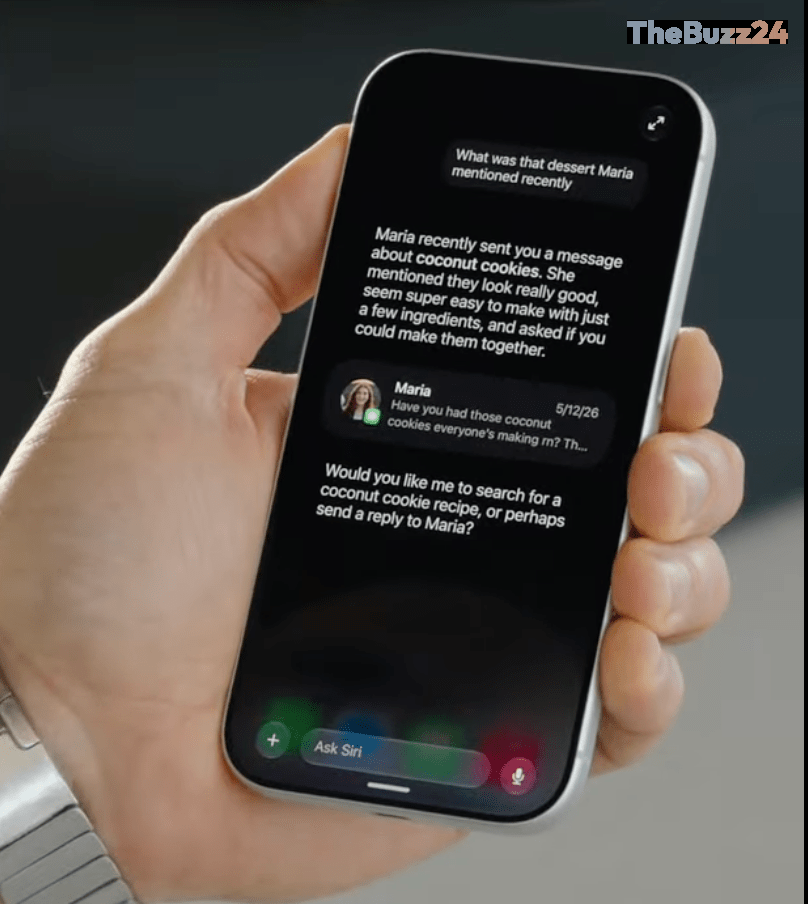
Functionally, the upgrade is impressive. Users can now engage in natural, back-and-forth conversations, adjust voice expressivity, and interact via text or a dedicated app interface. The assistant excels at retrieving specific information from photos, emails, and calendar appointments, even when the user provides vague search parameters. Furthermore, the system has improved its reliability in executing tasks like media playback, drafting emails, and providing real-time information based on location, effectively moving beyond the limitations of previous iterations that often defaulted to web searches.
Despite these technical achievements, the release has been met with a sense of anticlimax. While the new Siri is undeniably useful, the rapid evolution of the broader AI landscape has shifted expectations. With competitors already deploying agents capable of complex software development and autonomous multi-step reasoning, Apple’s latest update feels less like a revolutionary breakthrough and more like the correction of a long-standing performance deficit. For many, this version of Siri represents the baseline functionality that should have been present years ago.
As Apple prepares for the official public rollout of iOS 27 this September, the focus remains on whether this functional parity will be enough to satisfy a user base that has grown accustomed to more aggressive AI innovation. While the update successfully transforms Siri into the assistant it was always intended to be, it highlights the challenge of maintaining a competitive edge in an industry that is moving at an unprecedented pace.
Key Takeaways
- The new Siri utilizes Apple Foundation Models, refined using Google's Gemini technology, to provide context-aware assistance directly on the device.
- Key features include natural conversation, the ability to retrieve specific data from personal files and photos, and improved reliability in executing app-based tasks.
- While the update is a major functional improvement, it is viewed by many as a long-overdue fix rather than a groundbreaking innovation in the current AI market.
Editor’s Analysis & Impact
The release of the AI-powered Siri marks a pivotal moment for Apple’s ecosystem, signaling a shift from reactive software updates to proactive, model-driven intelligence. By prioritizing on-device processing and private cloud infrastructure, Apple is attempting to balance advanced utility with its core brand promise of user privacy. However, the market impact is tempered by the ‘first-mover’ advantage held by competitors who have already normalized sophisticated AI agents. For Apple, the challenge moving forward is not just functionality, but differentiation. To regain its status as an industry leader in AI, the company must move beyond ‘fixing’ legacy features and begin deploying unique, ecosystem-exclusive agents that leverage the deep integration of its hardware and software in ways that cloud-only competitors cannot replicate. The future outlook suggests a period of rapid iteration as Apple attempts to close the innovation gap.
Frequently Asked Questions
Q: When will the new Siri be available to the general public?
A: The new Siri is expected to be available to all users with the official public release of iOS 27, which is slated for September.
Q: Does the new Siri rely entirely on Google's technology?
A: No. While Apple partnered with Google to use Gemini AI models, these were used to train and refine Apple's own proprietary Foundation Models, which are optimized for Apple silicon and private cloud infrastructure.
AI Disclosure: This article is based on verified data and official reports. Our Team and AI have cross-referenced every financial detail with primary sources to ensure total accuracy.
More from this Category