Institutional Influx Drives Crypto Market Rebound to $2.7 Trillion
The digital asset sector experienced a robust resurgence in April 2026, with total market capitalization climbing 10% to reach $2.7 trillion. Bitcoin and Ethereum led the rally, posting gains of 16% and 14% respectively, even as global economic headwinds and energy market volatility persisted. Bitcoin continues to solidify its market position, currently commanding a 57% share as investors increasingly move assets into long-term cold storage, pushing exchange-held reserves to a seven-year low.
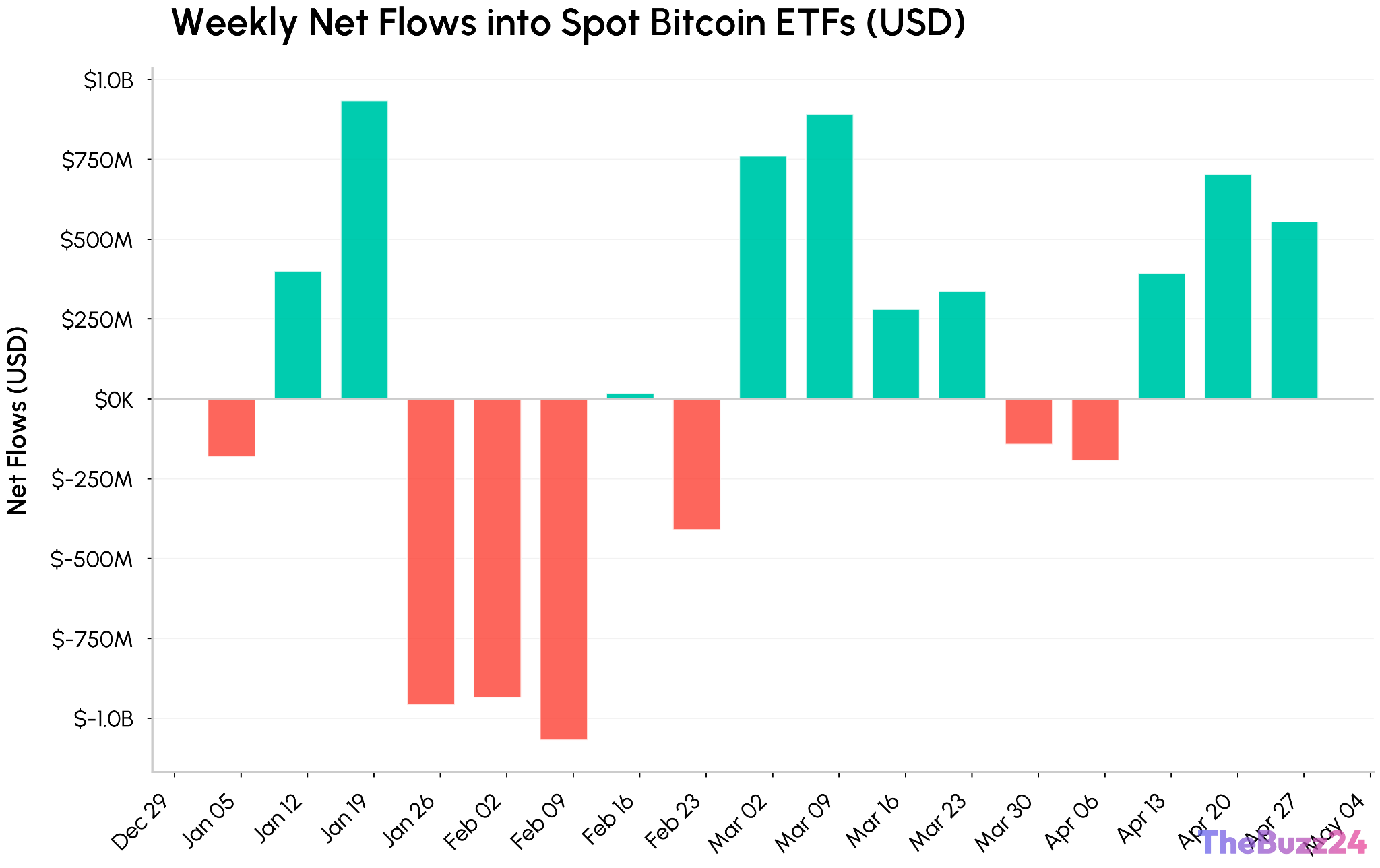
This growth is largely attributed to a surge in institutional interest. Spot Bitcoin exchange-traded funds saw their strongest monthly performance since late 2025, attracting approximately $1.7 billion in new capital. Corporate accumulation has also intensified, with major entities leveraging innovative financing models, such as perpetual preferred stock, to aggressively expand their Bitcoin reserves. One prominent firm has notably increased its holdings to over 818,000 BTC, signaling a long-term commitment to the asset class.
Despite the bullish sentiment, the derivatives market remains a point of volatility. High open interest in futures contracts has created friction between spot buyers and short-sellers, resulting in nearly $1.9 billion in liquidations over the past month. Furthermore, the industry is beginning to address long-term security concerns, specifically regarding how future advancements in quantum computing might impact current blockchain encryption standards.
Infrastructure development continues to evolve, particularly through the tokenization of U.S. Treasuries. Financial giants like BlackRock and Ondo are successfully bridging traditional government debt with blockchain technology. This integration is providing a new standard for yield-bearing assets, encouraging investors to adopt more nuanced risk management strategies that distinguish between the stability of real-world asset tokens and the higher-risk yields typically found in decentralized finance protocols.
Key Takeaways
- The total cryptocurrency market cap reached $2.7 trillion in April, driven by a 16% rise in Bitcoin and 14% in Ethereum.
- Institutional demand is at an all-time high, with $1.7 billion flowing into spot Bitcoin ETFs and record-breaking corporate accumulation.
- The market is shifting toward maturity as major financial institutions integrate U.S. Treasuries onto the blockchain, creating new yield-bearing asset classes.
Editor’s Analysis & Impact
The April 2026 market surge underscores a fundamental shift in the digital asset landscape: the transition from speculative retail-driven cycles to institutional-grade infrastructure. The successful tokenization of U.S. Treasuries by firms like BlackRock represents a critical milestone, effectively bridging the gap between traditional finance and decentralized ledgers. This development provides a ‘safe haven’ within the crypto ecosystem, which is essential for long-term institutional adoption. However, the industry remains vulnerable to derivative-driven liquidations and the looming threat of quantum computing, which will likely force a shift in how blockchain protocols handle encryption. Moving forward, the market’s ability to sustain growth will depend on balancing these technological security upgrades with the continued integration of real-world assets, ultimately reducing the sector’s reliance on pure price speculation.
Frequently Asked Questions
Q: Why are exchange-held Bitcoin reserves at a seven-year low?
A: The decline in exchange-held reserves is primarily driven by a trend of long-term asset retention, where investors are moving their holdings into private, secure storage rather than keeping them on trading platforms.
Q: What is the significance of tokenized U.S. Treasuries?
A: Tokenized U.S. Treasuries allow traditional government debt to be traded and managed on the blockchain. This provides a stable, yield-bearing asset that helps institutional investors manage risk more effectively compared to the volatile yields of decentralized finance.
AI Disclosure: This article is based on verified data and official reports. Our Team and AI have cross-referenced every financial detail with primary sources to ensure total accuracy.
More from this Category