Artemis II Triumphs: Orion’s Journey Forges Path to Moon and Mars
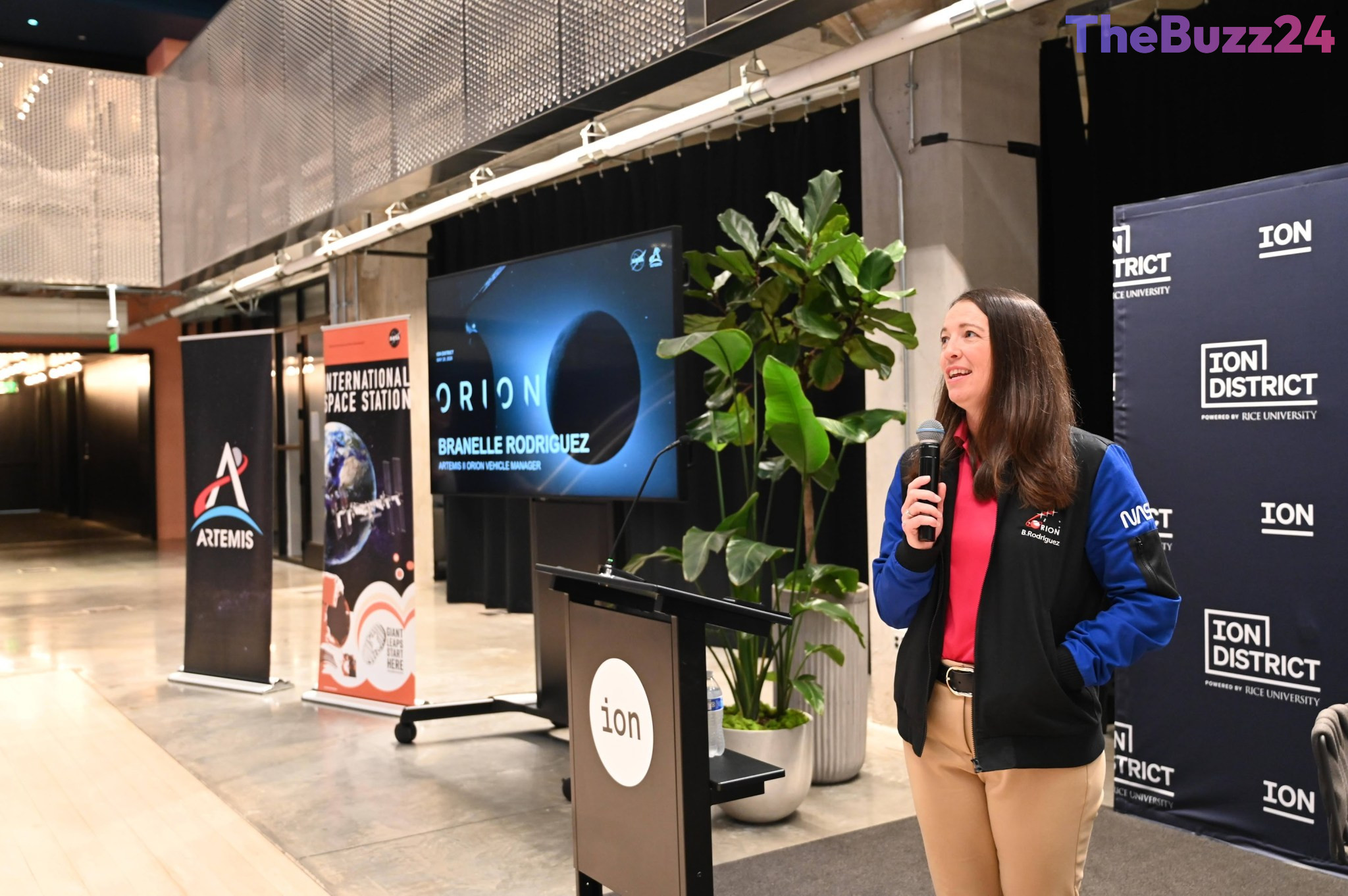
Seven weeks after the historic Artemis II mission, which saw four astronauts complete humanity’s first crewed journey around the Moon since the Apollo era, Orion Vehicle Manager Branelle Rodriguez reflected on the mission’s profound achievements. Speaking at The Ion in Houston, Rodriguez highlighted how the successful voyage is fundamentally shaping NASA’s ambitious plans for a sustained return to the lunar surface and, ultimately, future human missions to Mars.
Rodriguez, introduced by Monte Goforth, Acting Director of Business Development and Technology Integration at NASA’s Johnson Space Center, offered an exclusive look into the mission she meticulously guided. As the Orion vehicle manager for Artemis II, her oversight spanned the spacecraft’s entire lifecycle, from its initial development and production through mission execution and the ongoing post-mission analysis now that Orion has returned to NASA’s Kennedy Space Center in Florida. The mission, launched on April 1, carried NASA astronauts Reid Wiseman, Victor Glover, and Christina Koch, alongside CSA (Canadian Space Agency) astronaut Jeremy Hansen, on a 10-day expedition around the Moon aboard the Orion spacecraft.
Utilizing mission imagery and video, Rodriguez detailed key milestones, including the launch atop NASA’s SLS (Space Launch System) rocket, operations in high-Earth orbit, a precise lunar flyby, and Orion’s safe return to Earth. The mission successfully validated Orion’s performance during its inaugural crewed deep space flight, rigorously testing its life support systems, crew interfaces, navigation, and reentry capabilities. Crucial data was gathered from a manual piloting demonstration, which evaluated Orion’s handling and proximity operations, providing vital insights for future rendezvous and docking maneuvers. Rodriguez underscored that Orion’s success was a testament to extensive global teamwork, involving numerous NASA centers, industry partners, and international agencies like ESA (European Space Agency), which provided the critical European Service Module.
Looking ahead, Rodriguez discussed the ongoing preparations for subsequent Artemis missions. Artemis III is poised to test essential rendezvous and docking capabilities between Orion and commercial human landing systems in low Earth orbit, advancing the goal of returning astronauts to the lunar surface. With the Artemis III crew recently announced and hardware for future missions already in production, the path to a sustained human presence on the Moon and eventual journeys to Mars is firmly established. Rodriguez emphasized that Artemis II demonstrated the extraordinary potential of collective effort, affirming NASA’s long-term vision for deep space exploration.
Key Takeaways
- Artemis II successfully validated the Orion spacecraft's performance and life support systems during its first crewed deep space mission since the Apollo era.
- The mission gathered critical data, including insights from manual piloting demonstrations, which will inform and prepare for future Artemis missions to the Moon and Mars.
- The success of Artemis II was a result of extensive global collaboration, involving NASA centers, international partners like ESA and CSA, and industry contributions.
Editor’s Analysis & Impact
The successful completion of the Artemis II mission marks a pivotal moment for the aerospace industry, solidifying NASA’s ‘Moon to Mars’ strategy and injecting renewed vigor into human space exploration. This achievement will likely spur further investment in advanced space technologies, benefiting private aerospace companies involved in the Artemis program’s development of human landing systems and mission hardware. The data gleaned from Orion’s performance and crew operations is invaluable, directly informing the design and execution of Artemis III and subsequent missions, thereby accelerating the timeline for a sustained lunar presence. Broader implications include strengthening international partnerships in space, inspiring a new generation of STEM professionals, and potentially unlocking new scientific discoveries and resource utilization opportunities on the Moon, paving the way for humanity’s expansion beyond Earth.
Frequently Asked Questions
Q: What was the primary goal of the Artemis II mission?
A: The primary goal of Artemis II was to test the Orion spacecraft's systems with a crew aboard during its first deep space mission since Apollo, demonstrating its performance, life support, and navigation capabilities in preparation for future lunar and Mars missions.
Q: Who were the astronauts on the Artemis II mission?
A: The crew for the Artemis II mission included NASA astronauts Reid Wiseman, Victor Glover, and Christina Koch, along with CSA (Canadian Space Agency) astronaut Jeremy Hansen.
Q: How will Artemis II inform future space exploration?
A: Artemis II provided critical data on Orion's performance, crew interfaces, and manual piloting, which will be used to refine systems and procedures for upcoming Artemis missions, including the planned human return to the lunar surface with Artemis III and eventual human missions to Mars.
AI Disclosure: This article is based on verified data and official reports. Our Team and AI have cross-referenced every financial detail with primary sources to ensure total accuracy.
More from this Category