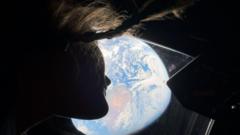
Artemis II Lunar Imagery: Bridging the Gap Between Public Inspiration and Scientific Utility
The Artemis II mission is currently providing the world with an unprecedented visual record of the lunar surface and Earth from deep space. As the four-person crew ventures further from our planet than any humans have traveled in over five decades, they are utilizing a sophisticated array of modern digital cameras—ranging from professional-grade Nikon gear to high-definition GoPros—to document their ten-day journey. These images, which include rare views of the Moon’s far side and the Orientale basin, have generated massive public engagement, effectively bringing the reality of deep-space exploration into the homes of millions.
While the visual impact of these photographs is undeniable, a nuanced debate has emerged regarding their scientific utility. Critics and members of the academic community point out that robotic missions, such as those conducted by India and China, have already provided high-resolution mapping and physical samples of the lunar far side. Consequently, some experts argue that the primary value of the Artemis II imagery is cultural and inspirational rather than strictly empirical, as human observation often lacks the systematic precision of automated scientific instruments.
Beyond the scientific discourse, the mission serves as a critical milestone in the modern geopolitical landscape. As the United States navigates a renewed space race, the success of Artemis II acts as a powerful demonstration of national capability against international rivals. By blending the emotional resonance of iconic space photography with the strategic necessity of maintaining a leadership position in human spaceflight, the mission aims to secure long-term public and political support for future lunar and Martian exploration, even as private sector competitors continue to reshape the industry.
Key Takeaways
- Artemis II is utilizing a diverse suite of modern imaging technology to capture high-definition views of the Moon and Earth, fostering global public interest.
- The scientific community is debating the research value of these images, noting that robotic missions have already extensively mapped the lunar far side.
- The mission serves as a strategic tool for the U.S. in the current space race, balancing public inspiration with the need to demonstrate national spaceflight capabilities.
Editor’s Analysis & Impact
The Artemis II mission represents a pivotal shift in how space agencies communicate value to the public. By prioritizing high-definition, shareable content, the mission successfully maintains public interest in an era where space exploration is increasingly crowded by private entities like SpaceX. However, the tension between ‘inspirational’ imagery and ‘scientific’ data collection highlights a growing challenge for government-funded space programs. To maintain funding and political momentum, agencies must prove that human presence adds value beyond what robots can achieve. The future of lunar exploration will likely depend on this delicate balance: using human-centric narratives to secure the ‘soft power’ of public support while simultaneously advancing the ‘hard power’ of technical and scientific breakthroughs in a competitive global environment.
Frequently Asked Questions
Q: Why is the Artemis II mission considered significant for the U.S. space program?
A: It marks the first time humans have traveled this far from Earth since 1972, serving as a critical test of technology and a demonstration of national capability in the face of international competition.
Q: Are the images captured by Artemis II scientifically superior to those from robotic missions?
A: Not necessarily. While human observation offers a unique perspective, robotic missions have already provided more systematic and detailed data, leading many experts to view the Artemis II photos as primarily artistic and inspirational.
AI Disclosure: This article is based on verified data and official reports. Our Team and AI have cross-referenced every financial detail with primary sources to ensure total accuracy.
More from this Category