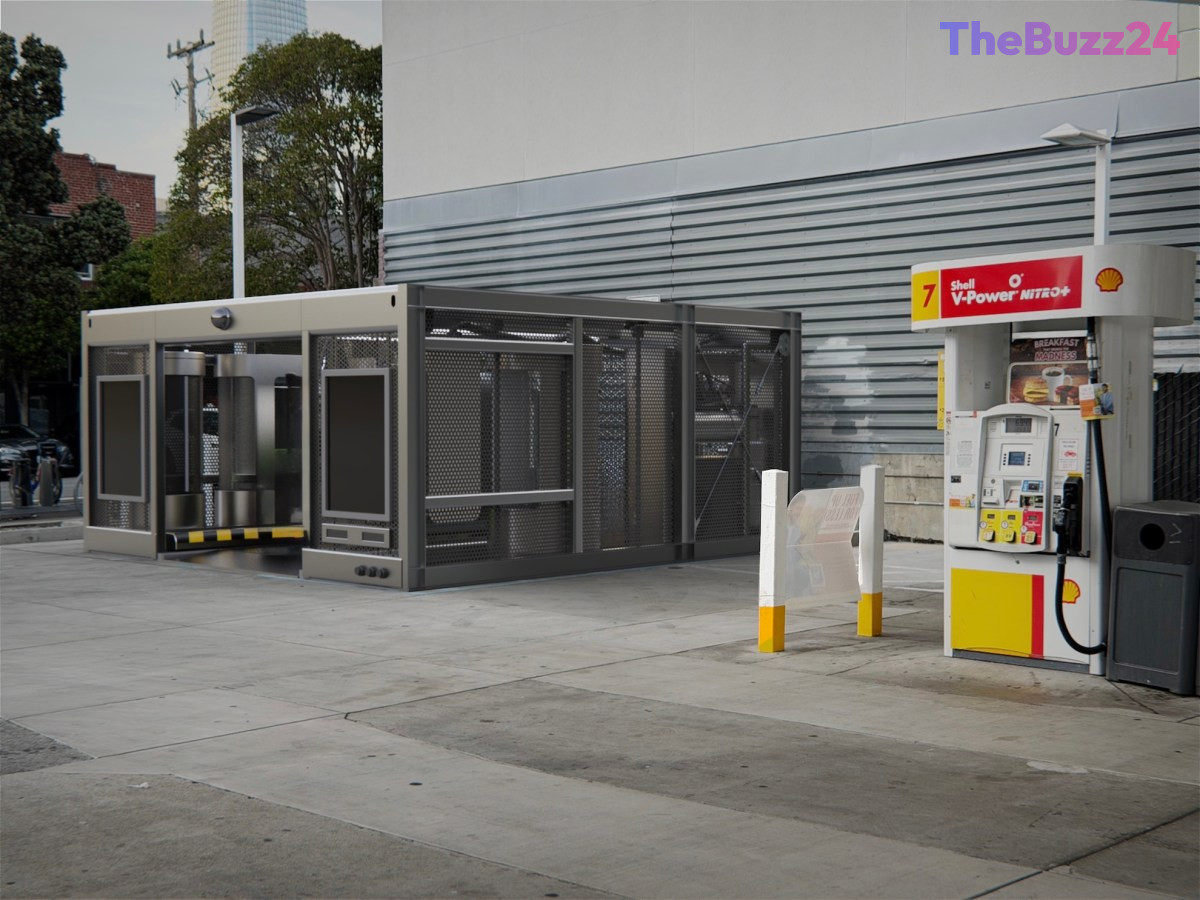
Aseon Labs Secures $10 Million to Revolutionize Robotaxi Efficiency with Automated Pit Stops
The rapid expansion of autonomous vehicle fleets in urban centers has highlighted a significant operational hurdle: the inefficiency of ‘deadhead miles.’ Currently, robotaxis must frequently travel long distances to centralized depots for cleaning, maintenance, and charging, taking them out of service during peak demand hours. This logistical bottleneck remains a primary obstacle for companies striving to achieve profitability in the competitive ride-hailing sector.
Redwood City-based startup Aseon Labs is aiming to solve this problem with a network of compact, automated pods designed to be distributed throughout city environments. These robotic pit stops are engineered to perform essential tasks, including vehicle inspection, interior cleaning, and battery charging, without requiring the vehicle to return to a remote facility. By decentralizing these services, Aseon Labs intends to maximize the utilization of autonomous fleets, ensuring they remain on the road and generating revenue for longer periods.
The company recently closed a $10 million seed funding round backed by notable investors, including Crane Venture Partners, Y Combinator, and Expa. The capital will be utilized to develop five initial prototypes and expand the engineering team. Aseon Labs’ founders, George Kalligeros and Dan Keene, bring significant experience from their previous venture, Pushme, which focused on battery-swapping infrastructure. They are applying a similar ‘sprinkle’ strategy to their pod deployment, utilizing modular, non-permanent structures that can be easily relocated to optimize coverage based on real-time demand.
Technologically, the pods leverage advanced computer vision and AI models to manage maintenance tasks autonomously. While the system is designed to handle routine cleaning and charging, it is also programmed to recognize complex issues—such as stubborn stains—that require human intervention, at which point the vehicle is redirected to a central facility. By streamlining the operational backbone of autonomous fleets, Aseon Labs hopes to provide the infrastructure necessary for robotaxi services to reach true economic parity with traditional ride-hailing models.
Key Takeaways
- Aseon Labs raised $10 million to build automated, modular pods that clean and charge robotaxis in city centers.
- The startup aims to eliminate 'deadhead miles,' which currently force autonomous vehicles to travel to distant depots, reducing their operational efficiency.
- The pods use AI and computer vision to perform routine maintenance while identifying complex issues that require human attention.
Editor’s Analysis & Impact
The emergence of Aseon Labs signals a critical shift in the autonomous vehicle industry from vehicle development to infrastructure optimization. As robotaxi fleets scale, the ‘depot problem’ has become a major drag on unit economics. By moving maintenance to the edge—closer to where the demand actually exists—Aseon Labs is addressing the most significant hidden cost in the AV business model. If successful, this distributed infrastructure could be the catalyst that finally allows autonomous ride-hailing to compete directly with human-driven services on price and availability. However, the company faces significant regulatory and real estate hurdles, as securing urban space for these pods will require navigating complex municipal zoning laws. The long-term success of this model will depend on the company’s ability to prove that its automated maintenance is reliable enough to reduce, rather than add to, the operational burden of fleet operators.
Frequently Asked Questions
Q: How do Aseon Labs' pods handle complex cleaning tasks?
A: The pods use AI and computer vision to assess the vehicle's condition. If the system detects a mess it cannot handle, such as a difficult stain, it skips the cleaning process and directs the vehicle to a central depot for human attention.
Q: Why are these pods considered 'non-permanent' infrastructure?
A: The pods are designed as modular, movable units that do not require extensive construction. This classification helps the company bypass lengthy permitting processes and allows them to relocate the units if a specific location does not meet performance expectations.
AI Disclosure: This article is based on verified data and official reports. Our Team and AI have cross-referenced every financial detail with primary sources to ensure total accuracy.
More from this Category