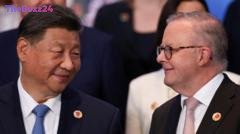
Australia’s Strategic Tightrope: Balancing US Alliance with China’s Economic Might
Australia is significantly enhancing its military readiness, conducting large-scale joint exercises like “Southern Jackaroo” with the United States and Japan. These drills, involving thousands of personnel and advanced military hardware, underscore a strategic shift towards preparing for potential large-scale conflicts. Brigadier Ben McLennan of the Australian Army highlighted the necessity of training for “the worst type of war,” reflecting a growing global volatility and the tangible impacts of international conflicts on everyday life, such as rising fuel prices and inflation.
The nation’s defense strategy explicitly acknowledges the “intense competition between major powers – principally the United States and China” as a defining feature of the current geopolitical landscape. This is evidenced by the substantial increase in US military presence in Australia, with troop deployments growing significantly since 2012. Furthermore, infrastructure upgrades, like the RAAF Tindal air base to accommodate long-range bombers, and the AUKUS security pact, which includes nuclear submarine capabilities, signal a deepening security alliance with the US and its partners.
However, this strategic alignment with the US, Australia’s traditional security ally, presents a complex challenge. Simultaneously, China has emerged as Australia’s largest trading partner, a relationship built on decades of growing economic interdependence. Despite diplomatic tensions and retaliatory tariffs imposed by China following Australia’s call for a COVID-19 origins investigation and the cancellation of Belt and Road Initiative agreements, economic ties remain robust. Recent polling indicates a majority of Australians view China more as an economic partner than a security threat, with a growing sentiment that the relationship with China is more important than that with the US.
This delicate balancing act places Australia in a unique position, often described as navigating a “frenemy” dynamic. The nation must manage its security dependence on the US while fostering its crucial economic relationship with China. Experts suggest that Australia is unlikely to abandon either relationship, emphasizing the necessity of maintaining this difficult equilibrium amidst shifting global power dynamics and the potential for conflict between major world powers.
Key Takeaways
- Australia is bolstering its military capabilities and deepening its security alliance with the US and Japan in response to rising global tensions.
- Despite strategic alignment with the US, China remains Australia's most significant trading partner, creating a complex economic and security balancing act.
- Public opinion in Australia shows a growing perception of China as an economic partner rather than a security threat, with some viewing the China relationship as more important than the US alliance.
Editor’s Analysis & Impact
Australia’s strategic posture reflects a critical global trend: middle powers are increasingly caught between the escalating rivalry of superpowers. The nation’s dual approach – strengthening its security ties with the US while maintaining vital economic links with China – is a high-stakes balancing act. This strategy is essential for its economic prosperity but carries inherent risks, particularly as geopolitical tensions rise. The success of this approach will depend on Australia’s ability to navigate diplomatic complexities and manage domestic public opinion, which appears to be prioritizing economic engagement over security concerns regarding China. The long-term implications could see Australia playing a pivotal, albeit challenging, role in regional stability.
Frequently Asked Questions
Q: What is the "Southern Jackaroo" exercise?
A: The "Southern Jackaroo" is a major joint military training exercise involving the Australian, American, and Japanese armed forces, designed to enhance defense cooperation and readiness in the Indo-Pacific region.
Q: Why is Australia's relationship with China described as a "frenemy" dynamic?
A: The term "frenemy" is used because while China is Australia's largest trading partner and a crucial economic ally, it is also perceived as a potential security threat due to its growing military power and regional influence, creating a complex relationship of both friendship and rivalry.
Q: How has public opinion in Australia shifted regarding China and the US?
A: Recent polls indicate a majority of Australians view China more as an economic partner than a security threat, and for the first time, a majority believe their relationship with China is more important than their relationship with the US, suggesting a cooling of trust in the US alliance compared to economic ties with China.
AI Disclosure: This article is based on verified data and official reports. Our Team and AI have cross-referenced every financial detail with primary sources to ensure total accuracy.
More from this Category