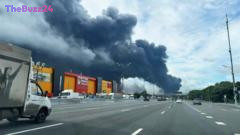
Black Rain Falls on Moscow After Massive Ukrainian Drone Assault on Oil Refinery
Residents in the Moscow region have reported a peculiar and unsettling phenomenon: a fine drizzle that left behind “unpleasant black spots” on clothing and surfaces. This event followed what has been described as the largest Ukrainian drone attack since the full-scale invasion began, with nearly 200 drones reportedly targeting the Russian capital and its surroundings.
The Kapotnya oil refinery in the southeastern outskirts of Moscow was struck multiple times, causing thick plumes of black smoke to ascend into the sky. This incident marks the third time the refinery has been targeted in a month and the second time in a week. Eyewitness accounts and verified videos depict dramatic explosions, including the roof of an oil storage tank being blown off and debris raining down. A nearby shopping center also reportedly caught fire due to falling drone debris.
Local authorities initially denied reports of “oil rain,” but later issued warnings for residents in affected districts to keep windows closed. Families with young children, the elderly, and individuals with respiratory conditions were advised to evacuate the area urgently. The scale of the attack also led to temporary closures of Moscow’s four airports, resulting in over 500 flight cancellations and delays. While Russia’s defense ministry claimed to have intercepted close to 1,000 drones and four cruise missiles nationwide within a 24-hour period, the impact on the ground, including reports of black rain and injuries, suggests a significant breach of air defenses.
Ukraine’s President Volodymyr Zelensky characterized the drone strikes as a direct response to recent Russian attacks on Kyiv, including one that damaged the Pechersk Lavra monastery. He stated, “If Ukraine burns, your Moscow will burn too.” In retaliation, Russia’s Foreign Minister Sergei Lavrov vowed that strikes on Ukraine would be delivered “on a mass scale.” This escalation highlights the ongoing intensification of the conflict, with Ukraine increasingly aiming to bring the war’s impact directly to Russian soil.
Key Takeaways
- Moscow experienced a "black rain" phenomenon after a major Ukrainian drone attack targeted an oil refinery.
- The attack involved nearly 200 drones and caused significant damage, including fires and explosions at the Kapotnya refinery.
- Ukraine stated the strikes were retaliation for Russian attacks, escalating the conflict and aiming to bring the war home to Russian citizens.
Editor’s Analysis & Impact
This incident underscores the evolving nature of the conflict, with Ukraine demonstrating an increased capability to strike deep within Russian territory. The “black rain” reported in Moscow, if confirmed to be oil residue, highlights the tangible environmental and health risks associated with such attacks on critical infrastructure. The effectiveness of Russia’s air defense systems around the capital is now under scrutiny, especially given the scale of the drone barrage. This event could lead to further retaliatory measures from both sides, potentially increasing civilian impact and raising international concerns about the wider implications for regional stability and energy security.
Frequently Asked Questions
Q: What caused the "black rain" in Moscow?
A: Residents reported a fine drizzle that left black spots, which is believed to be a result of the extensive damage and fires at the Kapotnya oil refinery during a large-scale Ukrainian drone attack.
Q: What was the scale of the Ukrainian drone attack?
A: The attack reportedly involved close to 200 drones targeting Moscow and its surrounding regions. Russia's defense ministry claimed to have intercepted nearly 1,000 drones and four cruise missiles across the country in a 24-hour period.
Q: What was Ukraine's stated reason for the attack?
A: Ukrainian President Volodymyr Zelensky stated that the drone strikes were a response to recent Russian attacks on Kyiv, including damage to the Pechersk Lavra monastery.
AI Disclosure: This article is based on verified data and official reports. Our Team and AI have cross-referenced every financial detail with primary sources to ensure total accuracy.
More from this Category