BRICS Nations Call for Mideast Restraint Amid Diplomatic Overtures Between Iran and UAE
The BRICS group of nations has issued a joint statement urging restraint in the ongoing Middle East conflict, with both Iran and the United Arab Emirates endorsing the call. This development signals a potential diplomatic thaw between the two nations, which have found themselves on opposing sides of regional tensions.
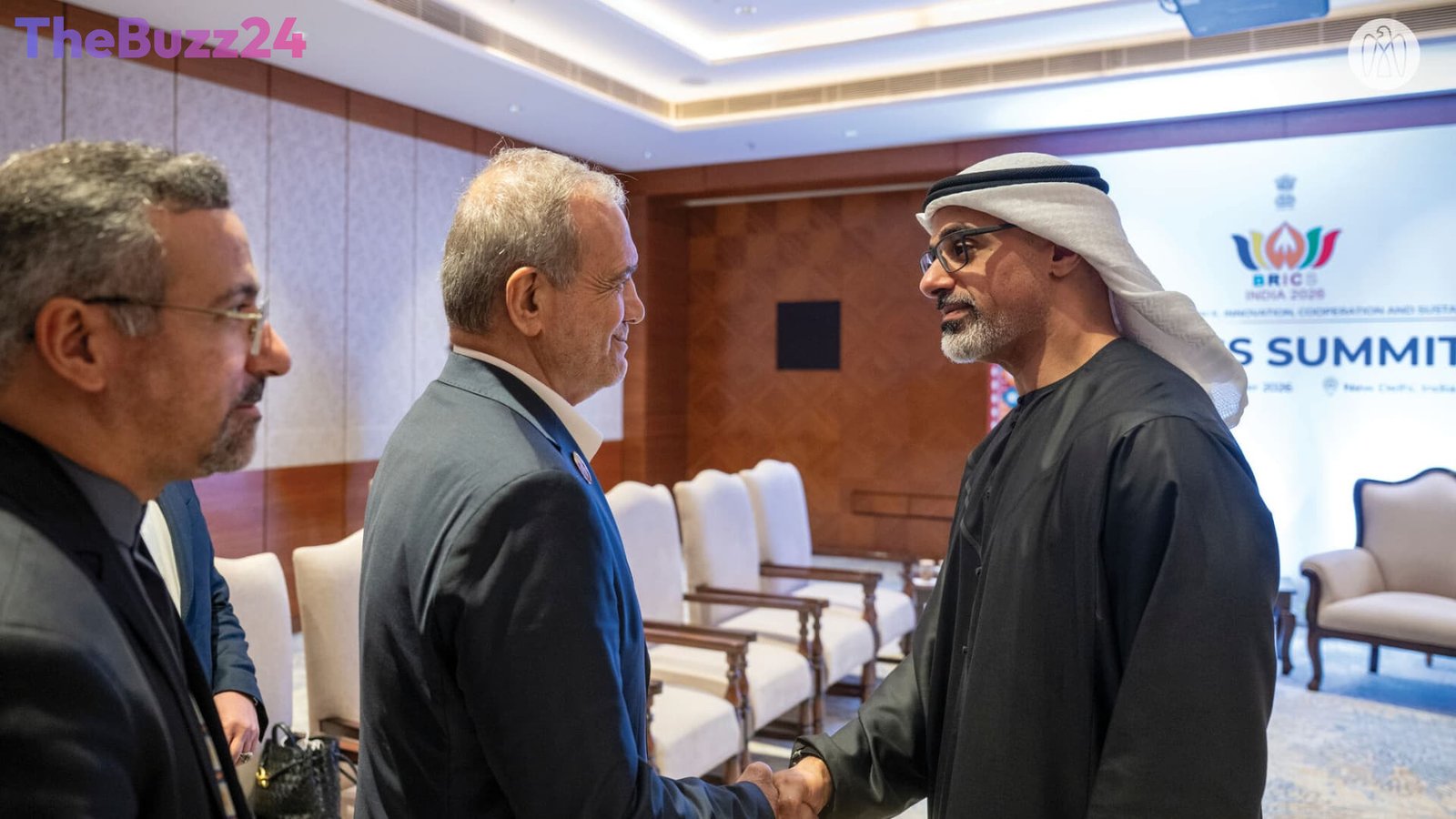
Adding to the diplomatic momentum, Iranian President Masoud Pezeshkian held a high-level meeting with the Crown Prince of Abu Dhabi on the sidelines of the BRICS summit in New Delhi. This encounter marks the most significant interaction between leaders of the two countries since the conflict began. Discussions reportedly focused on regional stability, de-escalation efforts, and pathways toward advancing peace and development in the region.
The BRICS summit itself serves as a crucial platform for the bloc, established in 2009 with the aim of challenging the existing world order dominated by Western powers. Originally comprising Brazil, Russia, India, China, and South Africa, the group has since expanded to include Egypt, Ethiopia, Indonesia, Iran, and the UAE. Organizers and diplomats have prioritized fostering unity within the bloc, particularly in addressing the complex situation in the Middle East, even as the United States and Iran engage in escalating exchanges.
The joint BRICS declaration expressed deep concern over the escalating tensions in the Middle East/West Asia, advocating for maximum restraint and the avoidance of actions that could further destabilize the situation. The statement also emphasized the importance of protecting civilian populations, respecting the sovereignty and territorial integrity of nations, and ensuring the security of global trade, supply chains, energy flows, and maritime routes. This unified stance from a diverse group of emerging economies underscores their collective desire for a more stable international environment.
Key Takeaways
- BRICS nations, including Iran and the UAE, have issued a joint statement calling for restraint in the Middle East conflict.
- A high-level meeting between the Iranian President and the Crown Prince of Abu Dhabi occurred on the sidelines of the BRICS summit.
- The BRICS bloc aims to increase its global influence by promoting unity and challenging the existing international order.
Editor’s Analysis & Impact
The joint statement from BRICS nations, particularly with the backing of Iran and the UAE, represents a significant diplomatic achievement for the bloc. It highlights BRICS’ growing ambition to play a more assertive role in global affairs and to offer an alternative perspective to Western-dominated international institutions. The convergence on a call for restraint in the Middle East, despite historical tensions between Iran and the UAE, suggests a shared interest in regional stability and economic security. This development could bolster BRICS’ credibility as a forum for dialogue and conflict resolution, potentially influencing future geopolitical dynamics and trade relations within the expanded membership.
Frequently Asked Questions
Q: What is BRICS?
A: BRICS is a grouping of major emerging economies originally comprising Brazil, Russia, India, China, and South Africa. It has since expanded to include Egypt, Ethiopia, Indonesia, Iran, and the United Arab Emirates. The bloc aims to promote economic cooperation and challenge the existing global order.
Q: What was the significance of the meeting between Iran and the UAE at the summit?
A: The meeting between the Iranian President and the Crown Prince of Abu Dhabi was the highest-level interaction between the two countries since the start of the Middle East conflict. It was seen as a positive sign for diplomatic progress and regional de-escalation.
Q: What are the broader goals of the BRICS bloc?
A: BRICS seeks to increase its collective influence on the world stage, advocate for reforms in international financial institutions like the World Bank and IMF, and promote greater equity and justice in the international order. They also aim to boost trade and economic cooperation among member states.
AI Disclosure: This article is based on verified data and official reports. Our Team and AI have cross-referenced every financial detail with primary sources to ensure total accuracy.
More from this Category