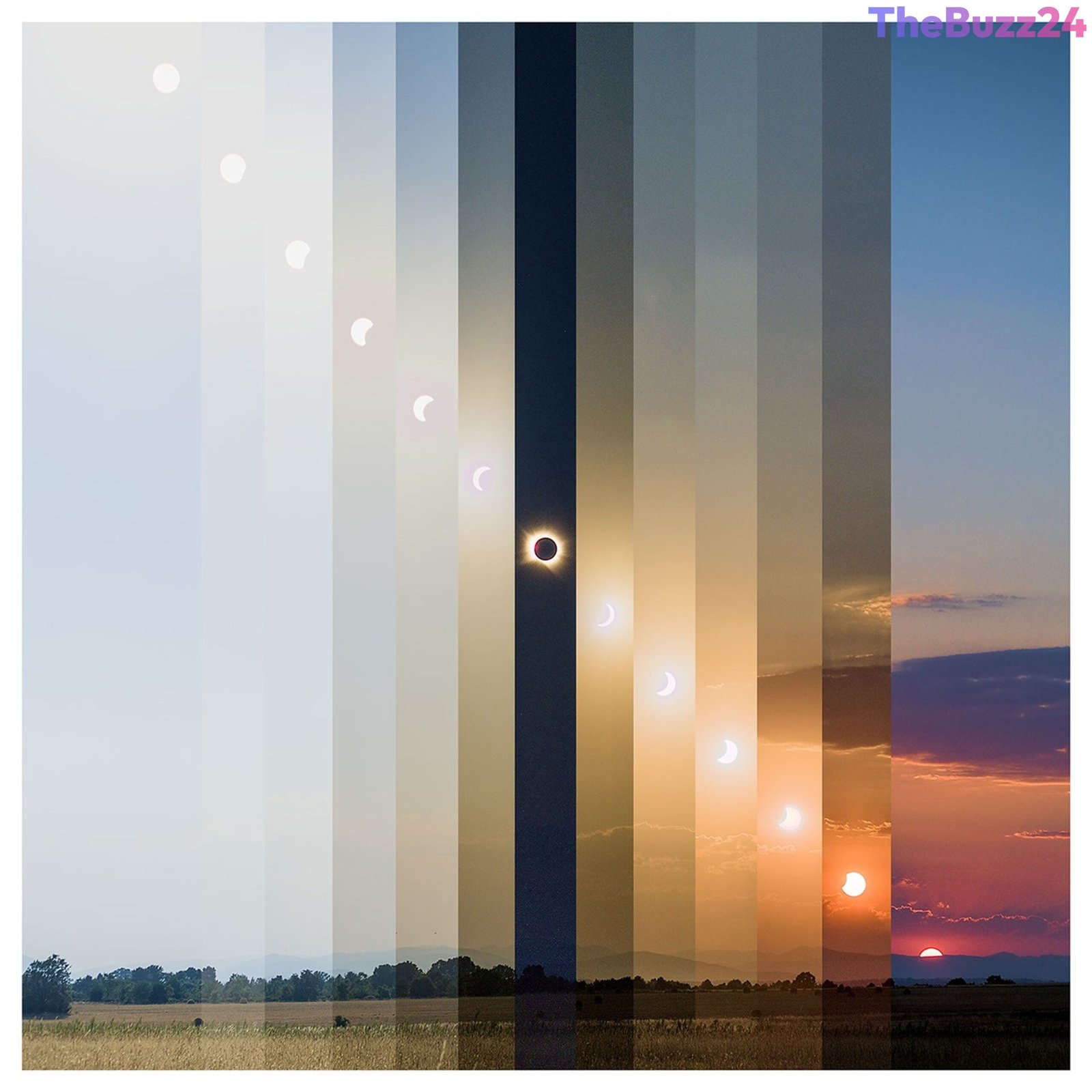
Celestial Shadows: How the August 2026 Solar Eclipse Highlights Humanity’s Historic Relationship with the Cosmos
The total solar eclipse of August 12, 2026, served as a powerful reminder of the profound awe celestial events inspire. For modern observers, capturing the progression of the Moon passing in front of the Sun is a scientific and photographic triumph. However, looking back through human history, these dramatic moments when daytime suddenly turns to darkness have sparked deep existential questions, shaping mythologies, spiritual practices, and societal norms across diverse cultures.
The very word “eclipse” originates from the ancient Greek term “ékleipsis,” translating to “abandonment.” To the ancient Greeks, the sudden disappearance of the Sun was interpreted as a terrifying sign of divine wrath, suggesting that the gods had abandoned humanity. This fear-based perspective contrasts sharply with other global traditions that view the alignment not as a curse, but as a sacred period of transition, reflection, and cosmic order.
For the Diné (Navajo) people of North America, a solar eclipse represents a solemn time of cosmic renewal. Out of deep respect for the celestial alignment, practitioners traditionally remain indoors, pausing daily activities and avoiding looking at the sky until the Sun and Moon complete their path. Meanwhile, in West Africa, the Batammariba people of Benin and Togo view the eclipse as a celestial conflict between the Sun and the Moon. Rather than panicking, the community uses the event as a catalyst to resolve earthly disputes, fostering peace and reconciliation among themselves to encourage the heavenly bodies to do the same.
These varied cultural responses underscore that astronomy has never existed in a scientific vacuum. Instead, the movements of the heavens have always been deeply intertwined with the human experience. As modern technology allows us to map and predict these events with absolute precision, the rich tapestry of historical and cultural interpretations remains a vital reminder of our enduring connection to the universe.
Key Takeaways
- The solar eclipse of August 12, 2026, serves as a modern focal point for exploring the historical and cultural significance of celestial events.
- Cultural interpretations of eclipses range from the ancient Greek belief of divine abandonment to the Diné practice of quiet renewal and cosmic respect.
- The Batammariba people of West Africa traditionally use the occurrence of an eclipse as a prompt to resolve community conflicts and promote peace.
Editor’s Analysis & Impact
The intersection of astronomy and anthropology highlights a growing trend in how modern society consumes scientific events. While contemporary audiences view eclipses through the lens of astrophysics and high-resolution photography, there is a burgeoning public interest in indigenous astronomy and historical humanities. This shift reflects a broader cultural desire to reconnect scientific phenomena with human storytelling. For educational institutions and science communicators, integrating cultural narratives into astronomical events is proving to be a highly effective tool for engagement. By framing events like the 2026 eclipse not just as physical anomalies but as shared human experiences, educators can bridge the gap between hard science and cultural preservation, fostering a more holistic appreciation of our place in the cosmos.
Frequently Asked Questions
Q: What does the word 'eclipse' mean etymologically?
A: The word 'eclipse' comes from the ancient Greek word 'ékleipsis,' which means 'abandonment' or 'being left behind,' reflecting the ancient belief that the Sun was abandoning humanity during the event.
Q: How do the Diné (Navajo) people traditionally observe a solar eclipse?
A: The Diné view a solar eclipse as a sacred time of cosmic renewal. Out of respect for the celestial alignment, they traditionally stay indoors, refrain from eating or drinking, and avoid looking at the event until the Sun and Moon have fully separated.
Q: What is the significance of an eclipse to the Batammariba people?
A: The Batammariba people of Benin and Togo believe that the Sun and Moon are fighting during an eclipse. To encourage peace in the heavens, the community uses the event as a time to resolve their own earthly conflicts and foster harmony.
AI Disclosure: This article is based on verified data and official reports. Our Team and AI have cross-referenced every financial detail with primary sources to ensure total accuracy.
More from this Category