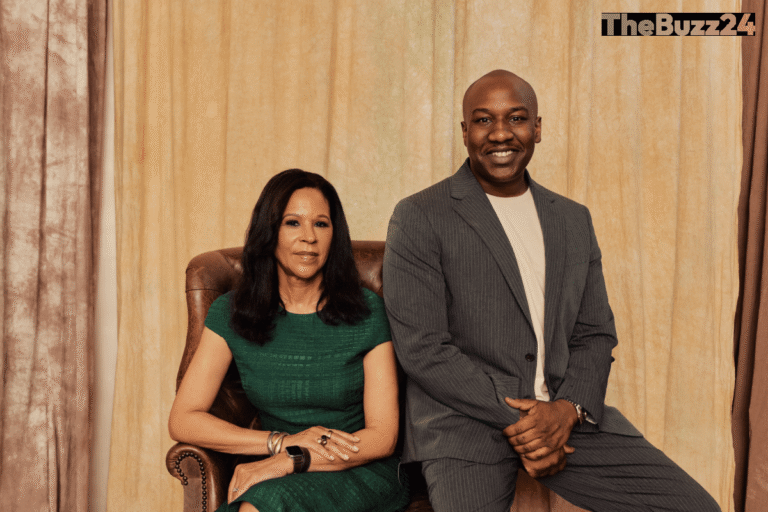
Charter Space Secures $5M Seed Funding to Expand Orbital Insurance Brokerage
Charter Space, an innovative aerospace insurance startup, has successfully closed a $5 million seed funding round to accelerate the expansion of its specialized insurance brokerage services. The El Segundo-based company has experienced rapid traction, currently servicing over 50 clients across the domestic space and defense sectors following the official rollout of its nationally licensed brokerage earlier this year.
The financing was spearheaded by insurance-focused Crystal Venture Partners, with additional participation from prominent fintech backers including QED and Blank Ventures, early-stage investor Hustle Fund, and the diversity-focused syndicate Gaingels. This latest capital infusion brings the startup’s total fundraising to $8 million since its inception, positioning the firm to scale its sales teams and broaden its portfolio of coverage offerings.
Traditionally, the commercial space sector has struggled to secure comprehensive financial and insurance services due to the high costs and perceived risks associated with underwriting orbital hardware. Founder and CEO Yuk Chi Chan noted that traditional insurers often hesitated to engage with complex aerospace engineering data. By bridging the gap between technical manufacturing data and underwriting processes, Charter Space aims to provide critical safety nets that encourage broader institutional investment, debt financing, and alternative capital integration beyond traditional venture capital.
With the commercial space economy experiencing unprecedented growth driven by lower launch costs and a surge of private enterprises building satellites and spacecraft, industry leaders view modern risk management as essential infrastructure. Charter Space plans to leverage the new capital to develop coverage for cutting-edge missions, such as lunar expeditions, in-space spacecraft servicing, and space-based nuclear power initiatives.
Key Takeaways
- Charter Space has raised $5 million in a seed funding round led by Crystal Venture Partners, bringing its total funding to $8 million.
- The startup currently serves over 50 companies across the U.S. space and defense industrial base.
- Funds will be used to expand the sales organization and introduce insurance coverage for novel missions like lunar operations and space-based nuclear power.
Editor’s Analysis & Impact
The successful funding of Charter Space highlights a maturing commercial space ecosystem that is beginning to integrate traditional financial and risk-management mechanisms. For decades, space exploration relied heavily on government funding and conservative defense contracting, leaving little room for commercial insurance innovation. As private entities proliferate and launch costs decline, the industry requires sophisticated financial infrastructure to attract non-venture capital, such as debt and institutional credit. By modernizing how underwriting risks are evaluated for satellites and spacecraft, Charter Space is addressing a critical bottleneck. This evolution will likely foster greater market stability, encourage wider global investment, and pave the way for sustainable long-term growth in the multi-billion-dollar commercial space economy.
Frequently Asked Questions
Q: What does Charter Space do?
A: Charter Space is a nationally licensed insurance brokerage and aerospace software startup that provides specialized insurance coverage and risk management solutions for commercial space and defense companies.
Q: Who led Charter Space's recent $5 million seed round?
A: The $5 million seed round was led by Crystal Venture Partners, with participation from QED, Blank Ventures, Hustle Fund, and Gaingels.
Q: Why is insurance historically difficult to obtain for space missions?
A: Insuring objects destined for space has traditionally been rare and costly because traditional insurers often lacked the technical data and understanding to properly evaluate complex aerospace engineering risks.
AI Disclosure: This article is based on verified data and official reports. Our Team and AI have cross-referenced every financial detail with primary sources to ensure total accuracy.
More from this Category