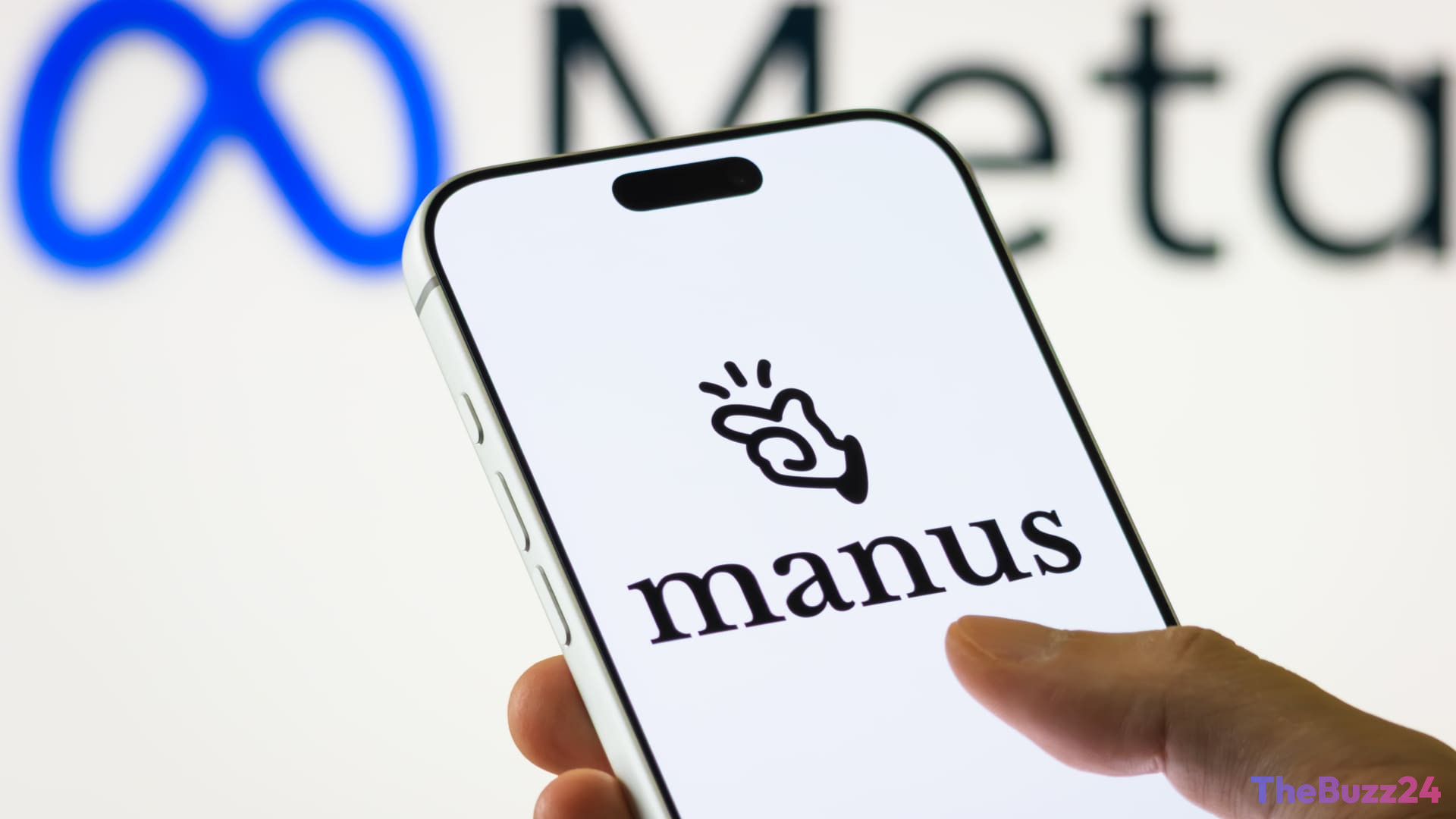
Beijing Blocks Meta’s $2 Billion Acquisition of AI Startup Manus
The Chinese government has officially blocked Meta’s proposed $2 billion acquisition of the Singapore-based artificial intelligence startup Manus. The National Development and Reform Commission (NDRC) issued a directive requiring both parties to abandon the transaction, effectively ending a deal that had been under intense regulatory scrutiny for several months.
The acquisition had become a focal point of geopolitical tension, as both U.S. and Chinese authorities have tightened their oversight of cross-border technology investments. Manus, which was originally founded in China before relocating its headquarters to Singapore, was viewed by regulators as a test case for companies attempting to navigate complex international trade restrictions. This relocation strategy, often described as “Singapore-washing,” has increasingly drawn the ire of Beijing as it seeks to prevent domestic AI talent and intellectual property from moving offshore.
Manus has gained significant industry attention for its general-purpose AI agents, which are capable of performing high-level tasks such as software coding, economic research, and complex data analysis. The startup reported reaching $100 million in annual recurring revenue within eight months of its first product launch, a growth rate that Meta hoped would bolster its own AI assistant and enterprise automation capabilities. Despite Meta’s insistence that the deal adhered to all legal requirements, the Chinese Ministry of Commerce conducted a thorough assessment of the transaction, citing concerns over export controls and the security of sensitive digital systems.
This intervention highlights the growing difficulty for global technology giants to acquire AI startups that have roots in China. As nations continue to treat artificial intelligence as a matter of national security, the regulatory landscape for cross-border mergers and acquisitions is becoming increasingly volatile, forcing companies to reconsider their expansion strategies in an era of heightened geopolitical competition.
Key Takeaways
- China's NDRC has formally blocked Meta's $2 billion acquisition of AI startup Manus.
- The deal faced scrutiny due to concerns over 'Singapore-washing' and the protection of domestic AI intellectual property.
- Manus is a high-growth AI firm known for its general-purpose agents that achieved $100 million in ARR in under a year.
Editor’s Analysis & Impact
The collapse of the Meta-Manus deal serves as a stark indicator of the ‘balkanization’ of the global technology sector. As AI becomes a critical pillar of national security, governments are increasingly willing to intervene in private market transactions to prevent the leakage of intellectual property. For Meta, this represents a significant setback in its efforts to rapidly scale its AI assistant capabilities through external acquisitions. Looking ahead, this move signals that cross-border M&A in the AI space will face unprecedented levels of scrutiny. Companies must now account for geopolitical risk as a primary factor in their valuation and integration strategies, as the era of frictionless global tech acquisitions is effectively being replaced by a more protectionist, state-led regulatory environment.
Frequently Asked Questions
Q: Why did China block the acquisition of Manus by Meta?
A: The Chinese government blocked the deal due to concerns over export controls, the protection of domestic AI technology, and the startup's relocation from China to Singapore.
Q: What does Manus do?
A: Manus is an AI startup that develops general-purpose AI agents capable of performing complex tasks like coding, data analysis, and economic research.
AI Disclosure: This article is based on verified data and official reports. Our Team and AI have cross-referenced every financial detail with primary sources to ensure total accuracy.
More from this Category