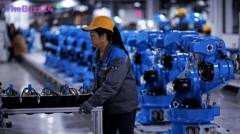
China’s Quiet Machine Revolution: Beyond Humanoids, Factories Embrace Automation
While the world’s attention is often captured by the spectacle of humanoid robots, China is quietly orchestrating a profound industrial transformation driven by widespread automation. This shift is evident in vocational schools like the Hangzhou Technician Institute, where students are being trained to code and program industrial robots, preparing them for a future where proficiency in artificial intelligence and robotics is paramount. The nation’s ambitious $20 billion plan aims to position China as a global leader in innovation, directly challenging the United States.
Across China, over two million robots are already operational in factories, a number that continues to grow at an unprecedented pace. This surge in automation is not confined to the assembly lines; it extends to the development of specialized robotic instruments, including those for medical applications. The country is not only scaling up its domestic robotic capabilities but is also becoming a major global supplier, with more than half of the world’s industrial robots now manufactured in China. This rapid adoption raises critical questions about the impact on China’s vast human workforce and the transparency of data within a tightly controlled information environment.
Beneath the surface of high-profile events like the World Humanoid Games, a less visible revolution is underway. Factories are increasingly deploying robots designed for practical, repetitive tasks such as welding, painting, and assembly, operating around the clock without the need for breaks or benefits. These machines are not only performing essential functions but are also being designed to build more of their own kind. Simultaneously, educational institutions are focusing on training individuals to collaborate effectively with this burgeoning robotic workforce, a strategy that Xi Jinping refers to as developing China’s “new productive forces.”
The drive towards automation is further accelerated by China’s demographic challenges, including a shrinking and aging population. Projections indicate that by 2035, over a third of China’s population will be aged 60 or older, and the country is expected to lose tens of millions of workers in the coming decade. Increased automation is seen as a crucial strategy to mitigate the potential economic impact of this demographic shift. Companies like EV maker Leapmotor are already achieving near-total automation in certain manufacturing processes, highlighting the speed at which this transition is occurring. While China possesses a robust ecosystem for manufacturing robot components, the development of advanced AI, the “brain” of these machines, remains a key area of competition with the US, though Chinese firms are rapidly closing the gap.
Key Takeaways
- China is rapidly advancing its automation capabilities, deploying over two million robots in factories and becoming a leading global supplier.
- The nation's push for automation is driven by both a strategic innovation plan and demographic challenges, including a shrinking workforce.
- While China excels in robot manufacturing, the development of advanced AI for robot intelligence remains a key area of competition with the US.
Editor’s Analysis & Impact
China’s aggressive push into industrial automation represents a significant strategic move with far-reaching implications. By leveraging its vast manufacturing base and investing heavily in vocational training, the nation is positioning itself to dominate the next wave of technological advancement. This revolution, while promising economic efficiencies and a solution to demographic pressures, also presents a critical challenge to its human workforce. The speed of this transition could lead to significant job displacement, necessitating careful management and reskilling initiatives. Furthermore, China’s progress in AI development, despite external pressures, signals a tightening race with the US, potentially reshaping global supply chains and technological leadership in the coming decade.
Frequently Asked Questions
Q: What is driving China's focus on automation?
A: China's focus on automation is driven by a combination of factors: a strategic national plan to become a global leader in innovation, the need to offset a shrinking and aging workforce, and the pursuit of economic efficiency and competitiveness in global manufacturing.
Q: How does China's automation strategy compare to the US?
A: China has a significant advantage in the physical manufacturing of robots and their components due to its extensive industrial ecosystem. The US, however, is often seen as leading in the development of advanced AI, the 'brain' of robots. The competition is intensifying as Chinese firms rapidly improve their AI capabilities.
Q: What are the potential impacts of automation on China's workforce?
A: The widespread adoption of automation could lead to significant job displacement for workers in manufacturing sectors, particularly those performing repetitive tasks. While new jobs will be created in areas like robot programming and maintenance, there's a risk of a skills gap and potential unemployment if the transition is too rapid or not managed effectively.
AI Disclosure: This article is based on verified data and official reports. Our Team and AI have cross-referenced every financial detail with primary sources to ensure total accuracy.
More from this Category