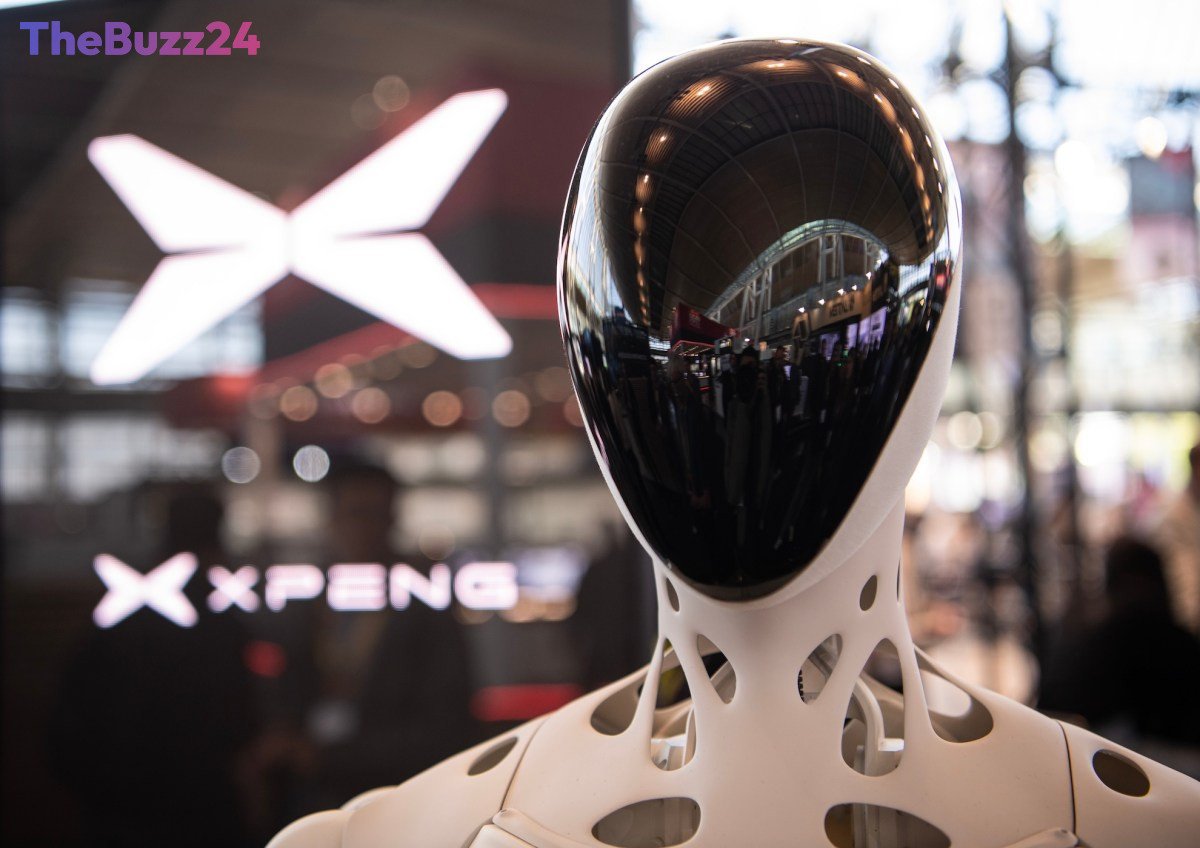
Chinese Automakers Race to Dominate Humanoid Robot Market, Mirroring Tesla’s Vision
The burgeoning interest in humanoid robots is reaching new heights, fueled by advancements in artificial intelligence and the ambitious visions of tech leaders like Tesla CEO Elon Musk. Beyond the initial hype, tangible progress in robotic physical capabilities and the integration of advanced AI techniques, akin to those powering large language models, are enabling robots to learn and execute increasingly complex tasks.
This momentum has spurred a new wave of investment, particularly from Chinese automakers, who are positioning themselves to capitalize on the anticipated profitability of humanoid robotics. Notably, Xpeng’s robotics division recently secured over $900 million in private financing, achieving a post-money valuation exceeding $6.3 billion. This round, backed by IDG Capital, Gaorong Ventures, Tencent, and Alibaba, marks the largest single-round private investment in China’s “embodied AI” sector. Other major players are also making moves; AiMOGA, the robotics unit of Chery Automobile, is reportedly preparing for an initial public offering, while BYD has unveiled its own humanoid robot, Xiao Di. Changan, GAC, Li Auto, SAIC, and Seres are among other Chinese automotive giants actively developing humanoid robots.
Xpeng’s strategy, particularly with its Iron humanoid robot designed for commercial deployment, closely aligns with Tesla’s pioneering efforts in autonomy and robotics. Industry observers note Xpeng’s founder, He Xiaopeng, is known for his agility in adapting to new technological frontiers, viewing robotics as a more promising profit avenue than the increasingly thin margins in the automotive sector. Both Xiaopeng and Xpeng co-president Brian Gu have personally invested substantial funds into their robotics unit, underscoring their commitment. While Chinese automakers bring a significant manufacturing advantage to the table, the critical challenge remains in matching the AI sophistication required to compete effectively with global leaders.
The race for scalable commercial deployment extends beyond China. Companies like Agility Robotics, Apptronik, and Figure are all pursuing similar goals. Hyundai, through its acquisition of Boston Dynamics, plans to integrate the Atlas humanoid robot into its Georgia factory by 2028 for tasks such as parts sequencing, and is establishing a U.S. Robot Metaplant Application Center to accelerate development. Even automotive suppliers like Mobileye have entered the fray, acquiring humanoid robot startup Mentee Robotics for $900 million, and Rivian has spun out Mind Robotics to explore its own robotic solutions.
Key Takeaways
- Chinese automakers are heavily investing in humanoid robotics, mirroring Tesla's strategy, with Xpeng leading a significant funding round for its Iron robot.
- Advancements in AI, particularly large language models, are making complex robots capable of learning diverse tasks, accelerating global efforts towards commercial deployment.
- While Chinese firms possess manufacturing prowess, their main challenge lies in matching the AI capabilities of Western counterparts as the race for scalable humanoid robot deployment intensifies across the automotive and tech sectors.
Editor’s Analysis & Impact
The surge in investment from Chinese automakers into humanoid robotics signals a pivotal shift in the global technology landscape. This move extends beyond traditional automotive manufacturing, positioning these companies at the forefront of the next industrial revolution. The market impact will be profound, creating new supply chains, specialized labor demands, and potentially disrupting sectors from logistics to healthcare. The future outlook suggests intense competition, with AI development being the primary battleground. Companies that can effectively integrate advanced AI with robust hardware will gain a significant advantage. Broader implications include the potential for widespread automation, necessitating new policy frameworks for workforce adaptation and ethical considerations surrounding autonomous systems.
Frequently Asked Questions
Q: What is 'embodied AI'?
A: Embodied AI refers to artificial intelligence systems that are integrated directly into physical machines, such as humanoid robots. This allows the AI to interact with and learn from the physical world, performing tasks in real-world environments.
Q: Why are automakers investing heavily in humanoid robots?
A: Automakers possess extensive manufacturing capabilities and are seeking new avenues for growth and profitability beyond vehicle production. They view humanoid robots as the next major technological frontier, offering potential for widespread commercial deployment in various industries, from factory automation to service roles.
Q: What is the main challenge for companies developing humanoid robots?
A: While hardware capabilities for humanoid robots are rapidly advancing, the primary challenge lies in developing sophisticated artificial intelligence that enables these robots to learn, adapt, and perform a wide range of complex tasks autonomously and reliably in diverse, unpredictable environments. The ability to master AI will be a key differentiator.
AI Disclosure: This article is based on verified data and official reports. Our Team and AI have cross-referenced every financial detail with primary sources to ensure total accuracy.
More from this Category