Circle’s Strategic Pivot Amidst DeFi Market Volatility and Security Challenges
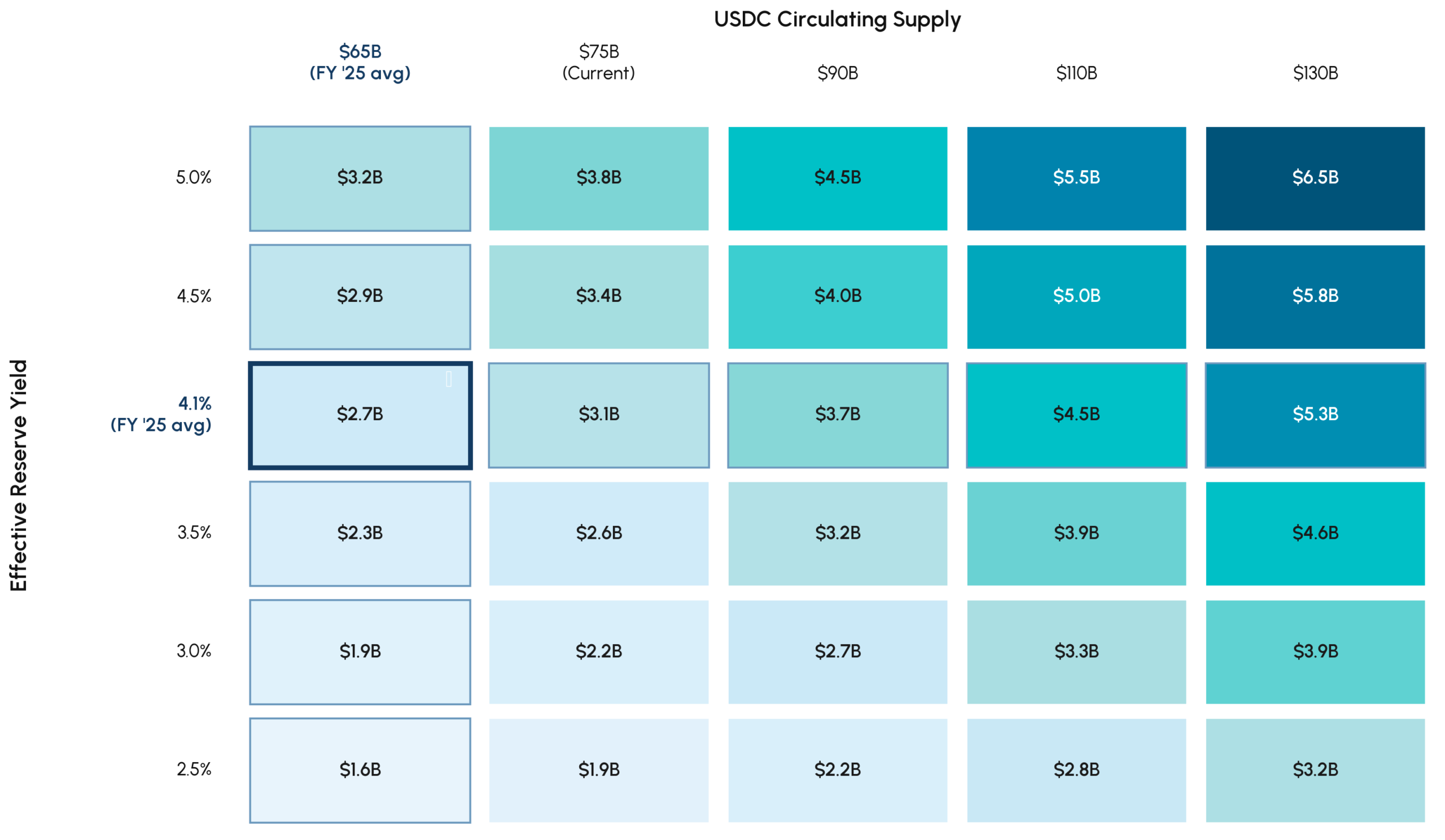
Circle is currently navigating a pivotal phase in its corporate evolution, balancing a heavy reliance on interest-based revenue with a strategic push toward diversified payment infrastructure. In fiscal year 2025, the firm generated approximately $2.7 billion in revenue, with nearly 96% of that income stemming from interest earned on its USDC reserve assets. As the company looks toward the future, it is prioritizing the expansion of fee-based services, including the Circle Payments Network and its cross-chain transfer protocol, to reduce its sensitivity to macroeconomic interest rate fluctuations. A significant upcoming milestone for the firm is the August 2026 renewal of its revenue-sharing agreement with Coinbase, a deal that remains central to its distribution strategy and profit margins.
Beyond its core reserve-income model, Circle is investing in new infrastructure projects like the Arc blockchain to transition into a comprehensive payments platform. These efforts are occurring against a backdrop of evolving regulatory scrutiny, with potential legislative frameworks like the CLARITY Act threatening to reshape how stablecoin issuers handle yield and distribution. These regulatory shifts could fundamentally alter the competitive landscape for digital assets, forcing issuers to adopt more transparent and standardized operational models.
Simultaneously, the broader decentralized finance (DeFi) ecosystem is reeling from a significant security breach involving KelpDAO. An attacker exploited a vulnerability in a cross-chain bridge configuration to mint $290 million in unbacked rsETH tokens, which were then used to drain WETH liquidity from major lending protocols such as Aave. This incident triggered a massive liquidity run, forcing users to withdraw billions in assets as utilization rates surged across the market. The breach highlights the systemic risks associated with the interconnected nature of DeFi, where a single point of failure can lead to rapid, cascading market contagion.
Key Takeaways
- Circle generated $2.7 billion in 2025 revenue, with 96% derived from interest on USDC reserves, prompting a strategic shift toward fee-based payment services.
- The upcoming August 2026 revenue-sharing agreement renewal with Coinbase is a critical factor for Circle’s future profit margins and distribution costs.
- A $290 million exploit of the KelpDAO bridge caused a systemic liquidity crisis across major DeFi lending protocols, exposing the dangers of derivative collateral stacking.
Editor’s Analysis & Impact
The dual narrative of Circle’s corporate maturation and the KelpDAO security failure illustrates the current ‘growing pains’ of the digital asset industry. Circle’s attempt to pivot from a rate-sensitive reserve model to a diversified payments infrastructure is a necessary evolution to ensure long-term sustainability as interest rates fluctuate. However, the KelpDAO incident serves as a sobering reminder that the DeFi ecosystem remains fragile. The ease with which a bridge vulnerability cascaded into a multi-protocol liquidity crisis suggests that the industry’s reliance on complex, interconnected collateral layers is a significant systemic risk. Moving forward, institutional adoption will likely hinge on the implementation of more rigorous security audits and the development of more resilient cross-chain infrastructure to prevent localized exploits from triggering broader market contagion.
Frequently Asked Questions
Q: Why is Circle trying to diversify its revenue streams?
A: Circle is diversifying to reduce its heavy reliance on interest earned from reserve assets, which currently accounts for 96% of its revenue, making the company highly sensitive to macroeconomic interest rate changes.
Q: What caused the liquidity crisis in the DeFi market involving KelpDAO?
A: The crisis was caused by an attacker exploiting a cross-chain bridge vulnerability to mint $290 million in unbacked rsETH tokens, which were then used as collateral to drain liquidity from lending protocols like Aave.
AI Disclosure: This article is based on verified data and official reports. Our Team and AI have cross-referenced every financial detail with primary sources to ensure total accuracy.
More from this Category