Citizen Scientists Hunt Cosmic Gold: Join the Kilonova Catcher Project
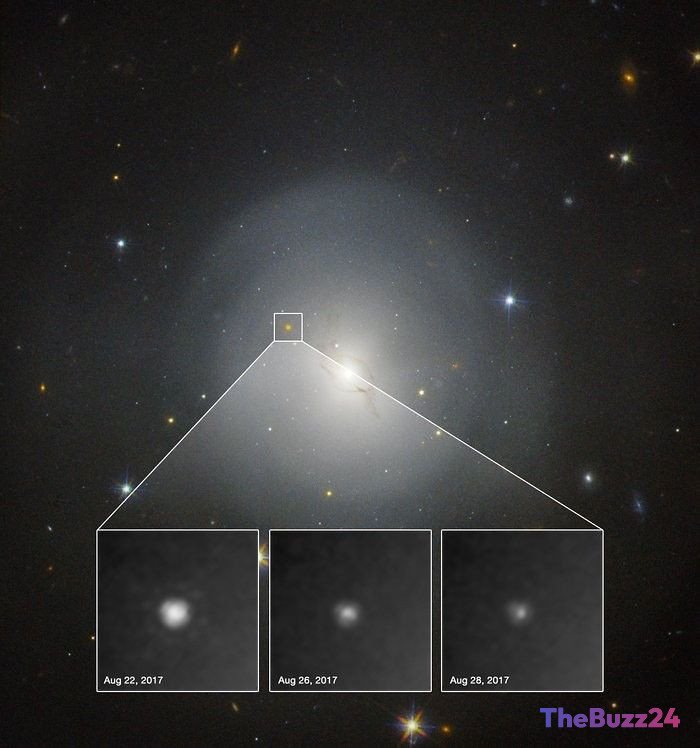
Amateur astronomers worldwide are being called upon to participate in a groundbreaking citizen science initiative, NASA’s Kilonova Catcher project. This program enlists individuals with telescopes to help detect and track kilonovae – brief, intense flashes of light produced when two neutron stars collide. These cataclysmic cosmic events are crucial for the universe’s creation of heavy elements like gold and platinum. Due to their ephemeral nature, fading within days, rapid detection is essential, a task that no single observatory can accomplish alone.
The Kilonova Catcher project functions as a global, rapid-response network. When alerts are issued by gravitational wave detectors or space telescopes, volunteers are mobilized to direct their personal telescopes toward the sky. Their observations aid in pinpointing and monitoring the fading light signatures of these events. Beyond kilonovae, the network also contributes to the study of gamma-ray bursts and other transient cosmic phenomena, expanding our understanding of the universe’s most energetic occurrences.
With over 150 registered members across multiple continents, the Kilonova Catcher network collaborates closely with professional astronomers and observatories. Participants have already made significant contributions, resulting in more than 64 official reports shared through NASA’s General Coordinates Network. Their valuable observations have even earned them co-authorship on peer-reviewed scientific research papers. The project also extended its reach to NASA’s lunar Impact Flash! project during the Artemis II mission, documenting light flashes caused by meteoroid impacts on the Moon. Future endeavors include supporting the upcoming Nancy Grace Roman Space Telescope, which is expected to generate thousands of new alerts.
Cristina Andrade, head of operations for Kilonova Catcher at the Minnesota Institute for Astrophysics, emphasized the project’s reliance on human observation. “We need more human minds, more people with their eyes on the sky and on the data… And more importantly, we need more people to realize they are capable of great feats of science, regardless of their background,” she stated. Dr. Damien Turpin, the project’s Principal Investigator, echoed this sentiment, expressing admiration for the amateur astronomers’ dedication and drive in pushing scientific boundaries.
Key Takeaways
- The Kilonova Catcher project invites amateur astronomers to help detect and track kilonovae, powerful cosmic events that create heavy elements.
- Volunteers use their own telescopes to respond to alerts from gravitational wave detectors and space telescopes, contributing to scientific discoveries.
- Citizen scientists involved in the project have co-authored research papers and contributed to NASA missions, highlighting the value of public participation in astronomy.
Editor’s Analysis & Impact
The Kilonova Catcher project exemplifies the growing trend of citizen science in professional research. By leveraging a global network of amateur astronomers, NASA is significantly expanding its observational capabilities for transient astronomical events. This approach not only accelerates discovery but also democratizes science, making cutting-edge research accessible to the public. The project’s success underscores the potential for crowdsourced data in fields like astrophysics, particularly with the advent of new, high-data-volume observatories like the Roman Space Telescope. This model could serve as a blueprint for future scientific endeavors requiring widespread, rapid observation.
Frequently Asked Questions
Q: What is a kilonova?
A: A kilonova is a brief, powerful flash of light produced by the collision of two neutron stars. These events are significant because they are believed to be the primary source of heavy elements, such as gold and platinum, in the universe.
Q: Who can participate in the Kilonova Catcher project?
A: Anyone with access to a telescope equipped with a camera can participate. The project aims to involve amateur astronomers worldwide in its rapid-response network.
Q: How do I join the Kilonova Catcher project?
A: To join, you can visit the project's website at https://kilonovacatcher.in2p3.fr/ or send an email to kilonovacatcher@gmail.com.
AI Disclosure: This article is based on verified data and official reports. Our Team and AI have cross-referenced every financial detail with primary sources to ensure total accuracy.
More from this Category