Cosmic Chandelier: Hubble Unlocks the Deep History of One of the Milky Way’s Oldest Star Clusters
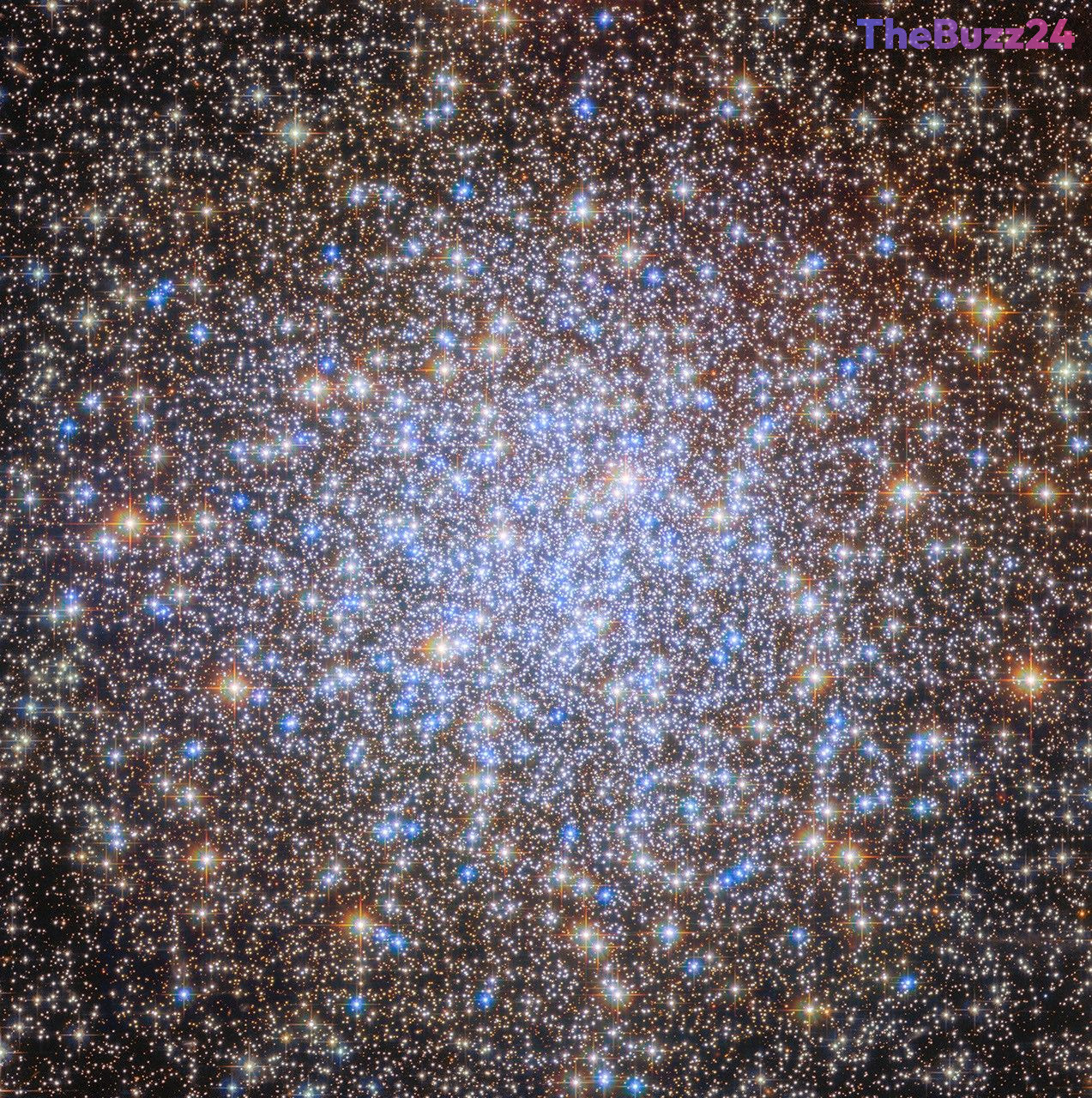
A spectacular new image of the globular cluster NGC 6723, colloquially known as the Chandelier Cluster, offers a dazzling look at one of the oldest structures in our galaxy. Located approximately 27,000 light-years away in the constellation Sagittarius, this tightly bound collection of tens of thousands of stars shines like a grand light fixture suspended in the cosmos. Globular clusters like this one are ancient relics of the early universe, with ages often exceeding 10 billion years, meaning they likely formed long before the flat disk of our own Milky Way took shape.
For decades, astronomers operated under the assumption that globular clusters were relatively simple structures. The prevailing theory suggested that all stars within a single cluster formed simultaneously from the same cloud of gas, resulting in a population of identical age and chemical makeup. However, advanced space-based observations have completely overturned this consensus, revealing that these stellar cities possess far more complex and dynamic histories than previously imagined.
Detailed spectroscopic surveys have allowed researchers to peer deep into the heart of NGC 6723. By analyzing the cluster in visible, near-infrared, and ultraviolet light, scientists mapped how stars of different masses behave, noting that heavier stars sink toward the cluster’s core while lighter ones drift outward. Crucially, ultraviolet data exposed subtle chemical variations among the stars, proving the existence of two distinct waves of star formation. The second generation of stars emerged roughly 634 million years after the first—a brief moment in the lifespan of a cluster that has endured for over ten billion years.
Key Takeaways
- The globular cluster NGC 6723, nicknamed the Chandelier Cluster, is located 27,000 light-years away and is over 10 billion years old.
- Advanced space observations have disproven the theory that all stars in a globular cluster form at the same time, revealing complex, multi-generational histories.
- Analysis of NGC 6723's chemical composition shows two distinct periods of star formation occurring roughly 634 million years apart.
Editor’s Analysis & Impact
The revelation of multi-generational star formation within globular clusters like NGC 6723 represents a major paradigm shift in stellar astrophysics. By proving that these ancient clusters are not chemically homogeneous, astronomers must now revise their models of early galactic evolution. This breakthrough underscores the enduring value of legacy space observatories, whose unique ultraviolet capabilities remain vital even in the era of newer infrared-optimized telescopes. Moving forward, combining ultraviolet data with deep infrared observations will allow scientists to map the chemical history of the universe with unprecedented precision. This synergy is poised to unlock the remaining mysteries of how the first structures in our galaxy coalesced, bridging the gap between the Big Bang and the formation of modern solar systems.
Frequently Asked Questions
Q: What is a globular cluster?
A: A globular cluster is a densely packed, spherical collection of tens of thousands to millions of stars that are tightly bound together by gravity. They are typically found in the outer halos of galaxies and contain some of the oldest stars in the universe.
Q: Why is NGC 6723 called the Chandelier Cluster?
A: It earned the nickname 'Chandelier Cluster' because of its sparkling appearance, resembling a grand, glowing light fixture composed of thousands of individual stellar 'bulbs' shining brightly in the night sky.
Q: How did astronomers discover that the stars in NGC 6723 formed at different times?
A: By utilizing sensitivity to ultraviolet light, researchers detected subtle variations in the chemical compositions of the stars. This chemical fingerprinting revealed two distinct waves of star formation separated by about 634 million years.
AI Disclosure: This article is based on verified data and official reports. Our Team and AI have cross-referenced every financial detail with primary sources to ensure total accuracy.
More from this Category