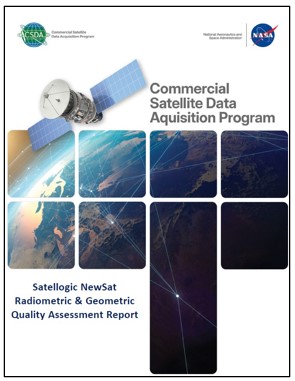
NASA Validates Satellogic Satellite Data for Advanced Scientific Research
NASA has officially cleared the integration of satellite imagery from the Satellogic NewSat constellation into its Commercial Satellite Data Acquisition (CSDA) program. This approval follows a rigorous multi-year evaluation process that scrutinized the radiometric and geometric integrity of data produced by both the Mark IV and Mark V sensor generations. By incorporating this data, the space agency aims to bolster its scientific research capabilities through high-resolution Earth observation.
The evaluation process, which analyzed 60 top-of-atmosphere reflectance images captured between 2021 and 2025, confirmed that Satellogic’s technology meets stringent performance standards. Experts found that the majority of spectral bands maintained radiometric accuracy within 10% of reference values established by the Aqua MODIS satellite. Additionally, the signal-to-noise ratios across most bands were deemed sufficient for high-quality scientific analysis.
While the assessment highlighted minor performance variations between sensor generations—with the Mark IV receiving an ‘Excellent’ rating for spatial response compared to the ‘Basic’ rating for the Mark V—Satellogic has already moved to refine its data processing protocols. NASA is currently conducting a follow-up review of these updated products to ensure continued alignment with mission requirements. This partnership marks a significant step in leveraging private sector satellite constellations to support global environmental and scientific monitoring efforts.
Key Takeaways
- NASA has approved Satellogic’s NewSat constellation data for use in scientific research programs.
- The validation process confirmed high radiometric accuracy, with most spectral bands performing within 10% of established reference benchmarks.
- Satellogic is currently refining its data processing protocols following a comparative assessment of its Mark IV and Mark V sensor generations.
Editor’s Analysis & Impact
The integration of Satellogic’s constellation into NASA’s CSDA program signals a maturing market for commercial Earth observation data. By validating private sector assets for scientific use, NASA is effectively outsourcing a portion of its data collection needs, which allows for more frequent and granular monitoring of Earth’s surface. This move not only provides Satellogic with a prestigious stamp of approval that will likely attract other government and commercial clients but also sets a precedent for how private satellite operators can contribute to public scientific infrastructure. As sensor technology continues to evolve, the ability for private firms to meet NASA’s rigorous quality standards will be a key differentiator in the competitive satellite imagery market, potentially leading to more collaborative efforts in climate modeling and resource management.
Frequently Asked Questions
Q: What is the purpose of NASA's CSDA program?
A: The Commercial Satellite Data Acquisition (CSDA) program is designed to identify, evaluate, and acquire data from commercial sources that can support NASA’s Earth science research and application goals.
Q: Why did NASA evaluate Satellogic's Mark IV and Mark V sensors?
A: NASA evaluated these sensors to ensure that the data provided by Satellogic meets the high radiometric and geometric standards required for reliable scientific analysis and environmental monitoring.
AI Disclosure: This article is based on verified data and official reports. Our Team and AI have cross-referenced every financial detail with primary sources to ensure total accuracy.
More from this Category