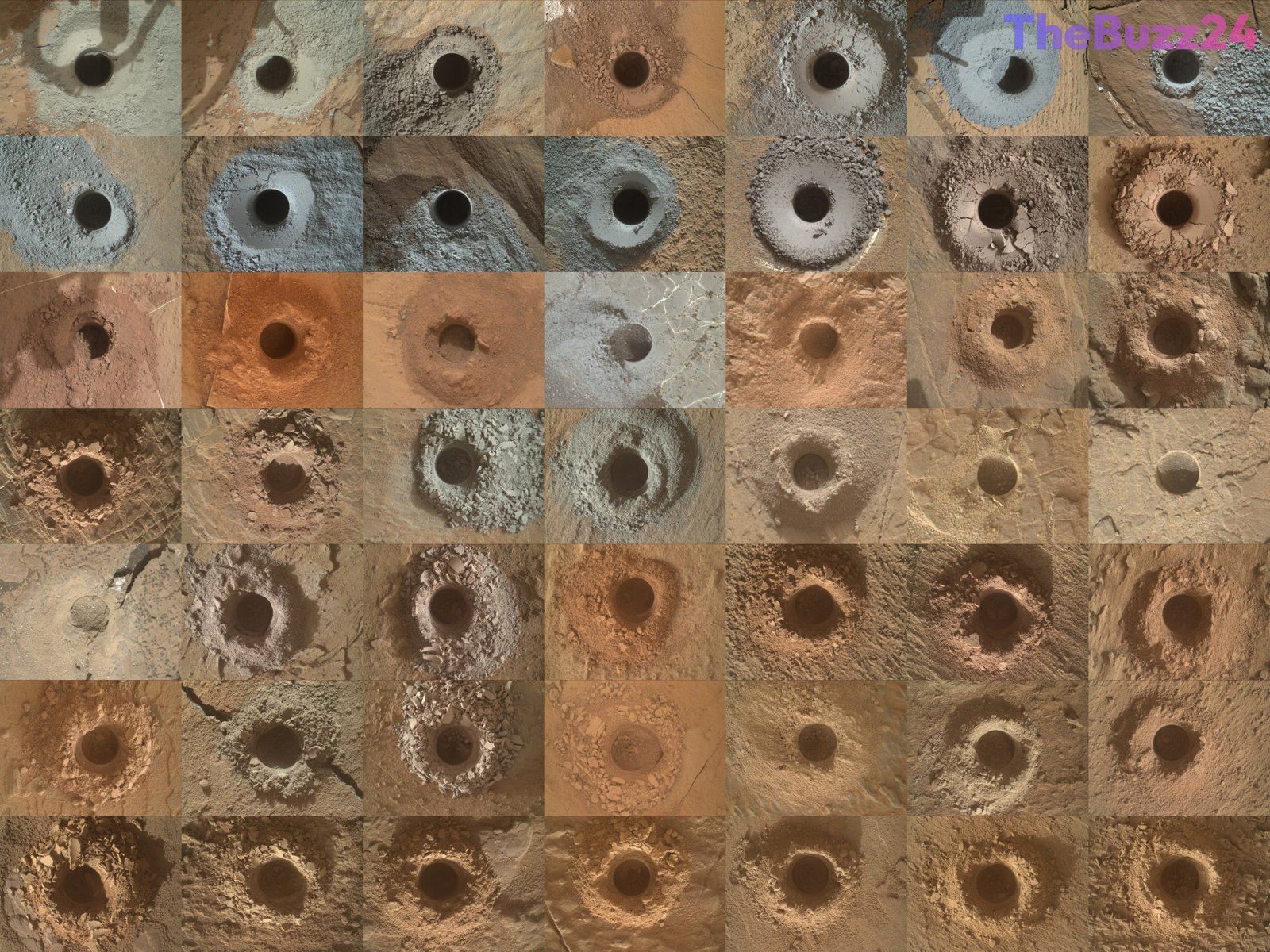
Curiosity Rover Marks Milestone with 49 Martian Rock Samples
NASA’s Curiosity Mars rover has reached a significant milestone in its ongoing exploration of the Red Planet, having successfully completed 49 distinct drilling operations as of November 2026. This extensive collection of geological data provides researchers with a comprehensive look at the Martian surface, offering insights into the planet’s ancient environmental history.
The process involves the rover’s sophisticated robotic arm, which is equipped with a specialized drill designed to penetrate the rugged Martian terrain. Once a hole is bored into the rock, the resulting pulverized material is carefully deposited into internal laboratory instruments. These onboard tools then conduct detailed chemical and mineralogical analyses to determine the composition of the samples.
Each of these 49 drill sites serves as a critical data point for scientists studying the evolution of Mars. By examining the rock layers, the mission team aims to better understand whether the environment was ever capable of supporting microbial life. The ongoing success of the Curiosity mission continues to expand our knowledge of planetary science and paves the way for future exploration efforts.
Key Takeaways
- NASA's Curiosity rover has successfully drilled 49 holes to collect rock samples on Mars as of November 2026.
- The rover uses a robotic arm to pulverize rock, which is then analyzed by internal instruments to determine chemical composition.
- These samples are vital for understanding the geological history of Mars and assessing its past potential for supporting life.
Editor’s Analysis & Impact
The sustained operational success of the Curiosity rover represents a triumph of long-term robotic engineering and planetary science. By consistently gathering high-quality geological samples, NASA is building a foundational database that informs not only our understanding of Mars but also the design requirements for future crewed missions. The ability to perform complex, autonomous drilling in a harsh, remote environment demonstrates the maturity of current space exploration technology. Looking ahead, the data retrieved from these 49 sites will likely be cross-referenced with findings from other missions, such as the Perseverance rover, to create a more cohesive map of Martian habitability. This mission underscores the importance of long-duration assets in deep space, proving that incremental, methodical data collection is the most effective strategy for unlocking the mysteries of our solar system.
Frequently Asked Questions
Q: How does the Curiosity rover analyze the rock samples it collects?
A: The rover uses a drill on its robotic arm to pulverize rock samples, which are then dropped into internal laboratory instruments that analyze the chemical and mineral composition of the material.
Q: What is the primary goal of collecting these rock samples?
A: The primary goal is to study the geological history of Mars and determine if the planet's ancient environment was ever capable of supporting microbial life.
AI Disclosure: This article is based on verified data and official reports. Our Team and AI have cross-referenced every financial detail with primary sources to ensure total accuracy.
More from this Category