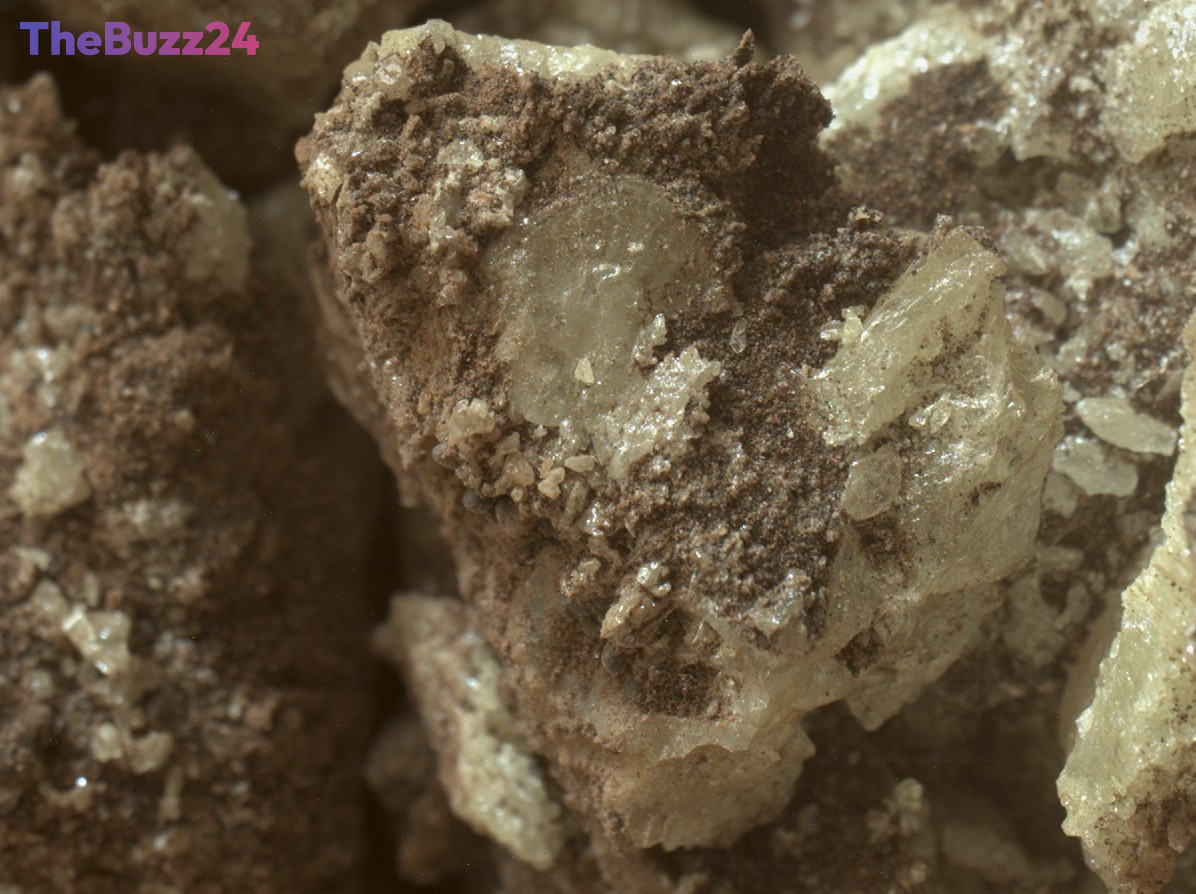
Curiosity Rover Uncovers First-Ever Sulfur Crystals on Mars
NASA’s Curiosity rover has captured a groundbreaking image revealing the first-ever sulfur crystals discovered on the Martian surface. The remarkable find occurred when the rover inadvertently crushed a rock during a drive on May 30, 2024. Subsequent analysis by Curiosity’s robotic arm camera provided a detailed, close-up view of these crystalline fragments.
This discovery offers a unique glimpse into Mars’ geological past. Scientific research, including a recent publication in the journal Science, posits that these sulfur deposits likely originated from magma-related activity deep beneath the planet’s crust. It is theorized that fluids or gases released from this magma approximately three billion years ago are responsible for the deposition of sulfur on the Red Planet’s surface.
The presence of these sulfur crystals is significant for understanding the chemical processes that have shaped Mars over billions of years. Scientists will continue to study these findings to gain further insights into the planet’s ancient environment and its potential for past habitability.
Key Takeaways
- NASA's Curiosity rover has identified the first sulfur crystals ever found on Mars.
- The crystals were discovered after the rover crushed a rock, revealing the fragments.
- Scientists believe the sulfur deposits are ancient, dating back approximately 3 billion years, and formed from magma-related geological activity.
Editor’s Analysis & Impact
The discovery of sulfur crystals by the Curiosity rover marks a significant advancement in our understanding of Martian geology and geochemistry. This finding provides tangible evidence supporting theories about ancient volcanic and hydrothermal processes on Mars, potentially indicating a more dynamic and chemically active past than previously understood. The presence of sulfur can also be a key indicator for potential past habitability, as it plays a role in various biological and chemical cycles. Further analysis of these crystals could unlock more secrets about Mars’ evolution and its potential to have supported life.
Frequently Asked Questions
Q: How were the sulfur crystals discovered?
A: The sulfur crystals were discovered when the NASA Curiosity rover accidentally drove over and crushed a rock on May 30, 2024. The rover's robotic arm camera was then used to capture images of the revealed fragments.
Q: When did the sulfur likely form on Mars?
A: Scientists estimate that the sulfur crystals likely formed about 3 billion years ago, originating from fluids or gases released by magma deep beneath the Martian surface.
Q: What is the significance of finding sulfur crystals on Mars?
A: The discovery is significant because it provides direct evidence of past geological processes, such as volcanic activity and hydrothermal systems, on Mars. It also offers clues about the planet's ancient chemical environment and potential for past habitability.
AI Disclosure: This article is based on verified data and official reports. Our Team and AI have cross-referenced every financial detail with primary sources to ensure total accuracy.
More from this Category