Decades-Old Mystery Persists as Promising Amelia Earhart Wreckage Lead Proves to Be Debris
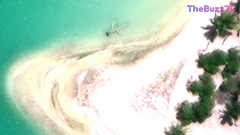
A fresh expedition to a remote Pacific island has dashed hopes of solving one of aviation history’s greatest enduring mysteries. Investigators traveling to the isolated shores of Nikumaroro in Kiribati have concluded that a peculiar object previously identified in satellite imagery is likely nothing more than a collection of washed-up timber rather than the long-lost aircraft of pioneering aviator Amelia Earhart.
The anomaly, known as the Taraia Object, first sparked intense speculation in 2020 when sharp reflections on satellite photos led some researchers to wonder if they had finally located the wreckage of Earhart’s twin-engine Lockheed Electra. To verify the hypothesis, an academic team embarked on a grueling five-day ocean voyage, weathering rough seas and turbulent winds before managing to spend four days conducting an on-site investigation.
Upon arrival, however, researchers discovered that much of the material had already fragmented and washed away, leaving behind only a single Y-shaped timber segment. Analysis from Purdue University confirmed that the formation was essentially a cluster of large trees deposited along the peninsula’s sandspit, with historical photographs indicating similar debris was present in the area as far back as 1938.
Amelia Earhart vanished alongside navigator Fred Noonan in 1937 during an ambitious attempt to circumnavigate the globe. After successfully completing the majority of her journey, the aviator disappeared over the Pacific Ocean while trying to locate Howland Island for refueling. While the search for definitive physical evidence on Nikumaroro has hit another roadblock, project leaders remain convinced that the remote island may still harbor secrets regarding the final chapters of the historic flight.
Key Takeaways
- An expedition to Nikumaroro investigated the 'Taraia Object,' which was previously hypothesized to be Amelia Earhart's missing plane.
- Researchers concluded that the object is actually a collection of large trees and driftwood rather than aircraft wreckage.
- Amelia Earhart and her navigator Fred Noonan disappeared over the Pacific Ocean in 1937 during their round-the-world flight attempt.
Editor’s Analysis & Impact
The ongoing quest to locate Amelia Earhart’s aircraft highlights the enduring public fascination with historical mysteries and the limits of modern remote sensing technology. While satellite imagery offers unprecedented access to remote locations, false positives like the Taraia Object demonstrate that boots-on-the-ground validation remains indispensable. Expeditions of this nature blend historical research with marine science, capturing global imagination but rarely yielding immediate answers. As technology continues to evolve, future searches may leverage advanced sonar and AI-driven image analysis, yet the harsh environmental conditions of the Pacific will continue to pose significant logistical hurdles for researchers seeking closure on the 1937 disappearance.
Frequently Asked Questions
Q: What was the Taraia Object?
A: The Taraia Object was a shiny anomaly spotted in 2020 satellite imagery of a lagoon on Nikumaroro island, which some researchers hypothesized could be the wreckage of Amelia Earhart's plane.
Q: What did researchers actually find at the site?
A: Upon investigating the site, researchers discovered that the object was likely a collection of large trees and driftwood deposited by the sea, with much of the debris having fragmented and washed away.
Q: When did Amelia Earhart disappear?
A: Amelia Earhart disappeared in 1937 while attempting to fly around the world, during the leg between Papua New Guinea and Howland Island.
AI Disclosure: This article is based on verified data and official reports. Our Team and AI have cross-referenced every financial detail with primary sources to ensure total accuracy.
More from this Category