Decart Unveils Oasis 3: Photorealistic World Simulation for AI Development, But With Limitations
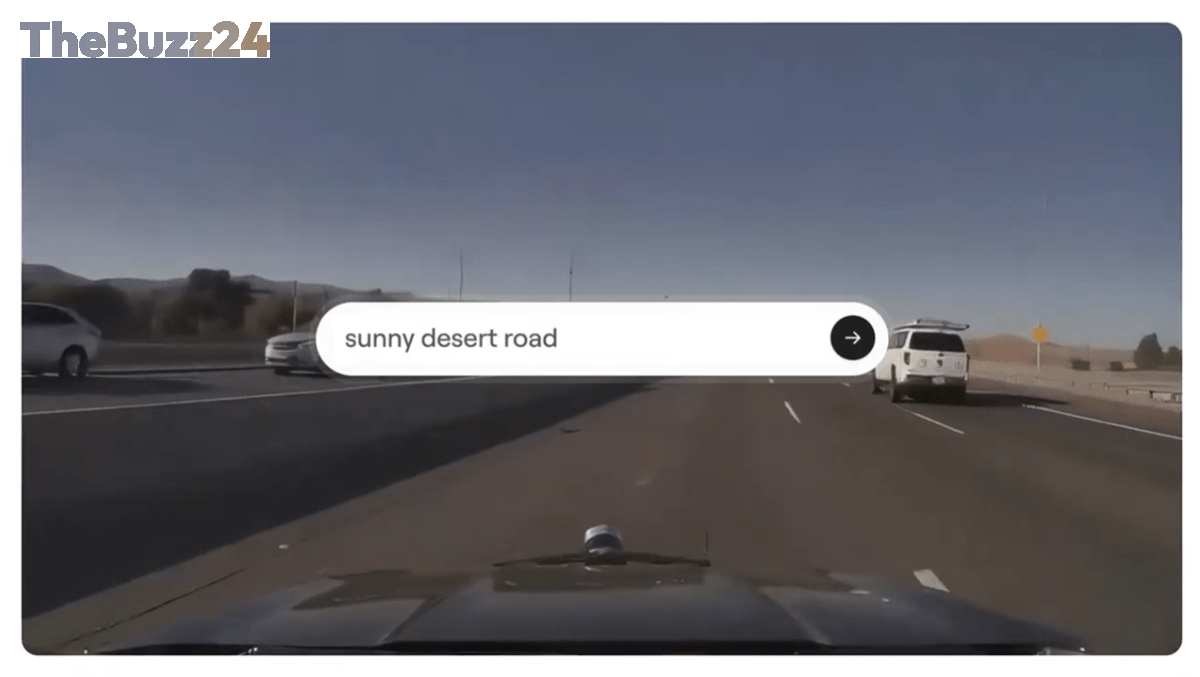
AI startup Decart has launched Oasis 3, its latest interactive world model designed to generate highly realistic driving environments in real-time. This advanced model is now accessible through an API, signaling a significant step forward in the development of AI for physical applications.
Initially, Decart is focusing on the autonomous vehicle sector, providing a platform for companies to simulate rare and complex driving scenarios at scale. The company also has plans to extend its reach into robotics and other areas of physical AI. A key strategic move by Decart is offering API access from the outset, aiming to cultivate a robust developer ecosystem around its world models, mirroring the success of platforms like OpenAI with language models.
“This is poised to be the first truly programmable world model,” stated Dean Leitersdorf, co-founder and CEO of Decart. “We anticipate a vibrant developer community will flourish on top of this technology.” Decart already boasts a substantial community of over 100,000 developers, many of whom utilize its real-time video model, Lucy, for applications in e-commerce and live streaming. Oasis 3 builds upon this foundation, marking Decart’s significant push into physical AI. Pricing for API access starts at $0.02 per second, with custom enterprise solutions available.
The world model landscape is becoming increasingly competitive, with major players like Google releasing Genie 3 and Fei-Fei Li’s World Labs introducing Marble. Decart’s Oasis 3 enters this arena with a strong emphasis on photorealism and continuous generation capabilities. This efficiency is partly attributed to Decart’s proprietary DOS (Decart Optimization Stack) software, which optimizes model performance across hardware from Nvidia, Amazon, and Google, thereby reducing operational costs significantly compared to competitors.
Despite its impressive capabilities, Oasis 3 faces challenges. While it excels at generating convincing initial scenes, the thematic consistency can degrade over extended simulations, leading to environments that lose their specific characteristics and become generic. Furthermore, issues such as unresponsive controls and the model’s tendency to allow vehicles to pass through each other indicate that perfect physics simulation remains an ongoing research problem. Decart acknowledges these limitations, particularly the auto-regressive nature of the model which generates frames sequentially, leading to rapid context window fill-up and potential memory limitations. The company is actively researching methods to enhance memory and context length, with future versions potentially allowing world generation from video input.
Key Takeaways
- Decart has launched Oasis 3, an interactive world model capable of generating photorealistic driving environments in real-time via API.
- The model targets autonomous vehicle development and robotics, aiming to build a developer ecosystem similar to OpenAI's approach with language models.
- While offering impressive realism and cost efficiency, Oasis 3 currently faces limitations in maintaining long-term thematic consistency and perfect physics simulation.
Editor’s Analysis & Impact
Decart’s Oasis 3 release signifies a notable advancement in the field of world models, particularly for applications requiring high-fidelity simulation. The company’s focus on developer accessibility via API and its emphasis on cost-efficiency through vertical integration are strategic moves that could foster rapid innovation. The potential to train autonomous systems on complex, rare scenarios at scale is immense. However, the current limitations in consistency and physics accuracy highlight that while world models are rapidly evolving, they are still in their nascent stages. The success of Oasis 3 will likely depend on Decart’s ability to address these technical hurdles and on the ingenuity of the developer community it aims to cultivate.
Frequently Asked Questions
Q: What is Decart's Oasis 3?
A: Oasis 3 is an interactive world model developed by AI startup Decart that can generate photorealistic driving environments in real-time. It is accessible via an API and is designed for applications like autonomous vehicle simulation and robotics.
Q: What are the main limitations of Oasis 3?
A: Current limitations include a degradation of thematic consistency in long simulations, unresponsive controls, and instances where the model does not accurately simulate physics (e.g., cars driving through each other). Maintaining long-term coherence and perfect physics remains an active area of research.
Q: How does Decart aim to compete in the world model market?
A: Decart is focusing on photorealism, infinite generation capabilities, and significant cost efficiency powered by its DOS software. By offering API access from day one, it aims to build a strong developer community and ecosystem around its technology.
AI Disclosure: This article is based on verified data and official reports. Our Team and AI have cross-referenced every financial detail with primary sources to ensure total accuracy.
More from this Category