Voyager 1 Nears Historic One-Light-Day Distance Milestone After Nearly Five Decades in Space
Nearly half a century after leaving Earth, the legendary Voyager 1 spacecraft continues to push the boundaries of human exploration. Launched in 1977, the twin probe is rapidly approaching a remarkable cosmic milestone: on November 18, 2026, it will officially cross the one-light-day mark, reaching a staggering 16.1 billion miles away from our Sun.
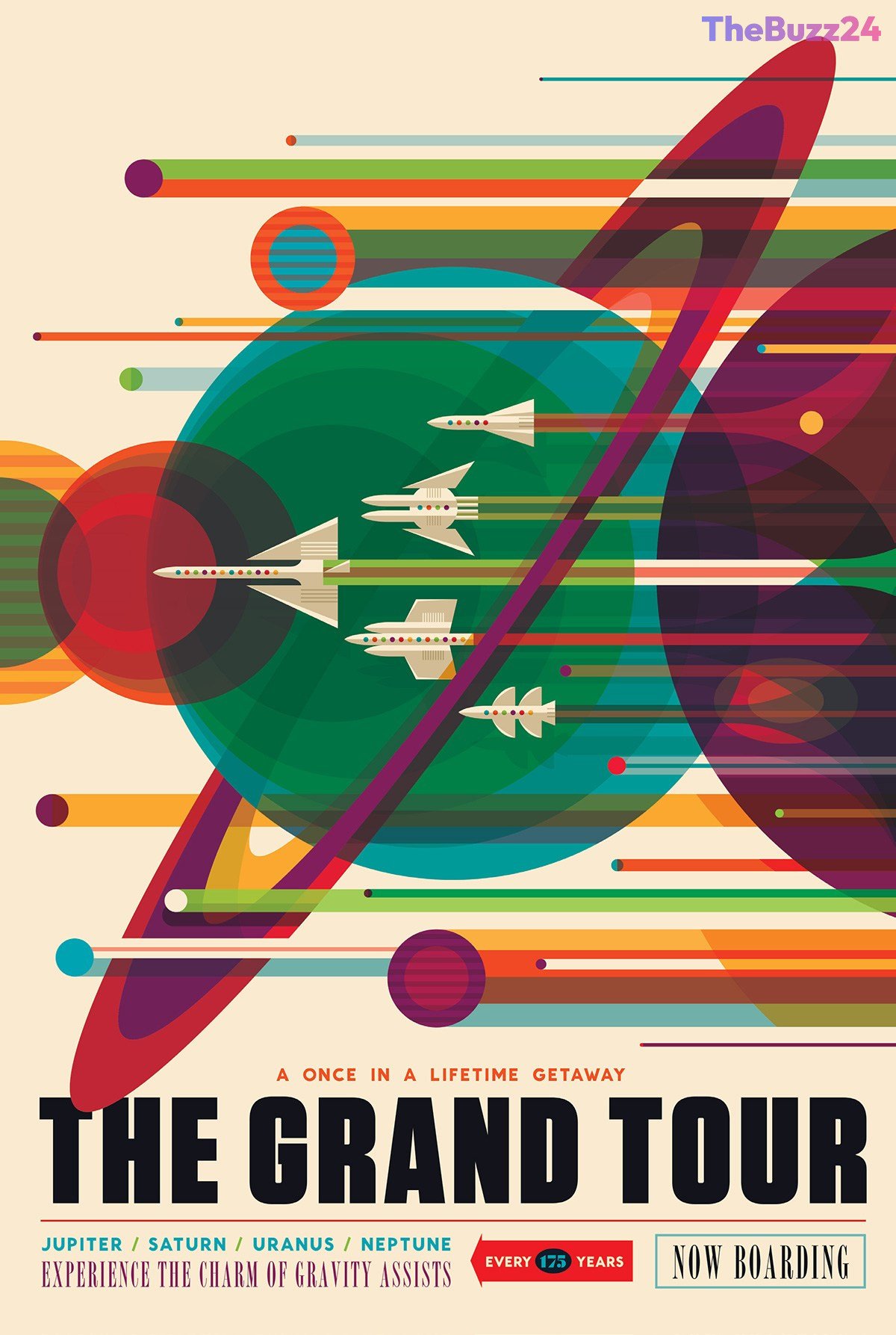
The mission initially capitalized on a rare, once-in-175-year planetary alignment of Jupiter, Saturn, Uranus, and Neptune. Through a sophisticated series of gravity assists, Voyager 1 and its sibling, Voyager 2, transformed humanity’s understanding of the outer solar system before journeying into the interstellar medium. While Voyager 2 charted a course toward Uranus and Neptune, Voyager 1 ultimately provided iconic imagery of the solar system, including the famous “pale blue dot” photograph of Earth.
Today, both spacecraft carry a unique cultural artifact known as the Golden Record. Designed to communicate the story of our world to any potential extraterrestrial intelligence, the 12-inch gold-plated copper phonograph features greetings in 55 languages, diverse musical selections, and sounds of Earth. The record’s protective aluminum cover includes scientific diagrams indicating the Sun’s position relative to 14 pulsars, along with instructions for playback etched onto a surface containing uranium-238 to withstand space radiation.
Communicating across such unfathomable distances requires the sophisticated capabilities of the Deep Space Network. As Voyager 1 sails well beyond the heliopause—the protective boundary where solar wind meets interstellar space—signals take over 24 hours to travel one way between the probe and Earth. Even after almost 50 years of continuous operation, these pioneering ambassadors continue transmitting invaluable scientific data from the absolute edge of the solar system.
Key Takeaways
- Voyager 1 is set to cross the one-light-day distance milestone from the Sun on November 18, 2026.
- Launched in 1977, the spacecraft utilized a rare planetary alignment and gravity assists to explore the outer solar system.
- Each Voyager probe carries a Golden Record containing sounds, images, and greetings from Earth encased in a radiation-resistant metal cover.
Editor’s Analysis & Impact
The enduring legacy of the Voyager mission represents one of the greatest technological and scientific achievements in human history. Designed for a much shorter lifespan, these probes have vastly exceeded expectations, providing unprecedented insights into the interstellar medium and the outer boundaries of our solar system. As Voyager 1 approaches the one-light-day milestone, the mission underscores the remarkable engineering capabilities of 1970s technology. Beyond the direct scientific data returned, the mission highlights the ongoing necessity for robust deep-space communication infrastructure, such as the Deep Space Network. The longevity of the Voyagers continues to inspire future generations of aerospace engineers and scientists, proving that sustained interplanetary and interstellar exploration is achievable with visionary planning and resilient design.
Frequently Asked Questions
Q: What is the Golden Record?
A: The Golden Record is a 12-inch phonograph record included aboard both Voyager spacecraft, containing greetings in 55 languages, music, environmental sounds, and images intended to showcase the diversity of life and culture on Earth.
Q: What does a 'light-day' mean in terms of distance?
A: A light-day is the distance that a beam of light travels in one Earth day, which is approximately 16.1 billion miles.
Q: Where are Voyager 1 and Voyager 2 currently located?
A: Both spacecraft have crossed the heliopause—the outer edge of the bubble created by the Sun's solar wind—and are currently traveling through interstellar space billions of miles away from Earth.
AI Disclosure: This article is based on verified data and official reports. Our Team and AI have cross-referenced every financial detail with primary sources to ensure total accuracy.
More from this Category