Decoding the Lifecycle of Memecoins: Rapid Peaks, Brutal Collapses, and Enduring Speculation
The volatile world of digital asset speculation has long been defined by the explosive rise and dramatic fall of memecoins. Recent market data analysis sheds light on the precise timeline of these speculative tokens, revealing that the typical memecoin follows a notoriously swift and unforgiving trajectory from its initial exchange listing to its ultimate collapse. By applying survival analysis techniques to a broad cross-section of tokens, researchers have mapped out the predictable lifecycle that characterizes the vast majority of these digital assets.
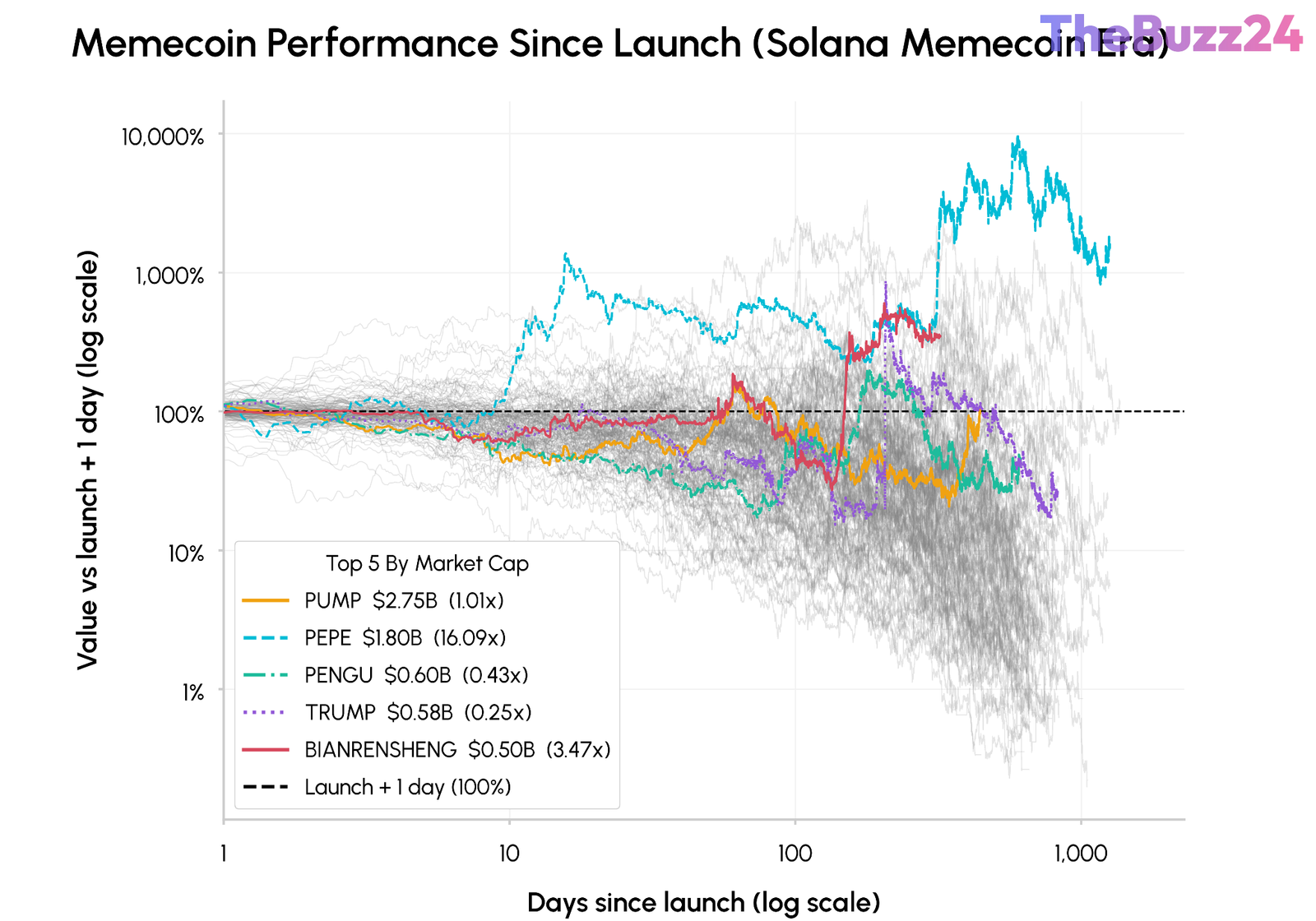
According to the findings, the median memecoin reaches its all-time high just 17.2 days after beginning public trade, with a quarter of tokens hitting their peak within a staggering 1.6 days. Once this peak is achieved, a steep and prolonged descent typically follows. The data indicates it takes a median of 370 days from that high-water mark for a token to suffer a 95% drawdown. Furthermore, recovery is exceptionally rare: approximately 81% of memecoins experience a collapse of 90% or more from their peak, and a mere 3.3% ever manage to recover their previous all-time high valuations.
The proliferation of automated launchpads has drastically lowered the barrier to entry, flooding the market with millions of speculative tokens. Despite this high-volume creation, price performance remains dismal across the board. The majority of tokens trade at a fraction of their launch value over time, and even major assets struggle to maintain long-term momentum. On-chain metrics mirror this bleak price action, showing that network activity surrounding major memecoins frequently dwindles to a fraction of its peak usage as speculative interest fades and migrates elsewhere.
Despite the overwhelmingly grim statistical outlook, analysts note that the underlying urge for high-risk speculation remains deeply ingrained in market culture. Rather than signaling the complete death of memecoin trading, these boom-and-bust cycles highlight how permissionless blockchain networks facilitate rapid capital formation and risk-taking. As tokenization continues to expand across emerging financial ecosystems, novel forms of digital speculation are expected to persist, driven by the enduring allure of asymmetric returns.
Key Takeaways
- The median memecoin reaches its all-time high in just 17.2 days, with a quarter peaking within 1.6 days of trading.
- Roughly 81% of memecoins suffer a price collapse of 90% or more from their peak, and only 3.3% ever manage to recover.
- Despite dismal long-term returns and severe drawdowns, high-risk speculation continues to thrive due to deep-seated market demand for asymmetric upside.
Editor’s Analysis & Impact
The quantitative breakdown of memecoin lifecycles underscores the extreme asymmetry and structural risk inherent in retail-driven crypto speculation. While decentralized launchpads have democratized token creation and successfully bootstrapped liquidity for emerging blockchain ecosystems, they have simultaneously accelerated the velocity of capital destruction. The data demonstrates that long-term value retention is statistically negligible for the vast majority of these assets. Looking ahead, regulators and platform developers will likely face increasing scrutiny regarding consumer protection, while traders will continue navigating these high-risk environments. Ultimately, memecoins function less as traditional long-term investments and more as hyper-accelerated lottery systems, proving that speculative behavior will persistently adapt to whichever technological rails permit frictionless deployment.
Frequently Asked Questions
Q: How long does it typically take for a memecoin to reach its peak?
A: The median memecoin reaches its all-time high price just 17.2 days after it is first traded on an exchange, with a quarter of all tokens hitting their peak within 1.6 days.
Q: What percentage of memecoins successfully recover after a major price collapse?
A: Recovery is exceptionally rare; about 81% of memecoins experience a drawdown of 90% or more from their all-time high, and only about 3.3% ever recover that peak value.
Q: Why do people continue to trade memecoins despite the poor statistical odds?
A: Speculation is deeply ingrained in financial market culture. Blockchains simply provide efficient, permissionless rails that allow traders to chase high-risk, asymmetric returns despite the overwhelming probability of long-term losses.
AI Disclosure: This article is based on verified data and official reports. Our Team and AI have cross-referenced every financial detail with primary sources to ensure total accuracy.
More from this Category