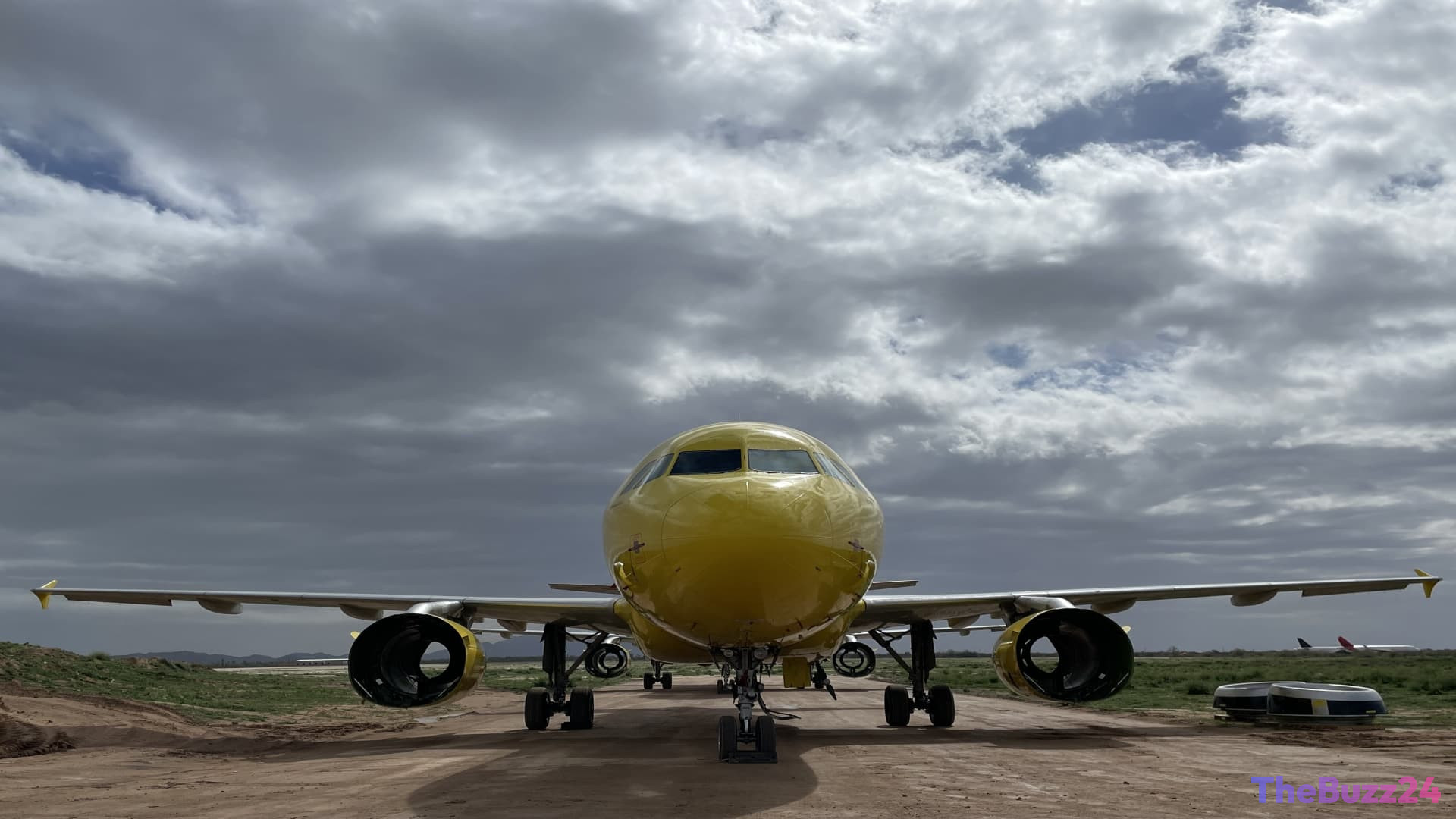
Spirit Airlines’ Grounded Fleet Finds Arid Haven in Arizona Desert Post-Collapse
In the wake of Spirit Airlines’ recent operational cessation, a specialized aviation logistics firm has embarked on the extensive undertaking of relocating numerous jets from the defunct carrier’s distinctive yellow fleet. Nomadic Aviation Group, known for its expertise in aircraft repossession and transport, has been actively ferrying a significant portion of Spirit’s planes from various airports across the United States to dedicated storage sites within the Arizona desert. This intricate operation, which commenced shortly after Spirit ceased flights in early May, represents one of the largest aircraft repossessions observed in recent times.
Steve Giordano, a managing partner at Nomadic Aviation Group, shed light on the complex coordination required to manage the movement of over two dozen aircraft. His dedicated team, comprising experienced pilots—including some who previously flew for Spirit Airlines—has been diligently flying the Airbus jets to specialized desert airfields situated near Phoenix and Tucson. These arid environments are strategically chosen for their ideal conditions, which naturally protect aircraft from corrosion and deterioration, a standard practice for preserving planes that are either retired or temporarily out of service.
The repossession effort underscores the profound logistical challenges inherent in an airline’s liquidation process. Unlike routine aircraft deliveries for new clients, this particular mission demanded that Nomadic oversee every facet of the operation, from securing fuel and ensuring necessary maintenance inspections to guaranteeing crew availability. Giordano emphasized the heightened sense of responsibility involved, stating, “When you’re out on a mission like this, there’s a lot more responsibility as far as getting the mission accomplished. To be honest, the easy part of this is the flying part of it.”
Spirit Airlines, having filed for bankruptcy and initiated the dismantling of its operations, maintained a fleet largely composed of leased aircraft. The systematic return of these planes to their respective lessors forms a crucial component of the ongoing bankruptcy proceedings. While the ultimate disposition of each individual jet remains undetermined, there is an anticipation that engines and other valuable components from these now-grounded aircraft could experience substantial demand, driven by persistent global supply chain disruptions and extended turnaround times within the broader aviation industry.
Key Takeaways
- Dozens of Spirit Airlines' distinctive yellow jets are being moved to desert storage facilities in Arizona following the airline's collapse.
- Nomadic Aviation Group is managing this complex repossession, utilizing hired pilots, some of whom are former Spirit employees, to fly the Airbus jets.
- The relocation is a critical part of Spirit's bankruptcy proceedings, involving the return of leased aircraft and potential high demand for their components due to aviation supply chain issues.
Editor’s Analysis & Impact
The large-scale repossession of Spirit Airlines’ fleet highlights the severe financial pressures and inherent volatility within the airline industry. This event will likely lead to a temporary increase in the availability of used aircraft and components, though ongoing global supply chain issues could absorb some of this surplus, particularly for critical parts like engines. For the broader market, Spirit’s collapse could pave the way for consolidation in the budget airline sector, potentially reducing competition and impacting fare structures. The meticulous logistical effort involved in grounding and storing such a large fleet also underscores the complex operational challenges faced during corporate liquidations, with implications for lessors, maintenance providers, and the aviation workforce.
Frequently Asked Questions
Q: Why are Spirit Airlines' jets being stored in the desert?
A: The jets are being stored in arid desert conditions near Phoenix and Tucson because the dry climate is ideal for preserving aircraft against corrosion and damage, a common practice for planes that are retired or temporarily out of service.
Q: What will happen to the Spirit Airlines aircraft?
A: Many of the aircraft were leased and are being returned to their lessors as part of Spirit's bankruptcy proceedings. While their ultimate fate is uncertain, components like engines and other parts from these grounded planes are expected to be in high demand due to ongoing supply chain issues in the aviation industry.
Q: Who is responsible for relocating the Spirit Airlines fleet?
A: Nomadic Aviation Group, a company specializing in aircraft logistics and repossession, is managing the complex operation of ferrying the jets from various airports to the desert storage facilities.
AI Disclosure: This article is based on verified data and official reports. Our Team and AI have cross-referenced every financial detail with primary sources to ensure total accuracy.
More from this Category