Devastating Back-to-Back Earthquakes Strike Venezuela, Leaving Hundreds Dead and Thousands Injured
A catastrophic disaster has struck Venezuela as two powerful, shallow earthquakes hit near the capital city of Caracas, leaving at least 235 people dead and more than 4,300 injured. The initial 7.2-magnitude tremor was followed almost immediately by a stronger 7.5-magnitude quake. Because both events occurred close to the Earth’s surface, the resulting destruction has been exceptionally severe. The disaster struck on a national holiday, a time when many residents were at home, leading to high casualty rates in residential areas.
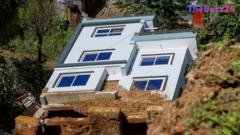
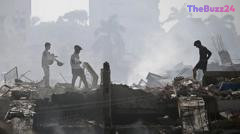
The coastal city of La Guaira and several neighborhoods in Caracas, including Altamira and Los Palos Grandes, have borne the brunt of the destruction. Emergency responders and local residents are working frantically to clear rubble from collapsed buildings, including multi-story hotels and apartment complexes, in a desperate race to find survivors. Local officials have confirmed that hundreds of buildings have been severely damaged or completely destroyed, while the main international airport in Maiquetía has been forced to close due to structural damage. Power outages and communication failures are further complicating rescue operations.
In response to the crisis, interim President Delcy Rodríguez has declared a state of emergency. The disaster has prompted a swift international response, with several nations pledging immediate humanitarian aid. The United States has promised $150 million in assistance, with the U.S. military deploying transport ships, aircraft, and specialized search-and-rescue teams to assist in the recovery efforts. This mobilization represents a significant moment of international cooperation during a period of ongoing political transition and economic strain within Venezuela.
Geological experts warn that the death toll is highly likely to rise as search operations continue. The region, which sits atop the boundary of two major tectonic plates, has experienced dozens of aftershocks since the initial quakes. This event marks the strongest earthquake to hit Venezuela since 1900, drawing comparisons to a devastating 1967 quake that claimed 200 lives. With thousands of people now homeless and sleeping in the streets out of fear of further collapses, the country faces a prolonged and challenging recovery process.
Key Takeaways
- Two powerful, shallow earthquakes measuring 7.2 and 7.5 magnitude struck Venezuela, killing at least 235 people and injuring over 4,300.
- Major structural damage has been reported in Caracas and La Guaira, including the collapse of multi-story buildings and the closure of the country's main international airport.
- The United States has pledged $150 million in aid and deployed military assets to support search-and-rescue operations amid a declared state of emergency.
Editor’s Analysis & Impact
This catastrophic event presents both an immediate humanitarian crisis and a complex geopolitical test for Venezuela. Coming at a time of severe economic instability and political transition, the country’s infrastructure is ill-equipped to handle a disaster of this magnitude. The closure of the primary international airport and widespread power outages will severely hinder domestic relief efforts. However, the disaster has also opened a channel for rapid international diplomacy. The swift deployment of $150 million in U.S. aid and military search-and-rescue assets marks a pivotal moment in U.S.-Venezuela relations, which have been highly strained. How the interim government coordinates this massive influx of foreign aid and manages the long-term reconstruction of critical infrastructure will likely define its domestic legitimacy and shape its future diplomatic ties with Western allies.
Frequently Asked Questions
Q: What caused the severe earthquakes in Venezuela?
A: Venezuela is situated over the boundary of two major tectonic plates. The earthquakes were caused by the sudden release of built-up friction between these plates, resulting in shallow, highly destructive tremors.
Q: How has the international community responded to the disaster?
A: Several countries have pledged support, with the United States leading the effort by promising $150 million in aid and deploying military transport ships, aircraft, and search-and-rescue teams to assist local emergency workers.
Q: Which areas in Venezuela were hardest hit?
A: The capital city of Caracas—particularly the Altamira and Los Palos Grandes neighborhoods—and the nearby coastal city of La Guaira suffered the most severe structural damage and casualties.
AI Disclosure: This article is based on verified data and official reports. Our Team and AI have cross-referenced every financial detail with primary sources to ensure total accuracy.
More from this Category