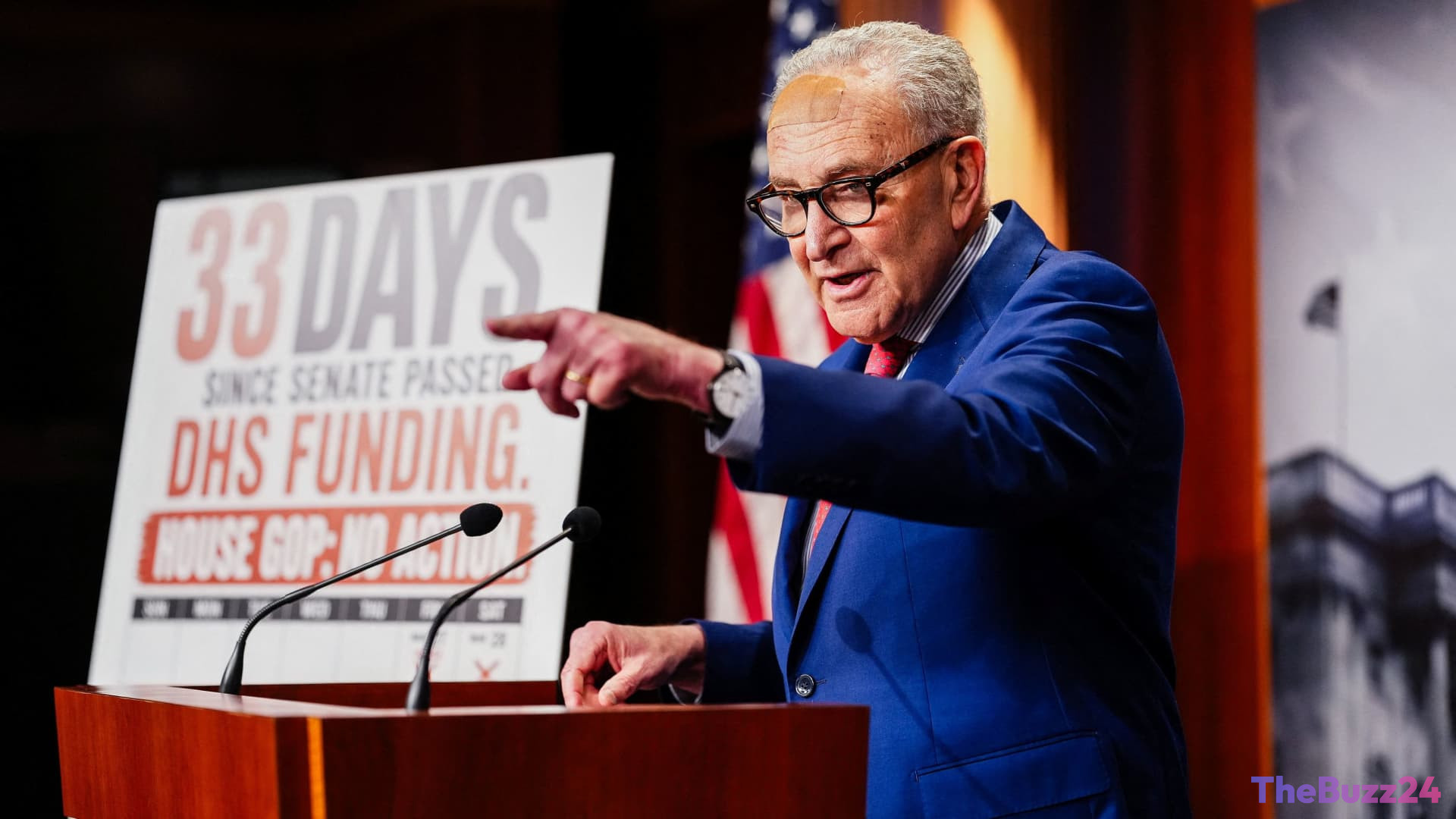
National Security at Risk as DHS Funding Crisis Deepens
The Department of Homeland Security (DHS) is currently navigating a precarious financial situation as a partial government shutdown stretches into its third month. With emergency funding reserves nearly depleted, thousands of essential federal employees—including Transportation Security Administration (TSA) agents and Secret Service personnel—face the imminent prospect of missed paychecks. This financial instability threatens to compromise the operational integrity of the nation’s airports and the security of high-ranking officials who rely on these dedicated professionals.
Legislative efforts to break the deadlock remain stalled due to deep-seated partisan divisions. In the House, leadership is attempting to utilize budget reconciliation to prioritize funding for Immigration and Customs Enforcement (ICE) and Customs and Border Protection (CBP). This approach has encountered significant pushback, not only from the opposing party, which is calling for comprehensive immigration enforcement reforms, but also from factions within the Republican party itself. The inability to reach a consensus has effectively paralyzed the legislative process.
Compounding the crisis is a packed legislative calendar that includes the reauthorization of the Foreign Intelligence Surveillance Act (FISA) and the passage of a critical farm bill. Disputes regarding surveillance warrants and agricultural protections have further hindered the House’s productivity. With a scheduled recess looming, lawmakers are under immense pressure to resolve these disagreements before the lack of funding leads to a broader breakdown in essential government services and national security infrastructure.
Key Takeaways
- DHS employees, including TSA and Secret Service staff, face potential pay delays as emergency funding runs dry.
- Congressional gridlock over border policy and immigration enforcement is preventing a broader funding resolution.
- The legislative impasse is delaying other critical business, including the reauthorization of FISA and the farm bill.
Editor’s Analysis & Impact
The current DHS funding standoff highlights a dangerous intersection of political brinkmanship and national security vulnerability. By tethering essential agency payroll to contentious immigration policy debates, lawmakers have created a scenario where the operational readiness of the country’s front-line security forces is used as a bargaining chip. This dysfunction signals a broader trend of legislative paralysis that threatens to erode public trust and institutional stability. If the impasse continues, the potential for a cascading failure in government services—ranging from airport security to intelligence oversight—could have long-term consequences for national safety. Moving forward, the inability to decouple routine government funding from ideological policy battles suggests that future shutdowns may become increasingly difficult to resolve, potentially forcing a shift in how federal agencies manage emergency financial contingencies.
Frequently Asked Questions
Q: Why are DHS employees at risk of missing paychecks?
A: The partial government shutdown has exhausted emergency financial measures, leaving the department without the necessary funds to process payroll for thousands of federal staff.
Q: What is the primary cause of the legislative gridlock?
A: The gridlock is primarily driven by disagreements over border policy and immigration enforcement, specifically regarding funding for ICE and CBP, which has prevented a consensus on broader government spending.
AI Disclosure: This article is based on verified data and official reports. Our Team and AI have cross-referenced every financial detail with primary sources to ensure total accuracy.
More from this Category