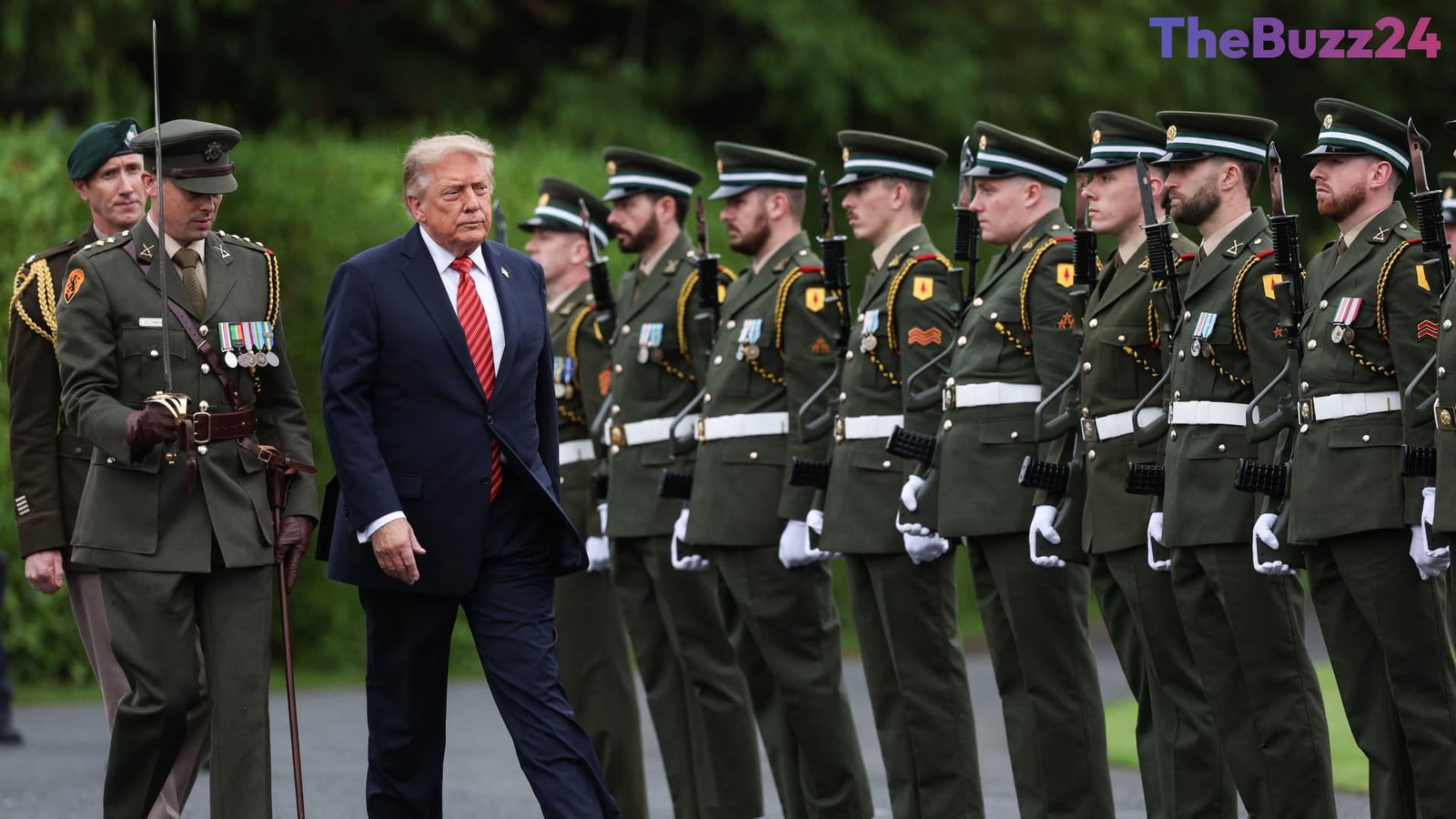
Donald Trump Arrives in Ireland for Diplomatic Meetings and Golf Tournament
Former President Donald Trump touched down in Dublin on Saturday for a brief 48-hour visit to Ireland, marking a departure from his recent domestic focus on midterm election campaigning and geopolitical tensions. While the trip is not classified as an official state visit, the itinerary includes high-level meetings with Irish President Catherine Connolly and Prime Minister Micheal Martin. These discussions are expected to touch upon significant economic ties and international policy concerns, despite the informal nature of the travel.
The visit occurs against a backdrop of heightened global tension and domestic political pressure. As the Republican Party works to secure its standing in Congress, the economic impact of international conflicts—specifically rising fuel costs—remains a primary concern for American voters. In Ireland, the visit has drawn attention due to the country’s distinct stance on foreign policy, including its recent legislative efforts to restrict trade with settlements in the Israeli-occupied West Bank, a move that has previously drawn criticism from U.S. officials.
Beyond the diplomatic agenda, the trip highlights the intersection of Trump’s political and business interests. The former president is scheduled to visit his property, the Trump International Golf Links in Doonbeg, which is currently hosting the Irish Open. He is expected to participate in the trophy presentation ceremony on Sunday. The visit has prompted planned demonstrations in both Dublin and near the Doonbeg resort, reflecting a mix of political opposition and public scrutiny regarding the nature of the trip.
Economic cooperation remains the cornerstone of the U.S.-Ireland relationship, with American-owned firms accounting for approximately 10% of the Irish workforce. Prime Minister Martin has emphasized the significance of this bilateral partnership, noting that the economic integration between the two nations has been a vital component of Ireland’s fiscal health for decades. Despite the potential for friction during meetings with officials like President Connolly, who has previously expressed strong opposition to U.S. foreign policy, both sides appear focused on maintaining the stability of this long-standing transatlantic alliance.
Key Takeaways
- Donald Trump is visiting Ireland for a 48-hour trip involving meetings with Irish leadership and attendance at the Irish Open golf tournament.
- The visit highlights the strong economic ties between the U.S. and Ireland, where American companies employ roughly 10% of the local workforce.
- The trip has sparked planned protests in Ireland, driven by disagreements over U.S. foreign policy and the intersection of Trump's political and business activities.
Editor’s Analysis & Impact
This visit underscores the complex duality of Donald Trump’s public life, where personal business interests and high-level statecraft frequently overlap. From a market perspective, the U.S.-Ireland economic corridor is robust, and the focus on corporate tax revenue and employment remains a stabilizing force for Irish public finances. However, the political optics of the trip are fraught with tension. By choosing to visit a property hosting a major sporting event during a critical domestic election cycle, Trump is navigating a delicate balance between maintaining his brand and addressing voter concerns regarding the economy and foreign policy. Future implications suggest that while bilateral trade will likely remain insulated from these personal visits, the diplomatic friction between U.S. foreign policy and European neutrality will continue to be a point of contention in transatlantic relations.
Frequently Asked Questions
Q: Is this an official state visit to Ireland?
A: No, the trip is not classified as an official state visit, though it does include meetings with Ireland's President and Prime Minister.
Q: Why is the visit to the Doonbeg golf course significant?
A: The Doonbeg course is owned by the Trump Organization and is currently hosting the Irish Open, where the former president is expected to present the trophy to the tournament winner.
AI Disclosure: This article is based on verified data and official reports. Our Team and AI have cross-referenced every financial detail with primary sources to ensure total accuracy.
More from this Category