Privacy-First Search: DuckDuckGo Sees User Surge Amid Google AI Backlash
DuckDuckGo is experiencing a notable rise in user adoption as a growing segment of the public expresses dissatisfaction with Google’s recent integration of AI-driven search features. The shift comes in response to Google’s transition toward automated agents that prioritize AI-generated summaries over traditional search results, a change that has left many users feeling that they have lost control over their digital browsing experience.
Recent data indicates that weekly installs for DuckDuckGo in the United States have climbed by an average of 18%, with some days seeing spikes as high as 30%. The trend is particularly pronounced on iOS devices, where daily install rates have surged by nearly 70% in certain instances. This migration is largely attributed to concerns regarding the accuracy of AI-generated summaries and a widespread frustration over the lack of an easy opt-out mechanism for these new search interfaces.
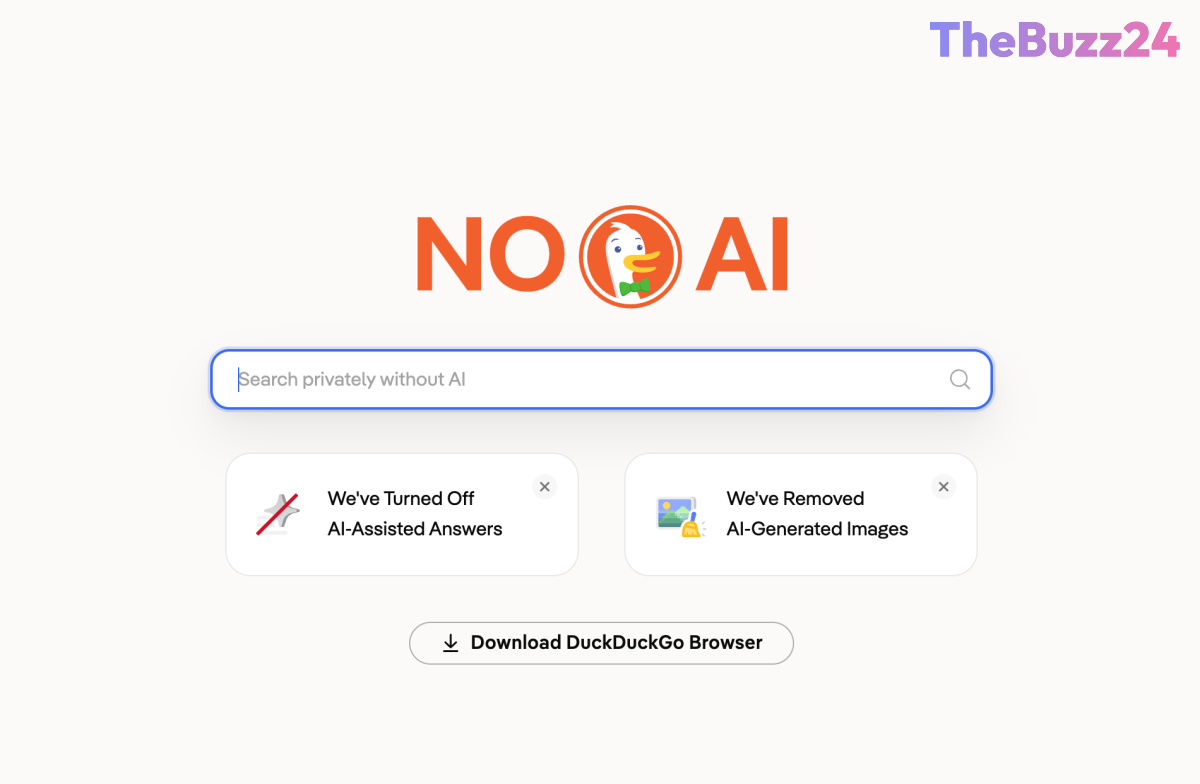
In response to the demand for a more traditional and private browsing experience, DuckDuckGo has reported a significant increase in traffic to its ‘no-AI’ search portal, which allows users to bypass AI-generated content entirely. While DuckDuckGo does offer its own AI-powered tools via Duck.ai—utilizing models from companies such as OpenAI, Anthropic, Meta, and Mistral—it maintains a strict privacy policy. The platform ensures that user IP addresses are stripped and that personal data is never utilized to train third-party AI models, positioning itself as a privacy-conscious alternative for those wary of the current direction taken by major tech firms.
Key Takeaways
- DuckDuckGo is experiencing a significant uptick in new installs, with daily peaks on iOS reaching nearly 70%.
- Users are migrating to privacy-focused alternatives due to frustration over Google's forced AI-driven search results.
- DuckDuckGo provides a 'no-AI' search option and maintains a strict policy against using user data to train AI models.
Editor’s Analysis & Impact
The current migration of users toward DuckDuckGo highlights a critical friction point in the evolution of search engines: the tension between AI-driven convenience and user autonomy. Google’s aggressive push to integrate generative AI into its core product has inadvertently created a market opening for competitors who prioritize simplicity and data privacy. This trend suggests that while AI is the future of information retrieval, a significant portion of the market remains skeptical of ‘black box’ algorithms that prioritize automated summaries over verifiable source links. If Google fails to provide a seamless opt-out mechanism, it risks further erosion of its market share among power users and privacy advocates. Long-term, this shift could force major search providers to adopt more transparent, user-centric interfaces to prevent further attrition to smaller, privacy-first platforms.
Frequently Asked Questions
Q: Does DuckDuckGo offer any AI features?
A: Yes, through Duck.ai, users can access models from companies like OpenAI, Anthropic, Meta, and Mistral, but the platform ensures that user data is not used to train these models.
Q: Can I use DuckDuckGo without seeing AI-generated content?
A: Yes, DuckDuckGo provides a dedicated 'no-AI' search page that allows users to bypass AI-assisted answers and generated images entirely.
AI Disclosure: This article is based on verified data and official reports. Our Team and AI have cross-referenced every financial detail with primary sources to ensure total accuracy.
More from this Category