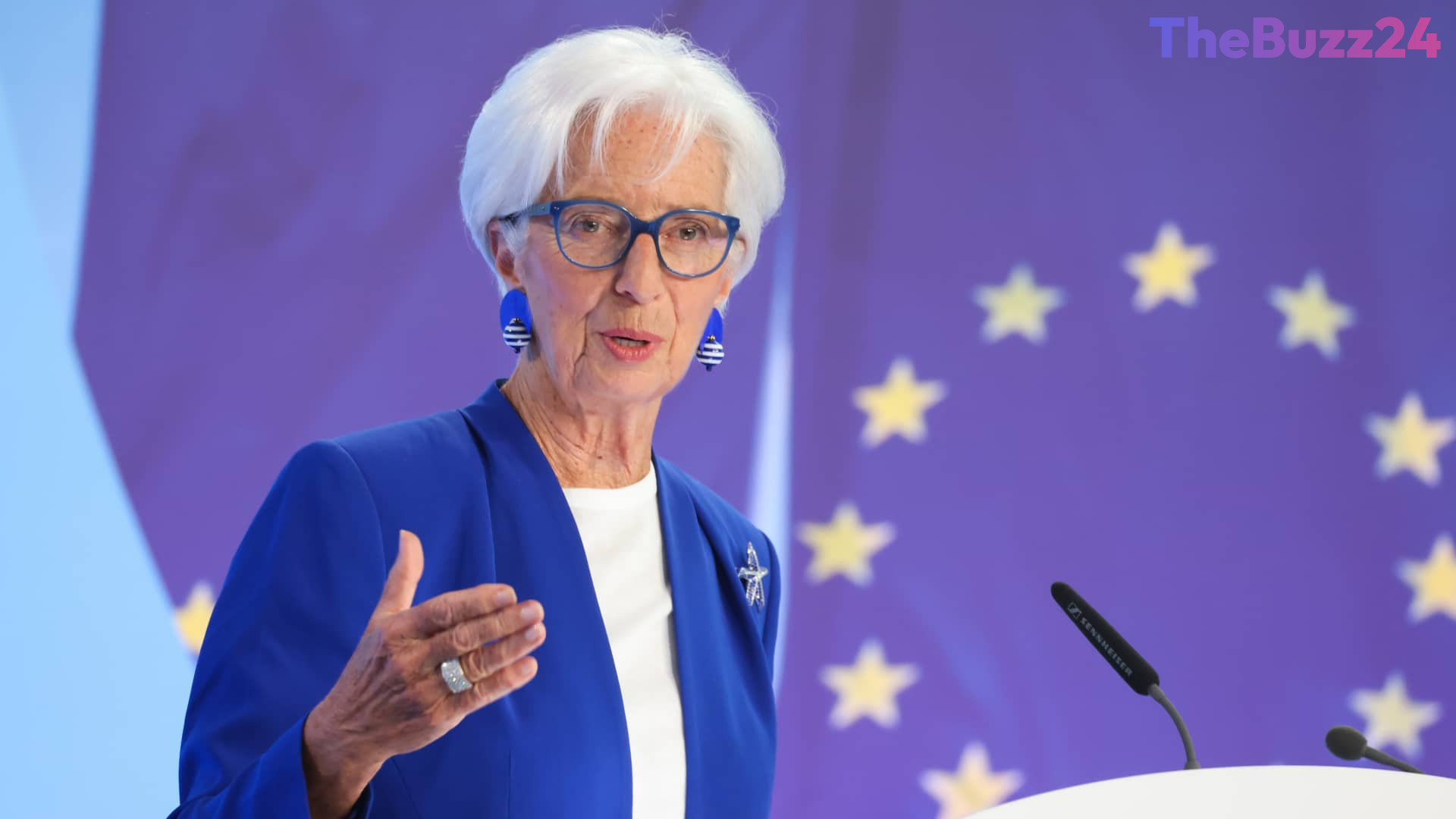
ECB Chief Christine Lagarde Refuses to Rule Out Early Exit Ahead of French Presidential Race
European Central Bank (ECB) President Christine Lagarde has signaled that she may step down from her post ahead of schedule to engage in France’s upcoming 2027 presidential election. Lagarde, whose official term at the helm of the central bank runs until October 2027, indicated that an early departure is a distinct possibility as she weighs how to best defend France’s integration within the European Union against rising eurosceptic sentiments.
The political landscape in France is gearing up for a highly contentious transition, with President Emmanuel Macron ineligible to run for a third consecutive term. Currently, Jordan Bardella, leader of the far-right National Rally, is leading early polls. Bardella has campaigned on a platform aimed at scaling back the authority of the European Commission and prioritizing national sovereignty over EU directives. Lagarde expressed deep concern over any political rhetoric that might diminish France’s standing in Europe, asserting that a strong European perspective must be actively represented in the national debate.
While Lagarde reaffirmed her immediate commitment to guiding the ECB through current economic turbulence and maintaining price stability, she did not dismiss the idea of directly supporting a candidate or even launching her own bid. She emphasized that France’s economic future is intrinsically linked to its European roots, warning that isolating the nation would lead to a clouded economic outlook. However, her potential departure introduces uncertainty for the eurozone, as previous rumors of her early exit have already triggered volatility in the currency markets.
This political maneuvering comes at a delicate time for France, which is currently grappling with severe fiscal pressures. The French government is attempting to implement budget cuts of at least 4 billion euros ($4.6 billion) to rein in its public deficit and align with the EU’s 3% GDP deficit threshold by 2029. A highly fragmented parliament has complicated these efforts, raising concerns that the upcoming presidential campaign could overshadow critical legislative negotiations required to stabilize the country’s economy.
Key Takeaways
- ECB President Christine Lagarde has acknowledged the possibility of leaving her post before her term ends in October 2027 to participate in the French presidential debate.
- Lagarde aims to counter eurosceptic narratives, particularly from far-right frontrunner Jordan Bardella, by advocating for France's strong integration within the European Union.
- The prospect of an early leadership transition at the ECB introduces potential market volatility, even as France struggles with a highly fragmented parliament and strict EU deficit targets.
Editor’s Analysis & Impact
Christine Lagarde’s potential early exit from the ECB introduces a layer of geopolitical and financial risk to the eurozone. As the central bank navigates the tail end of its inflation-fighting campaign, a leadership vacuum or sudden transition could destabilize bond markets and weaken the euro, as seen during previous rumors of her departure. Furthermore, her willingness to enter the French political arena underscores the growing anxiety among centrist European elites regarding the rise of nationalist, eurosceptic parties like the National Rally. If Lagarde transitions from central banking to active politics, she could become a unifying figure for pro-European moderates. However, this move risks politicizing the ECB’s legacy. Meanwhile, France’s struggle to pass crucial budget cuts highlights the deep structural challenges facing the eurozone’s second-largest economy, making political stability in Paris a critical concern for the entire monetary union.
Frequently Asked Questions
Q: When does Christine Lagarde's term as ECB President officially end?
A: Her non-renewable eight-year term is scheduled to conclude in October 2027.
Q: Why is Lagarde considering an early departure from the ECB?
A: She wants to ensure a strong pro-European voice is represented in the 2027 French presidential election, particularly to counter eurosceptic platforms that seek to reduce France's integration with the European Union.
Q: What economic challenges is France currently facing?
A: France is dealing with a highly fragmented parliament and significant public debt. The government is currently trying to pass billions of euros in budget cuts to reduce its deficit to the EU-mandated 3% of GDP by 2029.
AI Disclosure: This article is based on verified data and official reports. Our Team and AI have cross-referenced every financial detail with primary sources to ensure total accuracy.
More from this Category