Empowering Youth: Educators Harness NASA Satellite Data to Monitor Local Air Pollution
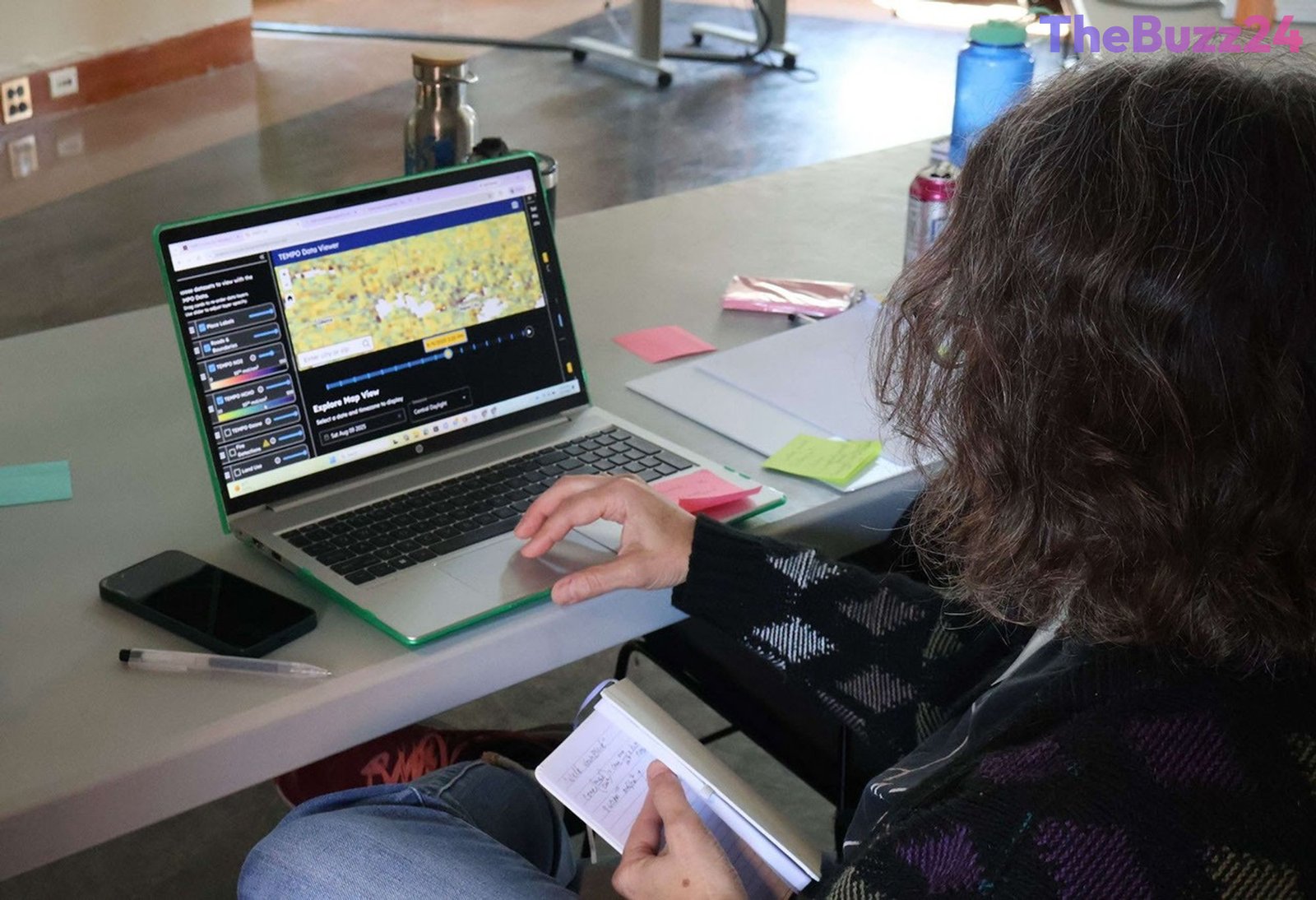
Educators and youth advocates are taking air quality monitoring into their own hands through an innovative initiative utilizing satellite technology. A collaborative project led by Harvard University’s Cosmic Storytelling with NASA Data (CosmicDS) and the Smithsonian Institution’s Breathing Easier: Supporting Teen Air Quality Investigations (BEST AQI) recently hosted a three-day Leadership Institute at the Center for Astrophysics in Cambridge, Massachusetts. The event convened 13 formal and informal educators to master TEMPO-Lab, an interactive web platform designed to analyze real-time pollution data.
Powered by NASA’s Tropospheric Emissions: Monitoring of Pollution (TEMPO) mission, the web tool enables users to evaluate atmospheric pollutants across North America on an hourly basis during daylight hours. During the workshop, participating teachers developed localized case studies analyzing environmental stressors such as wildfire smoke, agricultural emissions, power plant output, and metropolitan traffic congestion. The initiative aims to translate complex satellite metrics into actionable scientific learning for high school students across their home communities.
Highlighting the rapid adaptability of the project’s digital framework, software developers updated TEMPO-Lab overnight during the institute after scientists announced the release of a new beta ground-level ozone data product. This immediate integration allowed participants to examine cutting-edge ozone readings the next morning, showcasing how educational platforms can sync seamlessly with active scientific research.
Looking forward, the participating educators plan to expand the reach of the BEST AQI toolkit and TEMPO-Lab software by training approximately 100 additional teachers in South Dakota, Maryland, and New York. This expansion holds the potential to engage thousands of young researchers in assessing environmental hazards and advocating for cleaner air in their local regions.
Key Takeaways
- A joint initiative by Harvard University and the Smithsonian Institution trained educators to use NASA's TEMPO satellite data for local air quality analysis.
- The web-based TEMPO-Lab platform was updated overnight to incorporate new ground-level ozone data, giving teachers real-time analytical capabilities.
- Trained educators will cascade the curriculum to 100 colleagues, potentially reaching thousands of youth researchers across multiple states.
Editor’s Analysis & Impact
The integration of real-time satellite observation tools like TEMPO-Lab into secondary and community education represents a pivotal shift toward decentralized environmental monitoring. By providing public access to high-resolution atmospheric metrics, academic institutions are closing the gap between advanced scientific research and grassroots advocacy. As extreme weather events and wildfire smoke increasingly disrupt public health across North America, democratizing air quality data equips younger generations with the tools needed for data-driven civic action. Furthermore, rapid software deployments—such as integrating ground-level ozone metrics overnight—set a new precedent for real-time educational technology, demonstrating how open-data initiatives can foster community resilience and inspire future STEM careers.
Frequently Asked Questions
Q: What is TEMPO-Lab?
A: TEMPO-Lab is a free web-based interactive tool that allows educators and students to examine near-real-time air pollution data collected across North America.
Q: How frequently does NASA's TEMPO mission gather air quality data?
A: The TEMPO instrument measures major atmospheric pollutants hourly across North America during daylight hours.
Q: Where will this air quality education program be expanded?
A: The initial group of trained educators plans to share the curriculum with approximately 100 additional teachers across partner sites in South Dakota, Maryland, and New York.
AI Disclosure: This article is based on verified data and official reports. Our Team and AI have cross-referenced every financial detail with primary sources to ensure total accuracy.
More from this Category