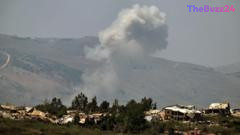
Escalating Tensions: Israeli Strikes Continue in Lebanon Amid Diplomatic Pressure
Military operations in southern Lebanon intensified on Wednesday as Israeli forces conducted a series of drone and jet strikes across multiple regions, including Mansouri, Aaziyyeh, and Nabatieh al-Fawqa. These actions occurred despite vocal criticism from U.S. President Donald Trump, who has publicly urged Israeli leadership to exercise greater restraint. While the Israeli military remained silent on the specific strikes, they confirmed that five soldiers sustained injuries during a separate drone engagement initiated by Hezbollah.
The ongoing hostilities persist even as international efforts to solidify a ceasefire agreement between the United States and Iran gain momentum. President Trump, speaking at the G7 summit, expressed frustration with the scale of the Israeli military response, suggesting that the current intensity of the conflict is unsustainable. Despite his close relationship with Prime Minister Benjamin Netanyahu, Trump emphasized that the U.S. role remains critical to Israel’s security, while simultaneously signaling that the current military approach in Lebanon has exceeded acceptable limits.
Hezbollah leadership has characterized the emerging U.S.-Iran agreement as a significant victory, calling for the restoration of Lebanese sovereignty and the withdrawal of foreign troops. Meanwhile, the Lebanese government is navigating a complex diplomatic path, seeking an independent resolution while welcoming international support for a ceasefire. As both sides prepare for potential formal negotiations in Switzerland, the humanitarian toll continues to rise, with thousands of casualties reported since the conflict expanded into Lebanon earlier this year.
Key Takeaways
- Israeli military strikes continue in southern Lebanon despite public pressure from the U.S. government to de-escalate.
- President Trump has publicly criticized the intensity of Israel's military campaign, highlighting a growing friction between the two allies.
- Hezbollah and the Lebanese government are signaling a desire for a ceasefire and the withdrawal of Israeli forces as part of a broader U.S.-Iran diplomatic framework.
Editor’s Analysis & Impact
The current situation in Lebanon represents a volatile intersection of regional proxy warfare and shifting geopolitical alliances. The friction between the U.S. administration and the Israeli government suggests that the traditional ‘blank check’ approach to military support may be evolving under the current U.S. leadership. If the U.S.-Iran agreement successfully moves toward a formal signing, it could fundamentally alter the security architecture of the Middle East, potentially isolating hardline factions that rely on perpetual conflict. However, the immediate outlook remains grim; the lack of a formal, transparent agreement leaves a power vacuum that both Hezbollah and the Israeli military are currently filling with kinetic action. Investors and regional observers should anticipate continued market volatility and potential supply chain disruptions if the conflict in the Levant fails to stabilize before the proposed diplomatic summit in Switzerland.
Frequently Asked Questions
Q: Why is the U.S. President criticizing Israel's actions in Lebanon?
A: President Trump has expressed concern that the scale of the military strikes is excessive and that the conflict has persisted for too long, potentially undermining broader diplomatic efforts to secure a ceasefire.
Q: What is the primary demand of Hezbollah regarding the current conflict?
A: Hezbollah is calling for the restoration of Lebanese sovereignty and the complete withdrawal of Israeli troops from occupied territories in southern Lebanon.
AI Disclosure: This article is based on verified data and official reports. Our Team and AI have cross-referenced every financial detail with primary sources to ensure total accuracy.
More from this Category