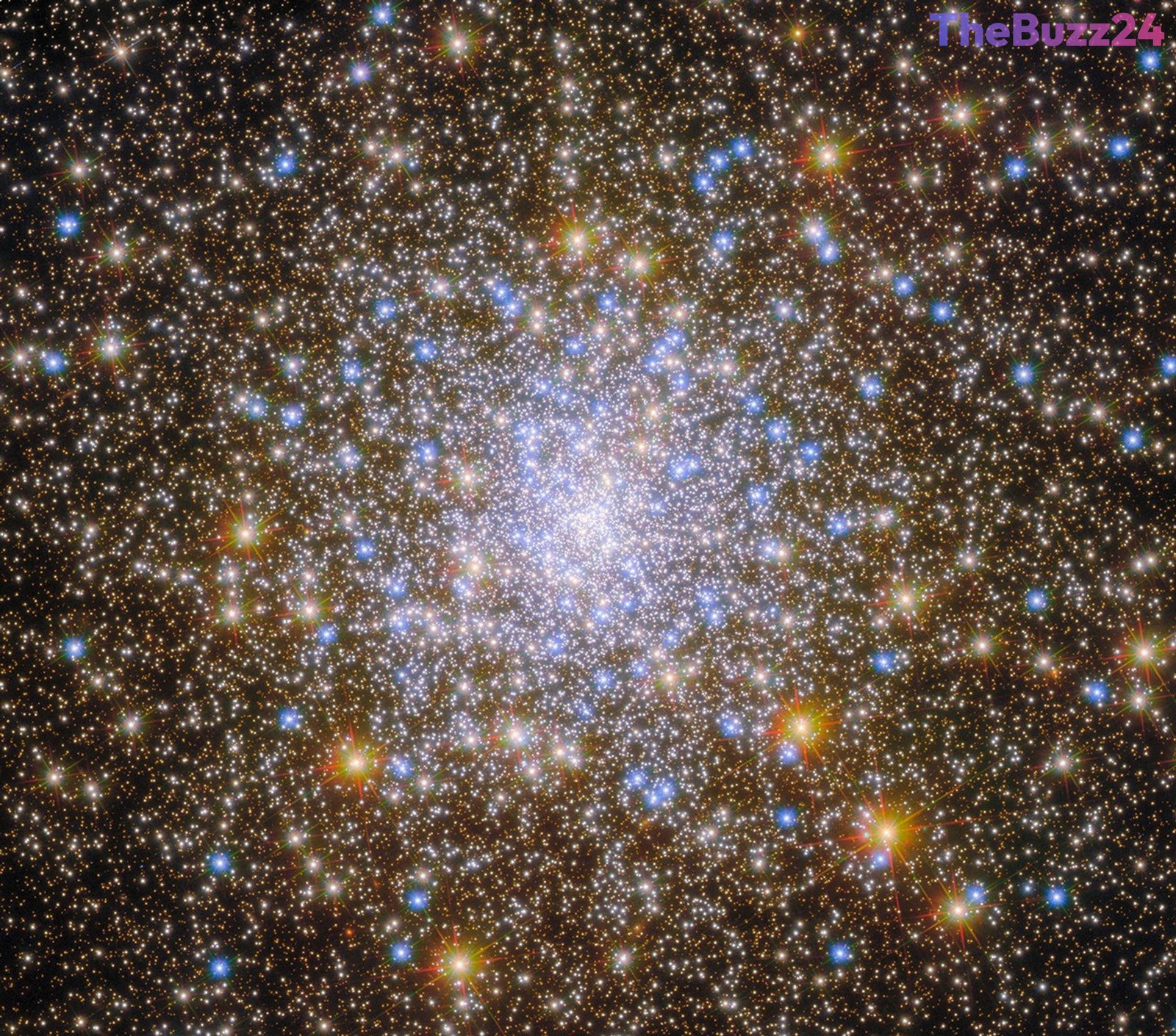
Hubble’s Glimpse into Galactic History: The Sparkling Messier 30 Cluster
An extraordinary new image from the NASA/ESA Hubble Space Telescope, released on November 5, 2026, offers a profound lesson in the universe’s ancient past. This captivating celestial portrait showcases Messier 30 (M30), a dense globular cluster brimming with thousands of stars, located approximately 27,500 light-years from Earth within the constellation Capricornus. The intricate details captured by Hubble provide astronomers with invaluable data for understanding stellar evolution and the formation of galaxies.
The cluster bears the name of the renowned French astronomer Charles Messier, who meticulously cataloged M30 and numerous other diffuse celestial objects during the 18th century. Messier’s pioneering work was crucial for navigators and astronomers of his era, helping them distinguish between comets, which often appeared as fuzzy patches through early telescopes, and stationary deep-sky objects like nebulae and star clusters. His catalog remains a cornerstone of astronomical observation today.
Globular clusters like M30 are ancient collections of stars, often considered cosmic fossils, providing a window into the early universe. Their stars are typically much older than those found in the galactic disk, offering clues about the conditions present billions of years ago. The detailed observations, made possible by the collaborative efforts of ESA/Hubble and NASA, with contributions from researchers M. Libralato, G. Piotto, and A. Sarajedini, allow scientists to study the dynamics and stellar populations within these venerable structures, furthering our comprehension of galactic evolution.
Key Takeaways
- The NASA/ESA Hubble Space Telescope has captured a stunning image of Messier 30 (M30), a globular cluster in the constellation Capricornus.
- M30, located 27,500 light-years away, was named after French astronomer Charles Messier, who cataloged it to differentiate from comets.
- Studying ancient globular clusters like M30 provides crucial insights into galactic history and stellar evolution.
Editor’s Analysis & Impact
The continuous release of high-resolution images from instruments like the Hubble Space Telescope underscores the enduring value of space-based observatories for scientific discovery. Globular clusters, as ancient stellar populations, are critical laboratories for understanding the early universe, star formation, and the evolution of galaxies. This particular observation of Messier 30 contributes to a broader effort to map and characterize these cosmic relics. The data gathered from such images not only advances theoretical astrophysics but also informs future missions, including those by the James Webb Space Telescope and upcoming observatories, ensuring a continuous stream of groundbreaking insights into our cosmos.
Frequently Asked Questions
Q: What is Messier 30 (M30)?
A: Messier 30 is a globular cluster, a dense, spherical collection of thousands of stars, located approximately 27,500 light-years away in the constellation Capricornus.
Q: Who was Charles Messier?
A: Charles Messier was an 18th-century French astronomer famous for compiling a catalog of 110 deep-sky objects (like nebulae and star clusters) to help astronomers distinguish them from comets.
Q: Why are globular clusters important to study?
A: Globular clusters are vital for understanding galactic history and stellar evolution because they contain some of the oldest stars in the universe, offering clues about the conditions and processes that occurred billions of years ago during the early formation of galaxies.
AI Disclosure: This article is based on verified data and official reports. Our Team and AI have cross-referenced every financial detail with primary sources to ensure total accuracy.
More from this Category