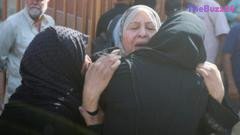
Escalating Violence in Gaza: New Strikes Claim Eight Lives Amid Stalled Peace Efforts
Recent military operations in Gaza have resulted in the deaths of at least eight individuals, including a young child, despite the existence of a year-old ceasefire agreement. The strikes occurred across two separate locations, highlighting the persistent volatility in the region as diplomatic efforts to secure a lasting peace remain at a standstill.
In Gaza City, a missile strike near the Cairo School in the Al-Rimal neighborhood claimed the lives of three people, among them a four-year-old boy. Witnesses described the scene as a sudden, unprovoked attack on civilians who were sheltering in the area. Simultaneously, in the southern city of Khan Younis, a drone strike targeted a group of police officers in the Al-Mawasi district, resulting in five fatalities. The local interior ministry characterized the incident as a massacre, noting that the victims were engaged in routine duties at the time of the strike.
The Israeli military confirmed that it conducted two separate operations targeting what it identified as military operatives, though it has yet to provide specific evidence or further details regarding the nature of the targets. These events underscore the fragility of the current security environment, as daily air strikes continue to occur despite the formal ceasefire established last October. With the death toll continuing to rise, the humanitarian situation remains dire, and the stalled peace plan brokered by the Trump administration offers little immediate hope for a resolution to the ongoing conflict.
Key Takeaways
- At least eight people, including a child, were killed in recent Israeli strikes in Gaza City and Khan Younis.
- The Israeli military stated the strikes targeted military operatives, though no further evidence has been provided.
- Despite a ceasefire agreement in place since last October, daily air strikes continue to claim civilian lives as peace negotiations remain stalled.
Editor’s Analysis & Impact
The ongoing violence in Gaza, occurring despite a formal ceasefire, signals a profound breakdown in the diplomatic framework intended to stabilize the region. The failure of the current peace plan, combined with the persistent nature of these military engagements, suggests that the conflict is entering a protracted phase of attrition. From a geopolitical perspective, the inability to enforce the ceasefire undermines international mediation efforts and exacerbates the humanitarian crisis. The lack of transparency regarding military targets further complicates the path toward de-escalation. Moving forward, the region faces a high risk of continued instability, as the absence of a functional peace process leaves both civilian populations and regional security in a state of extreme vulnerability. The international community remains largely sidelined, unable to bridge the gap between the stated goals of the ceasefire and the reality on the ground.
Frequently Asked Questions
Q: Is there currently a ceasefire in effect in Gaza?
A: Yes, a ceasefire has been in force since October of last year; however, air strikes have continued on a near-daily basis, leading to ongoing casualties.
Q: What was the initial trigger for the current conflict?
A: The conflict escalated significantly following the Hamas-led attack on Israel on October 7, 2023, which resulted in approximately 1,200 deaths and the taking of 251 hostages.
AI Disclosure: This article is based on verified data and official reports. Our Team and AI have cross-referenced every financial detail with primary sources to ensure total accuracy.
More from this Category