Europe’s Cultural Treasures Under Siege: A Surge in Bold Museum Heists Alarms Experts
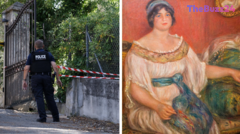
A recent audacious theft at a French museum, where four impressionist paintings by Pierre-Auguste Renoir, valued at millions of euros, were stolen, highlights a disturbing trend across Europe. This incident follows a warning issued by the European policing agency, Europol, regarding an alarming increase in brazen museum thefts throughout the continent. The Renoir heist, executed in a mere five minutes by cutting through a fence with an electric knife and hacksaw, underscores the evolving and increasingly forceful tactics employed by criminals. This surge in activity has put cultural institutions on high alert, with experts noting a significant shift in the nature of these crimes.
The turning point for many security professionals was the successful robbery at the Louvre in Paris last October, where €88 million worth of jewelry was stolen and remains unrecovered. This high-profile breach seemingly emboldened criminals, leading to a wave of “copycat” heists across Europe. Since the Louvre incident, smaller museums have been targeted, with thefts ranging from ancient coins in France to a diamond necklace in Vienna, Bronze Age artifacts in Spain, and art from Italian institutions. Art detective Arthur Brand notes that the methods are becoming more aggressive, with offenders using tools like sledgehammers and explosives, and focusing on small, portable, high-value items that can be quickly removed.
Museums present unique vulnerabilities compared to more heavily fortified banks or jewelry stores. Directors often face budget constraints, prioritizing exhibitions over security upgrades, and many institutions are housed in historic buildings that are challenging to adapt to modern security requirements. Furthermore, as public spaces, museums have inherent access control limitations, allowing perpetrators to scout locations as visitors. Kumar Sokka, CEO of Acre Security, points out that even well-secured museums can be overwhelmed by armed intruders, making rapid response and physical deterrence crucial.
In response to these escalating threats, museums are re-evaluating their security protocols. Measures include enhanced video surveillance, metal detectors, bag checks, and increased security personnel. Experts like Ibrahim Bulut, a museum security consultant, emphasize creating physical barriers that delay thieves, buying critical time for law enforcement to respond. This could involve reinforced doors, thicker display case glass, or integrated alarm systems that can trigger facility lockdowns. However, the cost of such upgrades poses a significant challenge, particularly for smaller institutions entrusted with nationally important collections. The dilemma remains how to fortify these cultural bastions without transforming them into inaccessible fortresses, thereby preserving their role as open institutions for public enjoyment.
Key Takeaways
- Museum thefts in Europe are increasing in frequency and audacity, with a shift towards more forceful tactics and rapid execution.
- High-value, portable items like precious metals, gemstones, and specific cultural artifacts (e.g., Chinese porcelain) are now preferred targets over paintings due to easier illicit resale.
- Museums face significant security challenges, balancing the need for enhanced protection against budget constraints, the preservation of historic buildings, and the imperative to remain publicly accessible.
Editor’s Analysis & Impact
The escalating wave of museum thefts across Europe signals a critical juncture for the cultural heritage sector. This trend will undoubtedly drive a surge in demand for advanced security technologies and expert consulting, creating a niche growth market within the security industry. Museums, particularly smaller ones, will face immense pressure to reallocate budgets towards security infrastructure, potentially impacting exhibition schedules or acquisition funds. The broader implications extend to the global art market, where the illicit trade of cultural artifacts could see a boost, complicating provenance and recovery efforts. Furthermore, the public’s perception of museum safety may shift, potentially affecting visitor numbers. This situation necessitates a collaborative, pan-European strategy involving law enforcement, cultural ministries, and security experts to safeguard invaluable historical assets while maintaining their accessibility for future generations.
Frequently Asked Questions
Q: Why are museums becoming more frequent targets for thieves?
A: Museums are often housed in older buildings with less robust security than banks or jewelry stores, and they are public spaces, making them vulnerable. Budget constraints often lead to underinvestment in security, and the high value of their contents makes them attractive targets.
Q: What types of items are thieves primarily targeting now?
A: While paintings are still stolen, there's a growing preference for precious metals, gemstones, and culturally significant artifacts like Chinese porcelain. These items are often easier to melt down, remove from settings, or sell on illicit markets without leaving a trace, compared to unique artworks.
Q: How are museums attempting to enhance their security?
A: Museums are implementing various measures, including enhanced video surveillance, metal detectors, bag checks, increased security personnel, and physical barriers like reinforced doors and thicker display glass. Experts also emphasize integrated security systems and staff training to detect suspicious activity and deter potential offenders.
AI Disclosure: This article is based on verified data and official reports. Our Team and AI have cross-referenced every financial detail with primary sources to ensure total accuracy.
More from this Category