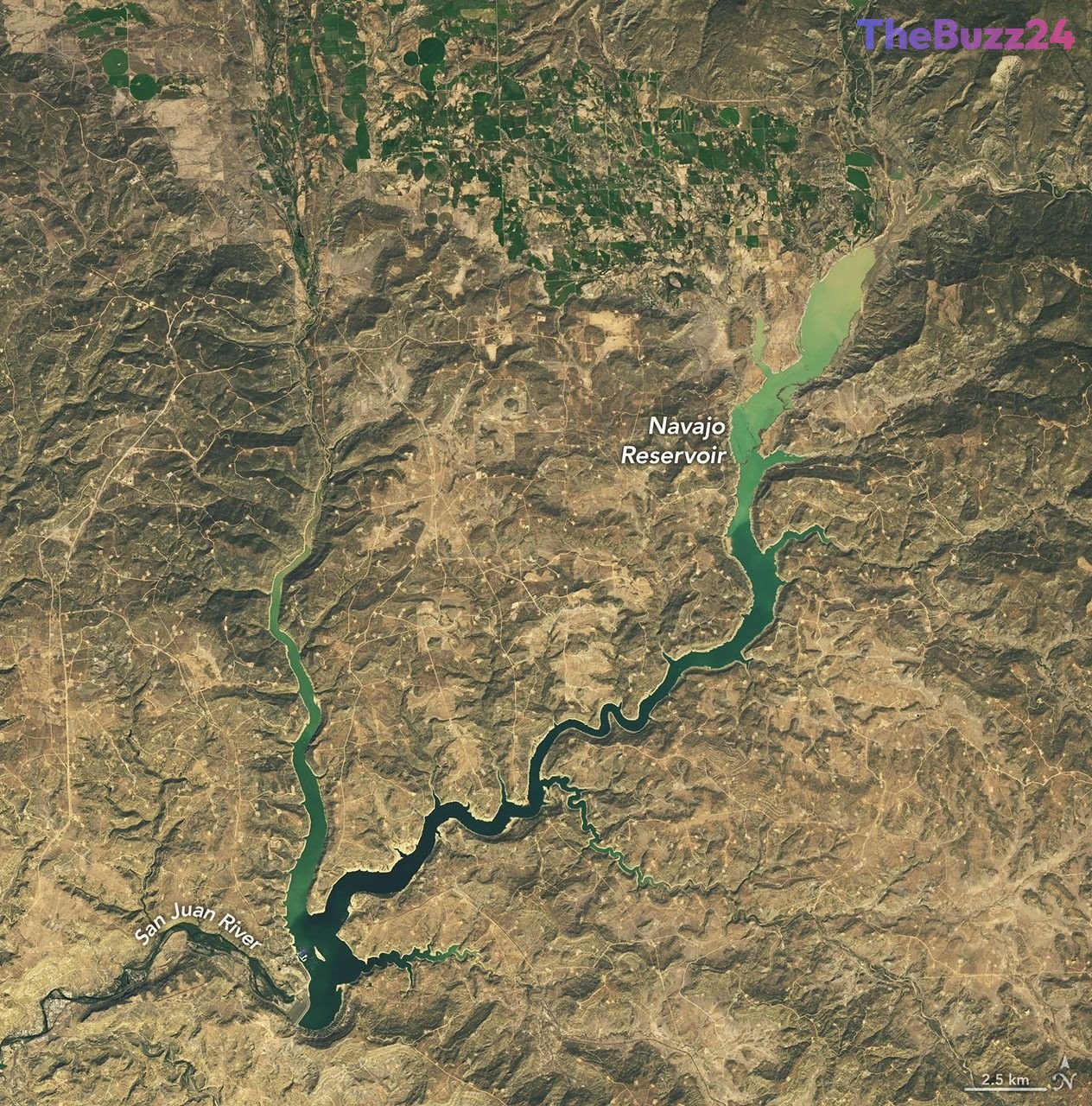
Extreme Rainfall Transforms Navajo Reservoir Landscape
The Four Corners region of the American Southwest has undergone a dramatic hydrological shift following a series of intense, back-to-back rain events in late October and early November 2026. Satellite imagery confirms that the Navajo Reservoir, situated across the border of northern New Mexico and southern Colorado, experienced a rapid surge in water levels, rising nearly 60 feet in less than two months. This sudden influx has brought the reservoir to its highest capacity since 2019, marking a significant departure from the low levels observed earlier in the year.
Prior to these storms, the region had been struggling with a persistent snow drought that left reservoirs depleted throughout the spring and summer. By late September, the Navajo Reservoir held only 60 percent of its average capacity. However, the recent deluge—which saw precipitation totals reach two to four times the seasonal average—has effectively reversed short-term drought conditions across the Southwest and Great Basin. As of early November, the reservoir reached 108 percent of its average capacity for that time of year.
While the moisture provided much-needed relief for the arid landscape, the rapid accumulation of runoff caused severe flooding in surrounding communities. Towns like Pagosa Springs, Colorado, faced significant infrastructure damage and emergency evacuations as the San Juan River approached record-breaking flood stages. The meteorological phenomenon, fueled by unusually high ocean temperatures and an active El Niño pattern, highlights the volatile nature of water management in the region, where the transition from extreme drought to dangerous flooding can occur with little warning.
Key Takeaways
- Navajo Reservoir water levels rose by nearly 60 feet in under two months due to extreme autumn rainfall.
- The surge brought the reservoir to 108% of its average capacity, effectively ending short-term drought in the Southwest.
- Intense runoff caused significant flooding and property damage in communities like Pagosa Springs, Colorado.
Editor’s Analysis & Impact
The rapid filling of the Navajo Reservoir serves as a stark case study in the ‘weather whiplash’ currently affecting the American West. While the immediate replenishment of water supplies is a positive development for regional agriculture and municipal water security, the infrastructure damage caused by the associated flooding underscores the vulnerability of mountain communities to extreme precipitation events. The influence of an active El Niño, combined with record-warm ocean temperatures, suggests that the region may face more frequent, high-intensity storm cycles in the future. Policymakers and water managers must now balance the benefits of drought relief against the necessity of upgrading flood mitigation infrastructure to handle these increasingly volatile hydrological swings.
Frequently Asked Questions
Q: Why did the Navajo Reservoir rise so quickly?
A: The reservoir rose due to back-to-back extreme rain events in late October and early November 2026, which delivered two to four times the average precipitation to the Four Corners region.
Q: Did the recent storms end the drought in the Southwest?
A: The storms effectively ended short-term drought conditions for the Southwest and Great Basin, though experts note that long-term drought persists in some areas.
AI Disclosure: This article is based on verified data and official reports. Our Team and AI have cross-referenced every financial detail with primary sources to ensure total accuracy.
More from this Category