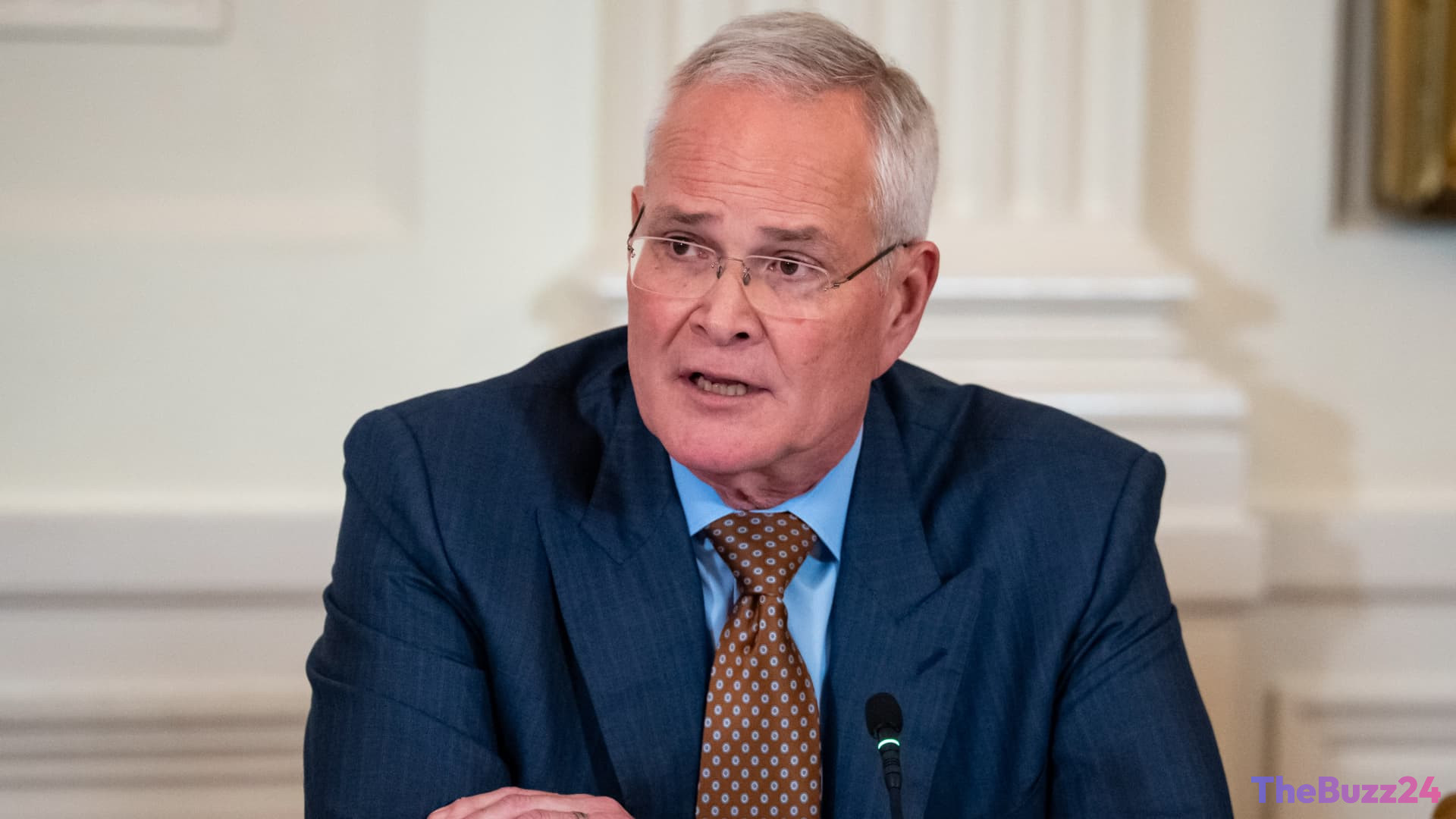
Exxon Mobil CEO Warns Global Oil Markets Underestimate Middle East Conflict’s Full Impact
Exxon Mobil CEO Darren Woods has issued a stark warning that global oil markets are yet to fully grasp the profound supply disruptions stemming from the ongoing conflict in the Middle East and the closure of the Strait of Hormuz. Woods emphasized that current oil prices do not accurately reflect the true scale of the impact, suggesting a significant price surge is still on the horizon.
The global economy has, to date, been somewhat shielded from the immediate consequences through a combination of factors. A substantial number of loaded oil tankers were already in transit during the initial phase of the conflict, providing a temporary buffer. Additionally, strategic petroleum reserves have been tapped, and commercial inventories drawn down, mitigating the immediate supply shock. However, Woods cautioned that these temporary supply sources are finite and will eventually become exhausted as the conflict persists, inevitably leading to upward pressure on prices.
Even once the Strait of Hormuz reopens, Woods anticipates a normalization period of one to two months for oil flows from the Persian Gulf. This timeframe is necessary for tankers to be repositioned, supply backlogs to be cleared, and vessels to reach their intended destinations. Furthermore, a critical factor that will drive future demand and prices is the necessity for governments and industries to replenish their strategic and commercial reserves, which will likely be depleted by the conflict’s end. This refilling process will introduce significant additional demand into the marketplace, further elevating prices.
Exxon Mobil itself faces direct operational challenges from the ongoing situation. The company projects a decline of 750,000 barrels per day in its Middle East production compared to 2025 if the Strait remains closed through the second quarter, impacting approximately 15% of its total production. Moreover, Iranian attacks on Qatar’s liquefied natural gas export hub damaged two production lines in which Exxon holds an ownership interest, accounting for about 3% of its upstream production in 2025. Despite a significant rise in overall oil prices since the conflict began, Exxon’s stock performance has remained relatively flat, reflecting the complex interplay of market dynamics and operational challenges.
Key Takeaways
- Exxon Mobil CEO Darren Woods warns that current oil prices do not fully reflect the supply disruption caused by the Middle East conflict and the closure of the Strait of Hormuz.
- The market has been temporarily insulated by strategic reserves, commercial inventories, and tankers in transit, but these buffers are expected to diminish, leading to future price increases.
- Even after the Strait reopens, a significant period will be required for supply normalization, compounded by increased demand from governments and industries replenishing depleted reserves.
Editor’s Analysis & Impact
The analysis by Exxon Mobil’s CEO highlights the precarious balance in global oil markets. While current prices might seem stable compared to the scale of disruption, the depletion of strategic reserves and commercial inventories signals an impending price shock. This could lead to increased volatility and sustained higher energy costs, impacting inflation and consumer spending globally. The situation underscores the fragility of global supply chains and the significant geopolitical risk premium now embedded in energy markets. Companies like Exxon Mobil face direct operational challenges, while governments will need to reassess energy security strategies. The long-term implications include accelerated investment in alternative energy sources and a re-evaluation of supply chain diversification to mitigate future disruptions.
Frequently Asked Questions
Q: Why does Exxon Mobil's CEO believe oil prices haven't fully reacted to the Middle East conflict?
A: He states that the market has been temporarily buffered by factors like oil tankers already in transit, the release of strategic petroleum reserves, and the drawdown of commercial inventories, which have masked the full extent of the supply disruption.
Q: What is the Strait of Hormuz and why is its closure significant?
A: The Strait of Hormuz is a critical maritime chokepoint through which a substantial portion of the world's oil supply passes. Its closure severely restricts the flow of crude oil and natural gas from the Persian Gulf to global markets, leading to significant supply shortages and price increases.
Q: How might oil prices normalize after the Strait of Hormuz reopens?
A: Even after reopening, it could take one to two months for oil flows to normalize as tankers need to be repositioned and supply backlogs cleared. Furthermore, governments and industries will need to replenish depleted strategic and commercial reserves, which will create additional demand and upward pressure on prices.
AI Disclosure: This article is based on verified data and official reports. Our Team and AI have cross-referenced every financial detail with primary sources to ensure total accuracy.
More from this Category