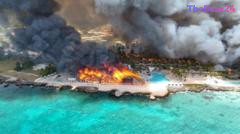
Fatal Fire Devastates Luxury Dominican Republic Resort, Forcing Mass Evacuation
A devastating early-morning fire swept through the Viva Wyndham Dominicus Beach resort in the popular coastal town of Bayahibe, Dominican Republic, resulting in the tragic death of a 46-year-old Italian tourist. The massive blaze forced the emergency evacuation of nearly 1,700 guests as flames tore through the luxury beachfront property. Emergency responders treated six individuals at the scene, while three others were transported to local medical facilities for further treatment.
High winds and the traditional, highly flammable thatched roofs of the resort buildings contributed to the rapid spread of the fire. Aerial footage captured thick plumes of black smoke rising from the resort as multiple structures were engulfed in flames. Emergency management teams successfully brought the fire under control, and displaced guests were quickly relocated to alternative accommodations in the area. Local authorities confirmed that broader tourism activities in Bayahibe remained unaffected by the incident.
In the wake of the disaster, diplomatic efforts are underway to assist affected travelers. The Italian embassy has stepped in to support approximately 285 Italian tourists staying at or near the resort, facilitating emergency passport replacements for those whose travel documents were lost in the fire and coordinating repatriation flights. Wyndham Hotels & Resorts expressed deep condolences to the victim’s family and confirmed that the independently owned and operated franchise has been closed indefinitely while investigations continue and autopsy results are awaited.
Key Takeaways
- A massive fire at the Viva Wyndham Dominicus Beach resort in the Dominican Republic claimed the life of a 46-year-old Italian tourist and injured several others.
- Nearly 1,700 guests were evacuated and relocated to other hotels, with the Italian embassy providing emergency travel documents and flight arrangements for affected citizens.
- The resort has been closed indefinitely following the blaze, which spread rapidly due to strong winds and flammable thatched-roof structures.
Editor’s Analysis & Impact
This tragic incident highlights a critical vulnerability in tropical resort architecture: the use of traditional thatched roofs. While aesthetically pleasing and culturally authentic, these materials pose severe fire hazards, especially when combined with coastal winds. In the aftermath of this disaster, insurance underwriters and local regulatory bodies are likely to demand stricter fire-retardant treatments and enhanced suppression systems for properties utilizing natural building materials. For Wyndham Hotels & Resorts, the incident underscores the reputational risks associated with franchise models, where safety compliance is managed by independent owners. Although local tourism remains largely unaffected, the tragedy may prompt travelers to scrutinize resort safety standards more closely, forcing the hospitality industry in the Caribbean to prioritize infrastructure modernization over traditional aesthetics.
Frequently Asked Questions
Q: What caused the fire at the Viva Wyndham Dominicus Beach resort?
A: While the exact cause of the fire remains under investigation, initial findings indicate that strong coastal winds and the highly flammable thatched roofs of the resort buildings caused the flames to spread rapidly.
Q: How are displaced tourists being assisted?
A: Displaced guests have been relocated to alternative hotels in the area. Additionally, diplomatic missions, such as the Italian embassy, are actively assisting affected travelers by issuing emergency passports and arranging flights home.
Q: Is the resort still open for business?
A: No, the Viva Wyndham Dominicus Beach resort has been closed indefinitely following the fire while investigations and recovery efforts continue.
AI Disclosure: This article is based on verified data and official reports. Our Team and AI have cross-referenced every financial detail with primary sources to ensure total accuracy.
More from this Category