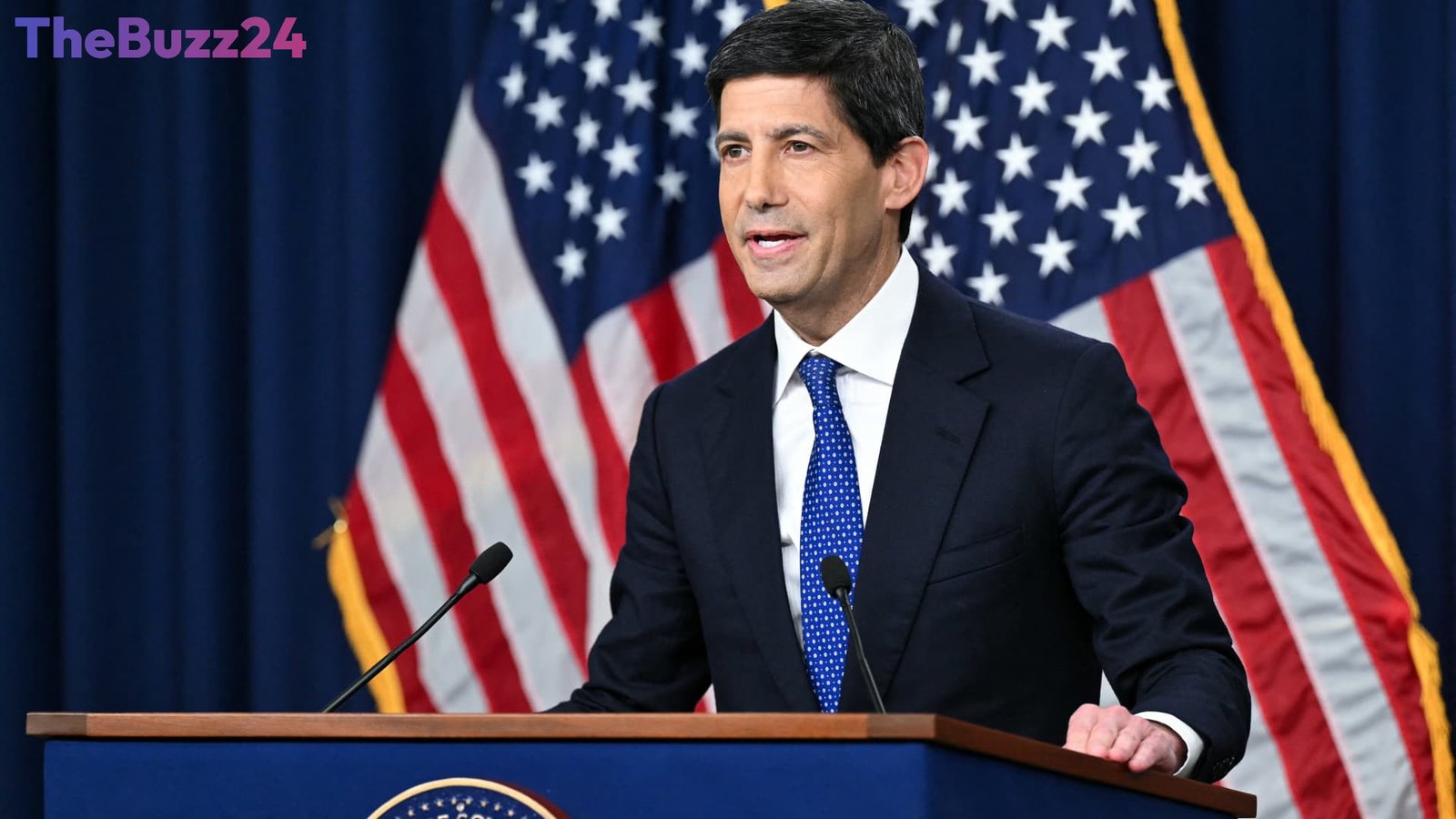
Federal Reserve Poised for Rate Hold Amid Inflation Concerns, Future Hikes Loom
The Federal Reserve is widely anticipated to maintain its benchmark interest rates at the current level during its upcoming policy meeting. While a decision on rates is expected Wednesday, the focus is shifting towards signals regarding future monetary policy adjustments, particularly from Federal Reserve Chairman Kevin Warsh.
Recent economic data indicates persistent inflationary pressures, with the consumer price index showing an annual rate of 3.7% in September, largely propelled by rising energy costs. Even excluding volatile food and energy components, core inflation remains above the Federal Reserve’s 2% target. This inflationary environment complicates the Fed’s decision-making process as it balances the need to control prices with the potential impact on economic growth and employment.
Market participants are closely observing Chairman Warsh’s communications for indications of the central bank’s future direction. Warsh has previously expressed a preference for markets to interpret economic data independently rather than relying on explicit forward guidance from the Fed. However, economists suggest that recent inflation figures will likely reinforce the expectation that further interest rate increases may be necessary over time. A pause in October could provide the Fed with additional time to assess the effects of previous rate hikes on the economy and financial conditions, while also allowing for a more comprehensive evaluation of incoming data.
The Federal Reserve faces a delicate balancing act, aiming to curb inflation without unduly stressing sensitive sectors like the housing and labor markets. The central bank must demonstrate its commitment to price stability while maintaining flexibility regarding the pace and extent of future monetary tightening. The path forward involves navigating complex economic signals and managing market expectations in an environment marked by both persistent inflation and a cooling housing market.
Key Takeaways
- The Federal Reserve is expected to hold interest rates steady at its upcoming meeting.
- Inflationary pressures, particularly from energy prices, remain a key concern for the Fed.
- Market attention is focused on Chairman Kevin Warsh's signals regarding future rate hikes and the Fed's communication strategy.
Editor’s Analysis & Impact
The Federal Reserve’s upcoming decision highlights a critical juncture in monetary policy. While a rate hold is largely expected, the persistent inflation data presents a challenge. The Fed’s communication strategy, especially from Chairman Warsh, will be crucial in managing market expectations. A more data-dependent approach, as favored by Warsh, carries execution risks, potentially leading to market volatility if not clearly articulated. The broader implication is the Fed’s ongoing struggle to achieve its dual mandate of price stability and full employment amidst a complex economic landscape. Future policy moves will likely be gradual but contingent on inflation trends, with potential impacts on interest-sensitive sectors like housing.
Frequently Asked Questions
Q: Why is the Federal Reserve considering holding interest rates steady?
A: The Federal Reserve is likely holding rates steady to assess the impact of previous rate hikes on the economy and to gather more data on inflation and employment trends before making further decisions.
Q: What is the Federal Reserve's target inflation rate?
A: The Federal Reserve's target inflation rate is 2%.
Q: What does 'forward guidance' mean in the context of the Federal Reserve?
A: Forward guidance refers to the communication from the Federal Reserve about its future monetary policy intentions, such as the likely path of interest rates. Chairman Warsh has expressed a preference for markets to derive policy signals from economic data rather than explicit Fed guidance.
AI Disclosure: This article is based on verified data and official reports. Our Team and AI have cross-referenced every financial detail with primary sources to ensure total accuracy.
More from this Category