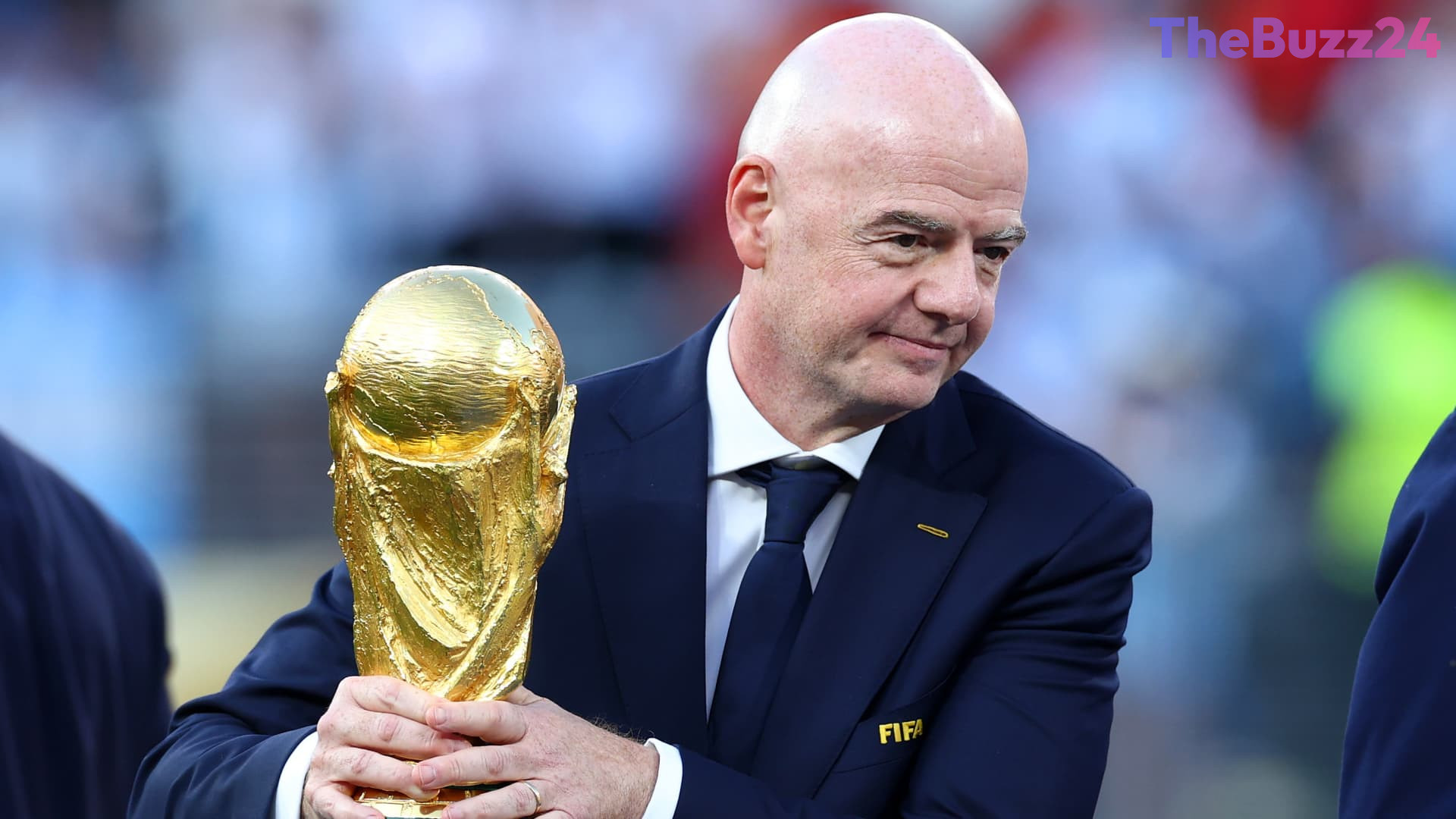
FIFA Faces Global Backlash Over Controversial $20 Billion World Cup Privatization Plan
Global soccer governing body FIFA has ignited intense controversy by revealing plans to restructure its operations and sell a significant minority stake in its marquee event. Under the leadership of President Gianni Infantino, the organization intends to spin off tournament operations into a new subsidiary, allowing private institutional investors to acquire up to a 20% stake. Valued at an estimated $20 billion, the initiative aims to capitalize on the soaring commercial success of recent international tournaments by injecting billions in private capital into the business.
The proposal has triggered immediate and fierce opposition from major stakeholders across the soccer landscape. European soccer’s governing body, UEFA, sharply criticized the initiative, accusing FIFA of overstepping its boundaries and attempting to monetize assets that belong to the global sporting community rather than a single administrative body. Critics argue that introducing private equity and profit-driven investors into the structure of the world’s most prestigious sporting event threatens the integrity and governance of the sport, risking the prioritization of financial returns over athletic traditions.
Adding further complexity to the situation, the proposed financial maneuver has drawn political attention, with high-profile figures and regional leaders voicing concerns over the commercialization of international sports. Financial institutions such as J.P. Morgan have been brought in to manage the transaction, while investment interest has been linked to prominent high-finance entities. Despite the widespread pushback, the initiative’s fate ultimately rests with FIFA’s extensive network of member associations, many of whom have historically relied on development funding distributed by the central governing body.
Key Takeaways
- FIFA plans to create a new commercial subsidiary for the World Cup, allowing private investors to buy up to a 20% stake in a deal valuing the venture at $20 billion.
- UEFA and various political figures have strongly condemned the move, arguing that the global tournament is not a commercial product available for sale.
- The proposal requires approval from FIFA's council and its 211 member associations, some of whom may be swayed by promises of increased development funding.
Editor’s Analysis & Impact
The push by FIFA to privatize a portion of its flagship asset marks a watershed moment in the intersection of professional sports and private equity. As sports organizations face mounting pressure to maximize revenue, turning to institutional investors for capital injection is becoming an increasingly attractive strategy. However, this move sets a precarious precedent for international athletics, where governance and commercial interests frequently collide. If successful, FIFA’s restructuring could pave the way for other global sports bodies to monetize their premier events, fundamentally altering how sporting events are funded and controlled. Conversely, if the backlash from UEFA and other key stakeholders leads to a prolonged boycott or governance crisis, it could severely damage the unity and stability of international soccer, forcing a reevaluation of how commercial partnerships are negotiated in elite athletics.
Frequently Asked Questions
Q: What is FIFA proposing to do with the World Cup?
A: FIFA plans to form a new subsidiary called FIFA Forward Enterprises to run the tournament and raise capital by selling up to a 20% stake to private investors, valuing the venture at $20 billion.
Q: Why is the proposal facing opposition?
A: Critics, led by UEFA, argue that the World Cup is a global sporting tradition rather than a commercial product to be traded, and they fear private investors will gain undue influence over how soccer is governed.
Q: How will the final decision be made?
A: The plan requires approval from a majority of FIFA's 37-member council and its 211 member associations, many of whom receive financial development grants from the governing body.
AI Disclosure: This article is based on verified data and official reports. Our Team and AI have cross-referenced every financial detail with primary sources to ensure total accuracy.
More from this Category