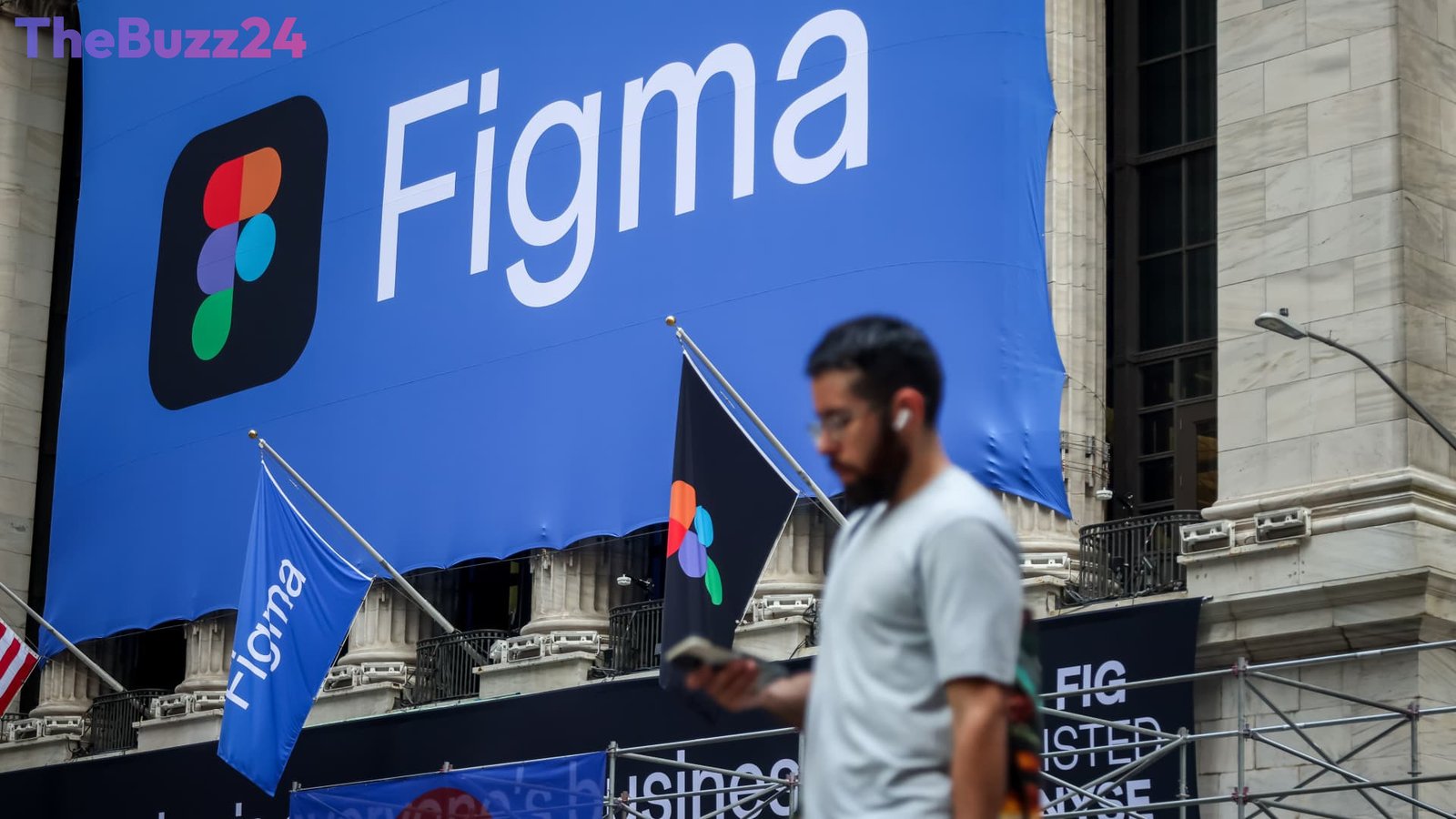
Figma’s Stock Dips Despite Earnings Beat as AI Investments Shape Long-Term Strategy
Figma, the popular design software company, experienced a notable dip in its stock value, falling 7% in after-hours trading, even as it surpassed analyst expectations for its third-quarter financial results and future guidance. The company reported a narrowed net loss of $81.3 million, a significant improvement from the $1.10 billion loss recorded in the same period last year. Revenue for the quarter reached $391.4 million, exceeding the consensus estimate of $375.8 million and marking a 43% year-over-year increase.
Despite these positive financial indicators, Figma’s leadership is strategically prioritizing long-term growth over immediate revenue gains. This approach involves investing in artificial intelligence capabilities and offering more AI credits to customers, a move that finance chief Praveer Melwani explained as a trade-off for sustained future expansion. “What that means is you’re potentially trading off near-term revenue, investing in your customers, and then allowing yourself to then grow durably over the long term,” Melwani stated. This strategy is already showing traction, with a nearly 50% increase in weekly users at high-spending organizations utilizing AI credits, and a doubling of work performed by Figma’s internal AI model.
The company also raised its full-year financial forecast, now anticipating an 11% operating margin and revenue between $1.497 billion and $1.499 billion, surpassing previous projections and analyst expectations. However, Figma projects a slowdown in fourth-quarter revenue growth to approximately 33%, a figure still above the 28% predicted by analysts. This forward-looking guidance, coupled with the company’s AI-centric investments, appears to have tempered investor enthusiasm in the short term, especially given the broader market concerns about AI’s competitive impact on software companies earlier in the year.
In addition to its AI focus, Figma is also increasing its attention to cybersecurity, according to co-founder and CEO Dylan Field. While clients are not requesting Figma to act as a security vendor, the company is actively scrutinizing the security practices of its own suppliers in light of recent AI-driven security breaches at other tech firms. This dual focus on AI integration and robust security underscores Figma’s commitment to evolving its platform for future market demands.
Key Takeaways
- Figma's stock declined despite exceeding third-quarter earnings and revenue expectations.
- The company is strategically investing in AI features, potentially sacrificing short-term revenue for long-term growth.
- Figma raised its full-year financial outlook and is also enhancing its focus on cybersecurity measures.
Editor’s Analysis & Impact
Figma’s recent performance highlights a common tension in the tech industry: balancing immediate financial results with strategic long-term investments, particularly in AI. While the stock dip suggests investor caution regarding the short-term revenue impact of AI credits, the company’s proactive approach to integrating AI and enhancing security positions it to capitalize on future market trends. The increased adoption of AI features and the improved operating margin indicate underlying strength. As the market continues to mature in its understanding of AI’s role, Figma’s strategy could prove prescient, potentially leading to more durable growth and a stronger competitive position in the design software landscape.
Frequently Asked Questions
Q: Why did Figma's stock fall despite beating earnings expectations?
A: Figma's stock fell because the company is prioritizing long-term growth through investments in AI, which may impact short-term revenue. Investors often react negatively to strategies that suggest slower near-term revenue growth, even if the long-term outlook is positive.
Q: How is Figma using AI?
A: Figma is integrating AI into its platform by offering more AI credits to customers, which helps them build websites and apps. The company's own AI model is also performing more work, and user engagement with these AI features is increasing.
Q: What is Figma's stance on cybersecurity?
A: Figma is increasing its focus on cybersecurity, not by becoming a security vendor, but by scrutinizing the security of its own vendors. This is a response to the growing threat of AI-driven security breaches in the tech industry.
AI Disclosure: This article is based on verified data and official reports. Our Team and AI have cross-referenced every financial detail with primary sources to ensure total accuracy.
More from this Category