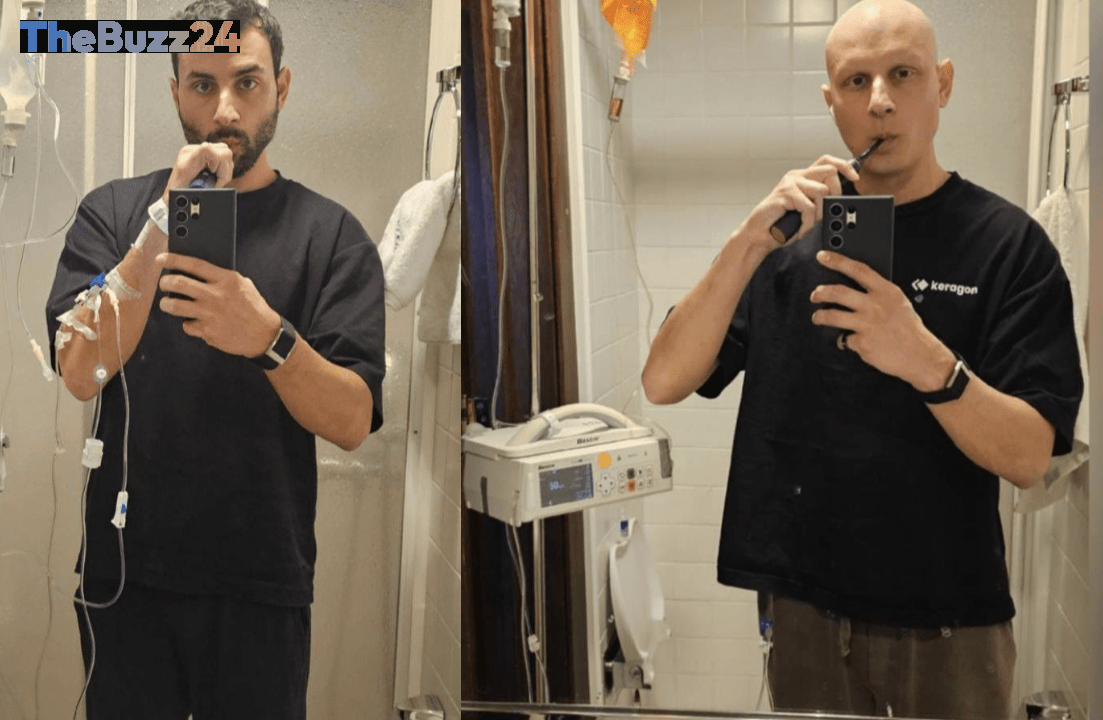
Founder’s AI-Assisted Battle Against Aggressive Cancer Reveals New Hope for Patients
Conno Christou, a 35-year-old entrepreneur known for his meticulous approach to health and performance, recently faced a life-altering diagnosis of aggressive non-Hodgkin’s lymphoma. Despite maintaining a rigorous health regimen, including detailed tracking of sleep, biomarkers, and nutrition, Christou’s cancer was discovered incidentally after he sought medical attention for a swollen arm. The aggressive, fast-growing tumor had developed rapidly, highlighting the unpredictable nature of the disease.
Christou’s journey through the medical system was marked by starkly contrasting treatment recommendations from highly regarded specialists. Initially advised to undergo a less aggressive chemotherapy regimen, he sought a second opinion, which strongly advocated for a more intensive, in-hospital treatment plan with a significantly higher success rate. This divergence in expert advice prompted Christou, a naturally data-driven individual, to gather twelve opinions in total. The overwhelming consensus favored the more aggressive treatment, a decision he approached with the same strategic mindset he applies to building companies.
During his six-month treatment, Christou leveraged his wearable technology, like the Whoop band, to monitor his body’s responses and predict immune system dips. He meticulously documented his symptoms and side effects, feeding this comprehensive data, along with his medical records and scan results, into an AI chatbot. While experts caution against relying solely on AI for medical advice, Christou found it invaluable for asking the right questions and understanding complex medical literature, especially for a rare condition. This AI-assisted approach proved crucial when his final scan showed ambiguous results, leading his oncologist to consider further aggressive therapies. Christou’s AI analysis identified a potential misinterpretation related to thymus rebound, a phenomenon common in younger patients recovering from his specific type of lymphoma. This insight led to further consultations, ultimately confirming the absence of active disease and averting unnecessary radiation treatment.
Christou’s experience has profoundly reshaped his perspective on life, work, and the potential of technology in healthcare. Having built Keragon, an AI-powered platform for medical practice automation, his personal battle has given him firsthand insight into the inefficiencies within the healthcare system and the potential for AI to streamline patient care and empower individuals. He emphasizes the importance of proactive patient engagement and believes that AI is already a powerful tool for those willing to utilize it, offering a glimpse into a future where personalized medicine is more accessible.
Key Takeaways
- An entrepreneur with a rigorous health regimen was diagnosed with aggressive non-Hodgkin’s lymphoma, discovered incidentally.
- The patient utilized AI tools to analyze his medical data, ask critical questions, and ultimately avoid unnecessary treatments by identifying a potential misinterpretation of scan results.
- Christou's experience highlights the growing role of AI in assisting patients with rare diseases and navigating complex medical decisions, while also underscoring systemic inefficiencies in healthcare.
Editor’s Analysis & Impact
Conno Christou’s story is a powerful testament to the evolving intersection of personal health, advanced technology, and patient empowerment. His successful navigation of a rare and aggressive cancer, significantly aided by AI, signals a potential paradigm shift in how individuals can engage with their healthcare. While medical professionals rightly urge caution regarding AI’s diagnostic capabilities, Christou’s case demonstrates its value as an analytical tool for patients seeking to understand complex information and challenge conventional approaches. This narrative not only offers hope for individuals facing similar health crises but also underscores the urgent need for healthcare systems to integrate such technologies responsibly to improve patient outcomes and operational efficiency. The implications for the health tech industry are substantial, suggesting increased demand for AI-driven patient support platforms.
Frequently Asked Questions
Q: How did Conno Christou's AI analysis help him during his cancer treatment?
A: Christou used an AI chatbot to process his medical records, scan results, and wearable data. This helped him identify a potential misinterpretation of his final PET scan, suggesting a thymus rebound phenomenon rather than active disease, which ultimately led to him avoiding further aggressive treatments like radiotherapy.
Q: Is AI a reliable replacement for doctors in cancer diagnosis and treatment?
A: Experts, including Christou himself, emphasize that AI should not replace doctors but rather serve as a tool to assist patients. General-purpose AI chatbots can be inaccurate and have not been thoroughly evaluated for personalized medical diagnoses. However, they can help patients ask better questions, understand complex medical literature, and analyze their own data.
Q: What is thymus rebound and why was it relevant to Christou's case?
A: Thymus rebound is a phenomenon where the thymus gland can reactivate after chemotherapy, particularly in younger patients recovering from certain types of lymphoma. This reactivation can appear as active disease on medical imaging, leading to potential misdiagnosis. Christou's AI analysis flagged this possibility based on his age and scan characteristics, which was later confirmed by medical professionals.
AI Disclosure: This article is based on verified data and official reports. Our Team and AI have cross-referenced every financial detail with primary sources to ensure total accuracy.
More from this Category